
A Quick Survey of Some of Our Top Holdings

August 12, 2018 in Commentary, Ideas, Letters

This article by MOI Global instructor Glenn Surowiec has been excerpted from a letter of GDS Investments.

“From whence shall we expect the approach of danger? Shall some trans-Atlantic military giant step the earth and crush us at a blow? Never. All the armies of Europe and Asia . . . could not by force take a drink from the Ohio River or make a track on the Blue Ridge in the trial of a thousand years. No, if destruction be our lot we must ourselves be its author and finisher. As a nation of free men we will live forever or die by suicide.” –Abraham Lincoln

In our 2017 Mid-Year Letter, GDS Investments commented upon the fundamental strength of the American economy and our confidence that, because of that strength, the political tomfoolery on display in Washington, D.C. would have little long-term impact upon that economy. We expressed our belief that, with its optimal mix of geographic fortune and structural stability, America exists is something of an economic Goldilocks zone where, notwithstanding the tweet-of-the day, the conditions for prosperity are enduringly “just right.”

A year removed from that letter, and many hundreds of tweets later, we retain our confidence in America’s indomitable economic strength. With political rhetoric now giving way to actual tariffs, deficits, and other actions which some see as self-inflicted economic harm, the question is whether we are now ripe for the national ‘suicide” which President Lincoln feared.

We think not! Indeed, we reiterate our caution … don’t bet against America. Though improvident and rash, tariffs, trade wars, and ballooning budget deficits shall not imperil that which survived civil war, reconstruction, world wars, assassinations, multiple recessions, and the Great Depression.

Though tempered by the knowledge that tariffs served to exacerbate the Great Depression, we think that conditions remain well-suited for growth within the GDS Investments portfolio. We will continue to look with a contrarian view upon individual fact patterns and individual companies and will base our long-term investment decisions upon nothing less than that research.

We again start with General Electric Company (NYSE: GE) and note that a cornerstone of successful investing is the ability to look ahead without dwelling on past mistakes. As present-day General Electric investors, we are buying into the future of the company, and not the past.

In our 2017 Year-End Letter, we commented upon the appointment of new CEO John Flannery and looked ahead with our expectation that Mr. Flannery would reverse General Electric’s well-documented recent troubles by restructuring the company’s non-core businesses. That expectation is now reality.

On April 26, 2018, The Wall Street Journal reported that General Electric turned down an offer from Danaher Corporation (NYSE: DHR) to purchase General Electric’s Life Sciences unit at a price in the $20B range. That unit generates approximately one-quarter of GE Healthcare’s total sales, and General Electric’s refusal to sell in the stated price range speaks volumes about the value which the company places on Life Sciences. Further cementing that valuation is the fact that Siemens AG (FWB: SIE) recently spun-off its medical imaging and diagnostics division (Healthineers) for $35B. If the same valuation metrics which were applied to Healthineers were applied to GE Healthcare, General Electric shareholders could realize more than $60B from a spin- off of that unit . . . a spin-off which we expect will be completed within the next 12 to 18 months.

General Electric will soon close on a transaction to merge the transportation business component of GE Aviation with Wabtec Corporation (NYSE: WAB). In that $11B deal, General Electric will realize nearly $3B in cash while its shareholders will own 40.2% of the new company. The structure of that transaction will bring significant advantages while allowing General Electric, under Mr. Flannery’s leadership, to continue to optimize its portfolio of businesses.

We expect that optimization will include (A) General Electric’s sale of its gas engine business to private equity firm Advent International for $3B, (B) the company’s sale of its 62.5% stake in Baker Hughes (NYSE: BHGE) over the next 36 months, and (C) as noted, the spin-off of GE Healthcare.

The General Electric turnaround will not be quick, and it will require a healthy dose of the patience about which we wrote in our 2017 Year-End Letter. We remain confident, though, that patience will be well-rewarded.

Another position which we featured in our 2017 Year-End Letter is Under Armour, Inc. (NYSE: UAA). Since that letter, Under Armour’s share price increased approximately 60%, and is up 100% from our cost basis. The company posted stronger-than-expected results in the first quarter, and the market appears poised to acknowledge something on which we commented six months ago . . . a growth strategy focused upon the company’s core products and brand cache (as opposed to rapid expansion) will be recognized with an appropriate valuation.

We wrote extensively, too, about QUALCOMM, Inc. (NASDAQ: QCOM) and explained efforts by Broadcom Limited (NASDAQ: AVGO) to effect a hostile takeover of Qualcomm. On March 12, 2018, the Trump Administration cited national security concerns to forbid that acquisition. Those concerns centered upon a belief that a Broadcom-owned Qualcomm would endanger the United States’ competitive position in 5G technology by allowing a Chinese company to gain unfair advantage.

Looking forward, we expect that, ultimately, Qualcomm will close on its long-pending acquisition of Netherlands-based NXP Semiconductors, N.V. (NASDAQ: NXP). The only necessary regulatory approval for that acquisition which now remains outstanding is from the government of China. That approval should rise or fall with the success of the United States’ ongoing trade negotiations with China.[1]

Furthermore, Qualcomm recently announced a $10B stock repurchase program. As such, Qualcomm’s share price should perform well for the foreseeable future regardless of the fate of the NXP Semiconductors deal.

GDS Investments continues to hold TripAdvisor, Inc. (NASDAQ: TRIP). While realizing free cash flow in both the hotel and non-hotel segments, the company reported strong revenues and earnings in Q1 which well-exceeded analysts’ expectations. In the past, TripAdvisor overinvested in brand and consumer-centric initiatives. Those investments caused earnings contractions when made, but they are now delivering returns which we expect will continue past 2018. Chief Financial Officer Ernst Teunissen is optimistic, and recently commented that the company’s “good start has made [management] more positive about our 2018 profitability outlook.”

We also mention here Exxon Mobil Corporation (NYSE: XOM). The company recently outlined its long-range guidance on capital expenditures and return on invested capital, and its plan to increase ROIC to at least 15% over the next five years. As the most disciplined capital allocator within the oil and gas industry, and with its fully integrated business model, Exxon Mobil can remain profitable throughout the entirety of the oil and gas cycle.

In the first half of 2018 GDS Investments started a number of new positions. One of those is Newell Brands, Inc. (NYSE: NWL). The owner of some of America’s most well-known brands, Newell historically employed an ill-advised “growth by acquisition” strategy which culminated in a 2016 merger with Jarden Corporation (NYSE: JAH). That acquisition left Newell saddled with too-much debt and difficulty integrating its pre-existing brands with Jarden’s.

More recently, Starboard Value LP and other activist investors took notice of Newell’s post- acquisition struggles. Starboard acquired a 4% interest in the company, and Carl Ichan built a 6% stake. As a result of internal pressure from those investors, as well as other changes, Newell expects to sell at least 25% to 40% of its existing portfolio. For example, on June 5, 2018, Newell announced plans to sell Rawlings to a private equity firm for $395M.

Between mid-2017 and mid-2018, Newell’s share price dropped more than 50% and, at current pricing, the company can be owned at compelling value as asset divestiture and restructuring play out. This position should yield good returns, especially in light of the company’s recent announcement that it will expand by $2.5B its currently ongoing share repurchase program.

Another new GDS Investments position is JD.com (NASDAQ: JD). This Chinese e-commerce company enjoys significant consumer trust in that country where, unfortunately, the marketplace is plagued by counterfeit merchandise and unreliable delivery execution. By combining that reputation with a strategic willingness to realize very low operating margins, JD.com became the e-commerce brand of choice for China’s most affluent customers in its largest cities and is second in size only to Alibaba (NYSE: BABA). News reports suggest that JD.com may be looking to re- enter the Russian market and the company recently announced plans to begin operations in Western Europe. A new arrangement with Alphabet, Inc. (NASDAQ: GOOGL) should also allow JD.com to begin to penetrate the Americas.

The Chinese e-commerce market has a long way to go to catch-up with the activity in Europe and North America. JD.com is perfectly positioned to enjoy growth in that market as Chinese wealth and internet usage expand.

We also reiterate our outlook regarding bonds, which are in the early stage of a bear market as interest rates continue to rise from artificially low levels. The last bull market in bond prices lasted for 35 years. There is no reason for us to expect that this nascent bear market will be any less long-lived.

To say that these are interesting times in the life of our nation would be something of an understatement. The soul of the country is deeply divided and our national leaders appear to revel in what seems to be a game of political Russian Roulette. As investors, though, we take solace from the facts that the foundations of the American financial system are strong and that, even now, there is no place on Earth where conditions are better suited for long-term economic growth.

In that regard, and not without a small dose of humility, we’d amend Mr. Lincoln’s warning to state that “as a nation of hard-working, patient, disciplined, and well-informed investors, America’s place as the world’s leading economy will endure forever, or die by suicide inflicted through irrationality, demagoguery, and fear.” None of those negative characteristics has ever defined the American economy in the long-term, and this morning’s tweet-of-the-day certainly won’t change that!

[1] As the date of this letter, American tariffs on some Chinese exports (and China’s retaliatory tariffs on some American exports) are in effect. We will carefully monitor the now ongoing trade dispute between these two (and other) trading partners, and make investment decisions accordingly.

Dundee Corp.: CEO Meeting Confirms Confidence in Investment

August 11, 2018 in Equities, Ideas

This article is excerpted from a letter by MOI Global instructor Jim Roumell, partner and portfolio manager of Roumell Asset Management (RAM), based in Chevy Chase, Maryland. Jim is a valued participant in The Zurich Project.

We wrote extensively about Dundee in our 1Q18 letter. After establishing our initial position, the stock price continued to decline in the 2nd quarter. As is typical, we decided to add to our position and average down. We believe Dundee is trading at a significant discount to a conservative estimate of Net Asset Value.

Dundee is a public Canadian independent holding company, listed on the Toronto Stock Exchange under the symbol DCA and also trades in the US under the symbol DDEJF. Through its operating subsidiaries, Dundee is engaged in diverse business activities in the areas of investment advisory, corporate finance, energy, resources/commodities, agriculture, and real estate. The Corporation also holds, directly and indirectly, a portfolio of investments mostly in these key areas, as well as other select investments in both publicly listed and private enterprises.

I had a face-to-face meeting with the company’s top management, including CEO Jonathan Goodman, last month and came away feeling confident in our investment.

Members, log in below to access the restricted content.

Not a member?

Thank you for your interest.  Please note that MOI Global is closed to new members at this time. If you would like to join the waiting list, complete the following form:

Disclosure: The specific securities identified and described do not represent all of the securities purchased, sold, or recommended for advisory clients, and the reader should not assume that investments in the securities identified and discussed were or will be profitable. The top three securities purchased in the quarter are based on the largest absolute dollar purchases made in the quarter. Roumell Asset Management, LLC claims compliance with the Global Investment Performance Standards (GIPS®) and has prepared and presented this report in compliance with the GIPS standards. Roumell Asset Management, LLC has been independently verified for the periods January 1, 1999 through December 31, 2017. Verification assesses whether (1) the firm has complied with all the composite construction requirements of the GIPS standards on a firm-wide basis and (2) the firm’s policies and procedures are designed to calculate and present performance in compliance with the GIPS standards. Verification does not ensure the accuracy of any specific composite presentation. The Balanced Composite has been examined for the periods January 1, 1999 through December 31, 2017. The verification and performance examination reports are available upon request. Roumell Asset Management, LLC is an independent registered investment adviser. The firm maintains a complete list and description of composites, which is available upon request. Results are based on fully discretionary accounts under management, including those accounts no longer with the firm. Past performance is not indicative of future results. The U.S. dollar is the currency used to express performance. Returns are presented net of management fees and include the reinvestment of all income. Net of fee performance was calculated using actual management fees. From 2010 to 2013, for certain of these accounts, net returns have been reduced by a performance-based fee of 20% of profits, paid annually in the first quarter. Net returns are reduced by all fees and transaction costs incurred. Wrap fee accounts pay a fee based on a percentage of assets under management. Other than brokerage commissions, this fee includes investment management, portfolio monitoring, consulting services, and in some cases, custodial services. Prior to and post 2006, there were no wrap fee accounts in the composite. For the year ended December 31, 2006, wrap fee accounts made up less than 1% of the composite. Wrap fee schedules are provided by independent wrap sponsors and are available upon request from the respective wrap sponsor. Returns include the effect of foreign currency exchange rates. Exchange rate source utilized by the portfolios within the composite may vary. Composite performance is presented net of foreign withholding taxes. Withholding taxes may vary according to the investor’s domicile. The annual composite dispersion presented is an asset-weighted standard deviation calculated for the accounts in the composite for the entire year. Dispersion calculations are greater as a result of managing accounts on a client relationship basis. Securities are bought based on the combined value of all portfolios of a client relationship and then allocated to one account within a client relationship. Therefore, accounts within a client relationship will hold different securities. The result is greater dispersion amongst accounts. The 3-year annualized ex-post standard deviation of the composite and/or benchmark is not presented for the period prior to December 31, 2012, because 36 monthly returns are not available. Policies for valuing portfolios, calculating performance, and preparing compliant presentations are available upon request. The investment management fee schedule for the composite is as follows: for Direct Portfolio Management Services: 1.30% on the first $1,000,000, and 1.00% on assets over $1,000,000; for Sub-Adviser Services: determined by adviser; for Wrap Fee Services: determined by sponsor. Actual investment advisory fees incurred by clients may vary.

Valentum sobre Covestro

August 10, 2018 in Ideas de inversión, MOI Global en Español

NOTA DEL EDITOR: Esta idea de inversión es obtenida de una carta a los inversores de Valentum FI.

* * *

Covestro [ETR: 1COV]: Es una compañía química alemana, spin off de Bayer [ETR: BAYN], sin deuda, especialista en polímeros y adhesivos. Lleva dos años generando unos resultados brillantísimos como consecuencia de una demanda muy sana y escasez en oferta de los polímeros (MDI, TDI). La compañía es cíclica en un 50% de sus ventas y esperamos, como todo el consenso, que los márgenes se normalicen (desde el 25% al 20%) como consecuencia de entrada de nueva capacidad.
Continue reading »

Highlighted Tweet by MachHBInvesting

August 9, 2018 in Twitter

David Steinberg on Approaches to Deep Value Investing

August 9, 2018 in Deep Value, Equities, Featured, Interviews, Skills, The Manual of Ideas, Transcripts

We are delighted to bring you this conversation from the MOI Global archives.

We had the pleasure of sitting down with David Steinberg, managing partner of DLS Capital Management, in Chicago in 2014, for an exclusive interview on his deep value-oriented investment approach.

Watch an excerpt of the full video:

The following transcript has been edited for space and clarity.

MOI Gobal: Tell us about how you got started in the business and what piqued your interest in value investing.

I look at deep value, I’m looking at the value of the whole enterprise. In other words, the investment may come in the form of a bond or a bankrupt company or it might come in the sense of a deeply discounted equity.

David Steinberg: I got into the business in 1981 as a retail broker. I started at Merrill, but shortly thereafter went to Morgan Stanley where I spent the majority of my career and ended my career there in the Special Situations Group in New York. What I found in dealing with really high net worth and wealthy and sophisticated institutions is you really needed a base of knowledge and a factual foundation behind what was going to drive your investments. By learning more and more about the economics of asset valuation and cash flows, I was able to always build a really strong case as to the logic and rationale about how we were going to make money or how this particular investment was making money.

The more I did so, the larger a business you could grow and the more confidence you could have with the investors you were dealing with, as well as your returns actually did well. The knowledge you built about factual asset values and cash flows and intrinsic value gave you a terrific foundation for having the courage to make investment suggestions and build your portfolios. That’s the test of time.

MOI: Deep value investing means different things to different people…

Members, log in below to access the restricted content.

Not a member?

Thank you for your interest.  Please note that MOI Global is closed to new members at this time. If you would like to join the waiting list, complete the following form:

Hate for Cable, Change of Heart for DISCA?

August 9, 2018 in Communication Services, Equities, Europe, Ideas, Jockey Stocks, Letters, Mid Cap, North America, South America

This article is excerpted from a letter by MOI Global instructor Patrick Brennan, portfolio manager of Brennan Asset Management.

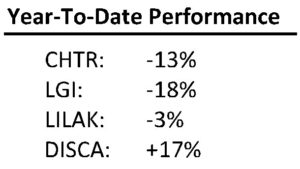
As detailed in several of our previous letters, we believe investor fear over a changing landscape has created several opportunities in the media/telecom sector. Our largest positions are in various cable systems around the world: Liberty Global (LGI), Charter (CHTR) via Liberty Broadband (LBRDA)/GCI Communications (GLIBA), Liberty Latin America (LILAK) and in one mispriced content asset (DISCA).

While investors may group all cable names together, we believe the cable industry structure, growth outlook and regulatory environment vary considerably for cable companies in the US versus Europe versus Latin America. DISCA, our sole content investment, is most exposed to the ever-changing (for the worse) US TV ecosystem. As we have noted in multiple letters, we believe cable’s broadband business is better protected from the various video cord-cutting pressures that are likely to continue or to accelerate. We think this basic thesis has not materially changed, but investors’ reactions to the various media assets have varied widely.

CHTR (which we own via Liberty Broadband and GCI Communications) declined nearly 12 percent in a single day this past April as investors fretted about the decline in video subscribers with a chunk of the decline related to so-called “non-pay disconnects.” Essentially, as CHTR moved from 13 to 2 billing systems, certain individuals were erroneously not required to pre-pay their subscription.

These customers never paid for their service and CHTR disconnected them. While CHTR’s integration of the Time Warner and Bright House acquisitions has generally gone well, this non-pay error was a clear glitch. There will be some carryover effect from this change in the second quarter, but the mistake will not impact the back half of this year. If this is CHTR’s worst integration issue, it will have done a phenomenal job. While the one-day decline was not fun, there does not appear to be any lasting harm.

That said, the “non-pay” issue did not account for the entire video subscriber decline and CHTR was negatively impacted by the video losses affecting the rest of the media industry. Over the past couple of years, CEO Tom Rutledge has publicly discussed growing the video subscriber base, but during the first quarter call, he essentially stated that the ultimate free cash flow will not materially move with “a couple of million video subs.” In our opinion, this sentiment is directionally accurate, but some investors interpret his statement as essentially moving the goal posts and thereby hurting his credibility. Additionally, CHTR’s stock drop likely reflected some concerns about the pending rollout of 5G wireless broadband services which we discussed in our Q1 letter.

We presented LBRDK/GLIBA at Wide-Moat Investing Summit, hosted by MOI Global, this past June where we discussed the above issues in far greater detail. […] We believe Rutledge’s basic thesis regarding video loss impact on free cash flow is directionally accurate. That said, we wish Rutledge would have acknowledged a range of possibilities relating to the US video market. Video subscribers are generally costlier to service (higher number of questions/complaints) and require large amounts of capex support (technicians and video boxes). For this reason, there are considerable offsets for cable if video losses continue to accelerate. We will not rehash the entire 5G conversation again, but we simply note that there are considerable uncertainties with regard to the underlying technology, timing, costs and addressable markets. Furthermore, even if the technology works perfectly, the most plausible rollout areas of deployment are in the largest metropolitan areas, and CHTR is underrepresented in these areas. We continue to believe that CHTR is undervalued and that owning the name through LBRDK/GLIBA allows a “double discount,” as we can own CHTR at levels 10-20% below the current stock price.

DISCA is perhaps more controversial than CHTR, and the number of issues that DISCA bulls and bears agree upon is probably similar in number to the shared political beliefs of Donald Trump and Elizabeth Warren (with conversations often as friendly). That said, we would suggest that going into the first quarter, both bulls and bears probably would have agreed that US video losses would continue, that there would be continued growth in DISCA’s international business, and that DISCA was likely to increase synergy targets from its recent Scripps acquisition. Unofficially, we also believe that ~90 percent of the bull/bear camp would also agree that CEO David Zaslav was likely to make a hyperbolic statement during the earnings call regardless of results. All of these expectations came to fruition (arguably the synergy bump was greater than anticipated) when DISCA reported first quarter results and yet the stock still rose.

What has changed? From a fundamental perspective, very little. In fact, DISCA’s stock price barely budged earlier in the year, despite a rash of upgrades from sell-side analysts who finally calculated pro-forma numbers and ran out of creative ways to show “neutral” ratings with 50%+ upside. But, a couple of external events (neither surprising) marginally changed sentiment on the name. First, AT&T’s acquisition of Time Warner was initially approved without condition[2]. At the same time, Comcast and Disney were practically tripping over each other to acquire Fox/Sky at nosebleed valuation levels (the ~13x valuation for Sky is insane relative to the implied value of LGI – more on this in a bit). Some investors began to realize that there are only a certain number of international content assets still available as the demand for global content continues to accelerate. At roughly the same time the deal was approved, Dr. Malone bought $30+ million worth of stock in the open market. We would argue that this news (while quite positive) was not completely unexpected as Dr. Malone publicly declared that he liked the Scripps merger and would consider additional purchases. Of course, an even larger Malone open market purchase of LILAK approximately one year ago has not inspired LILAK investors, as investors can now purchase shares nearly 20% below what Dr. Malone paid. But, we digress. We have no doubt that investors could punish DISCA shares if US subscriber losses materially increase. Furthermore, we do not argue that DISCA’s US business is not facing substantial headwinds and could very well be a declining business over time. Instead, we simply argue that DISCA’s international business is stronger than many realize and its increased US size, increased focus on female viewers and the possibility of further skinny bundle penetration are not reflected in its current valuation.

And then there is Liberty Global (LGI) – the “bad news bears” of the cable space. In several past investor letters, we described management missteps but argued that the private market value of its cable assets was far higher than current trading values. We also noted that a transaction with Vodafone was highly likely. So, after announcing a deal with Vodafone (VOD) that values its German and select Eastern European cable assets at ~11.5x trailing EBITDA, we were surprised to see the stock actually decline 6 percent on the day of the announcement. LGI has never been an easy asset for outsiders to value. It operates in multiple markets with varying ownership levels, is listed in the US but operates exclusively in Europe (F/X and Brexit 2.0 concerns), has content/tax assets and is currently embarking on an aggressive rollout (Project Lightning) that significantly inflates current capex levels. Unlike CHTR, LGI has not provided a clear breakout of the value of its content assets and significant tax assets and, this value is therefore often ignored by investors. Furthermore, Deutsche Telecom’s CEO has loudly complained about the VOD transaction. While the deal will be reviewed at the EU level (not at the local German level) and while past regulatory history would suggest approval is likely, there will be multiple ugly headlines before the deal closes.

Certainly, LGI’s Swiss market has weakened and the sell-side has become more concerned about UK organic growth levels. Investors have grown increasingly disillusioned with CEO Mike Fries, who many perceive as overpromising but under-delivering.

Clearly, LGI has been a frustrating name to own, especially as the broader market has gone straight up. The UK is a competitive market, but we continue to see price increases from competitors and we think low single-digit operating cash flow growth is likely. At current valuation levels, little else is needed to achieve meaningful upside. Assuming the deal goes through, the stock currently trades ~6.3x 2019E EBITDA, near recession trough valuation levels and far below private market value. If shares don’t budge and the VOD deal closes as expected, LGI could end up retiring nearly 50% of outstanding shares.

Again, the business dynamics of LGI/LILAK/CHTR are very different – Virgin’s UK performance has little to no correlation to CHTR’s mobile launch in the US or Chile’s continued fiber rollout. But, cable is quite unpopular and therefore multiple contractions at CHTR will impact those at LGI and LILAK. We cannot pinpoint a single moment when this will change, but we believe investors will ultimately reexamine whether double-digit free cash flow yields for oligopolistic businesses are really appropriate.

[2] As we were completing this letter, The Justice Department announced an appeal to AT&T’s merger with Time Warner, after the deal was completed in June.

Disclaimer: BAM’s investment decision making process involves a number of different factors, not just those discussed in this document. The views expressed in this material are subject to ongoing evaluation and could change at any time. Past performance is not indicative of future results, which may vary. The value of investments and the income derived from investments can go down as well as up. It shall not be assumed that recommendations made in the future will be profitable or will equal the performance of the securities mentioned here. While BAM seeks to design a portfolio which reflects appropriate risk and return features, portfolio characteristics may deviate from those of the benchmark. Although BAM follows the same investment strategy for each advisory client with similar investment objectives and financial condition, differences in client holdings are dictated by variations in clients’ investment guidelines and risk tolerances. BAM may continue to hold a certain security in one client account while selling it for another client account when client guidelines or risk tolerances mandate a sale for a particular client. In some cases, consistent with client objectives and risk, BAM may purchase a security for one client while selling it for another. Consistent with specific client objectives and risk tolerance, clients’ trades may be executed at different times and at different prices. Each of these factors influences the overall performance of the investment strategies followed by the Firm. Nothing herein should be construed as a solicitation or offer, or recommendation to buy or sell any security, or as an offer to provide advisory services in any jurisdiction in which such solicitation or offer would be unlawful under the securities laws of such jurisdiction. The material provided herein is for informational purposes only. Before engaging BAM, prospective clients are strongly urged to perform additional due diligence, to ask additional questions of BAM as they deem appropriate, and to discuss any prospective investment with their legal and tax advisers.

“Al enfocarnos en el nivel de la empresa, vamos a ser exigentes”

August 8, 2018 in MOI Global en Español, Traducciones

Read in English


Recientemente tuvimos el placer de charlar con David Rolfe, director de inversiones de Wedgewood Partners. La firma, con sede en St. Louis y fundada en 1988, tiene aproximadamente US$3 mil millones de activos bajo gestión. David se unió a la firma en 1992 en el mismo cargo que tiene actualmente y ha sido clave para dar forma a la filosofía y enfoque de inversión de Wedgewood. Al invertir en compañías de crecimiento, con fosos amplios, de 1992 a marzo de 2013, Wedgewood ha logrado una capitalización compuesta del 12% anual neto, frente a 9% del S&P 500.

(La siguiente entrevista es una transcripción editada y puede presentar errores. La transcripción ha sido ligeramente resumida por motivos de claridad y legibilidad).

The Manual of Ideas: Has estado en el negocio como inversor durante décadas. Antes de que analices tu enfoque de inversión y algunas de tus ideas favoritas, cuéntanos un poco sobre tu trayectoria y qué fue lo que te interesó de la inversión.

David Rolfe: Nací y crecí en St. Louis, Missouri, y allí es donde se encuentra Wedgewood. Fui muy afortunado de interesarme apasionadamente en el negocio de la inversión en 1984, hace mucho tiempo.

Tenía un profesor de inversiones en la Universidad de Missouri, en St. Louis, el profesor Ken Locke. Nunca olvidaré la clase de inversiones. El primer día el profesor descartó el capítulo en cuestión, y lo único que hizo fue hablar sobre la Bolsa. Resultó ser un adicto a la Bolsa. Me imagino que la mayoría de la clase estaba bastante aburrida, pero había algunos de nosotros que estábamos fascinados. No pudimos obtener suficiente de eso. Lo hizo muy interesante. De hecho, yo y otro estudiante y profesor, comenzamos el club de inversión estudiantil en la Universidad de Missouri. Comenzó como una cartera de papel. Todavía está allí, sigue funcionando. Son US$175 o US$180 mil y están bien organizados, y compiten contra otras escuelas por premios monetarios.

Ese fue el error inicial, pero la forma en que realmente me ayudó fue que me puso en la dirección de la lectura no académica. Esa fue mi primera exposición a los gustos de Buffett y Graham; Templeton, y T. Rowe Price… él también fue una inspiración; si realmente estás interesado en este tema, compra estos libros. Compra los libros clásicos, léelos y vuelve a leerlos. Me enganché. Después, cuando terminé la escuela a finales de 1985, me uní al sell-side en Wall Street. Era un corredor de Bolsa. Esa era mi forma más fácil de entrar en el negocio.

Ese fue el segundo planeta que se alineó para mí a principios de 1988, después del crac de 1987 —y me gusta bromear que después del crac de 1987 no pude vender ni un CD a mis padres—, pero tuve la suerte de poder entrar al buy-side como gestor de carteras en la antigua St. Louis Union Trust Company, y rápidamente fue comprada por Boatmen’s Trust. St. Louis es una ciudad de grandes empresas fiduciarias. Lo que fue clave en el desarrollo de mi carrera en esa firma: todos los gestores de carteras tenían un libro de negocios discrecional; podrían hacer lo que quisieran en términos de filosofía y proceso. Además, la entidad combinada tenía un gran negocio de custodia, así que esa fue mi primera exposición a la talla de Mason Hawkins en Southeastern Asset Management y «pandilla de crecimiento» precoz en Janus: [Tom] Marsico, [Jim] Craig y [Tom] Bailey. Estaban enfocándose.

Fuera de ese entorno rico, me había enamorado de la inversión focalizada [focus investing]. Después de casi cuatro años de ser gestor en Boatmen’s Trust, la suerte volvió a mí cuando el director de inversiones fundador de Wedgewood Partners —la firma se fundó en 1988 así que esto fue en la primavera de 1992—, se jubiló. A la edad madura de treinta años —y conocía todos los misterios del mundo de las inversiones—, con un pequeño track record, conocí a mi compañero Anthony Guerrerio, presidente y fundador de Wedgewood Partners, y me dio una oportunidad. Me dio la oportunidad. En mayo de 1992, me incorporé como director de inversiones con una pizarra en blanco para llevar esta filosofía en desarrollo a Wedgewood. Y en el camino, examinamos a un par de personas en el equipo de inversión. Primero, Dana Webb en 2002; Michael Quigley en 2006; y entonces nosotros cuatro hemos estado haciendo esta estrategia única comenzando en 1992: más de 21 años.

MOI: Has tenido un excelente track record desde entonces. Tengo curiosidad por profundizar un poco más en esa filosofía de inversión tuya. Tienes tres principios clave: enfoque,  paciencia y disciplina. Vamos a elegir el enfoque. ¿Qué quieres decir con eso?

Rolfe: Una de las cosas de las que nos gusta conversar cuando describimos nuestra filosofía en Wedgewood Partners es esta idea de que la inversión enfocada tiene ventajas estructurales sobre otras estrategias. En Wedgewood, por lo general tenemos aproximadamente veinte acciones, así es como nos enfocamos. Al enfocarnos en el nivel de la empresa, vamos a ser exigentes. Estamos poniendo nuestras veinte mejores ideas en la cartera, y ahí es donde nos detenemos. Dado que tenemos muy poca rotación de cartera en Wedgewood, esperamos tener estas empresas de gran crecimiento durante muchos años. Nuestro enfoque se centra en las compañías que consideramos que son las mejores en su clase, con una ventaja competitiva única, que creemos que como mínimo pueden duplicarse en los próximos tres a cinco años. No es crecimiento por el simple hecho del crecimiento: hipercrecimiento, crecimiento imprudente, crecimiento arriesgado del apalancamiento del balance. Estamos buscando estas compañías maravillosas, líderes dominantes de participación de mercado que no tienen que usar el apalancamiento financiero.

Una vez que identificamos ese subconjunto pequeño, tenemos que esperar pacientemente por la faceta de valor de la ecuación. Es tan importante, tan críticamente. Sabemos que si estamos comprando empresas a su valor razonable, y si se capitalizan al 15% en los próximos cinco años, el crecimiento subyacente va a impulsar los años fuera de la apreciación de la cotización; sin embargo, queremos comprarlos a un descuento de su valor intrínseco. Y sabemos por experiencia, y tiene un sentido intuitivo, que el lado positivo de la ecuación será el mayor impulsor de tu rentabilidad potencial en esa empresa durante la próxima semana, mes, trimestre, año; incluso dos años. Si tenemos razón en estos modelos de negocios, no deberán estar cambiando tanto. Pero como sabemos lo que pasa con el Sr. Mercado, la valoración cambia constantemente y puede llegar a ser extrema. Somos exigentes con los tipos de compañías que queremos tener. Y somos exigentes con la valoración en la que invertimos en ellos: o los recortamos o los vendemos.

Continue reading »

The Power of Low Costs

August 6, 2018 in Diary, Letters

This post by MOI Global instructor Phil Ordway has been excerpted from a letter of Anabatic Investment Partners, based in Chicago, Illinois.

Phil shared his research and insights into the “power of a low-cost advantage” at Wide-Moat Investing Summit 2018. Replay here.

Over the life of the Fund 50-80% of our capital has been deployed in companies that have a clear, defined cost advantage over their competitors. A competitive advantage can come in many different flavors, but my favorite might be a low-cost advantage. I don’t think it’s necessarily better than others, but for me it’s easier to understand. A low-cost advantage company also fits well with my own areas of strength (patience) and knowledge (financial, industrial, and consumer companies).

An underlying premise here is that the world is competitive. I think the rumors of the death of capitalism are premature, and I see vicious competition almost everywhere. There are few better allies to have in this fight than a low-cost advantage. Put another way, high costs – or even just an industry-average cost structure – can create serious impediments to success. Suffering less and avoiding failure can turn a prosaic business into a great success.

Some of the companies I most admire (Costco, Amazon, Southwest) use a low-cost business model to create a virtuous feedback loop with volumes: low costs enable low prices; low prices generate high volumes; high volumes enable lower costs; lower costs are reinvested in lower prices; and on and on we go. The best companies take this feedback loop and combine it with other hallmarks of “wide moat” companies – brand loyalty, network effects, effective capital allocation, etc. – to get exceptional and durable long-term results. Many great companies use a low-cost strategy to create other competitive advantages such as brand loyalty. What could be better than customers who have a deep, deserved trust that they only need to look in one place to find the best price?

A separate and parallel point could be made about our process as it relates to this topic. Just as a low-cost advantage gives a company a valuable edge that can be exploited over many years, the company must survive and be patient. A low-cost advantage tells us nothing about what will happen this quarter or this year; the world is too messy and unpredictable for that. I feel the same way about a value-investing approach to investment – it tips the odds in our favor over a period of many years, but interim periods can be all over the map. Things are always changing, but we remain steadfast in our philosophy and investment principles. For all things low-cost and value investing I remain short-term cautious and long-term bullish.

Gross Long and Gross Short performance attribution for the month and year-to-date periods is based on internal calculations of gross trading profits and losses (net of trading costs), excluding management fees/incentive allocation, borrowing costs or other fund expenses. Net Return for the month is based on the determination of the fund’s third-party administrator of month-end net asset value for the referenced time period, and is net of all such management fees/incentive allocation, borrowing costs and other fund expenses. Net Return presented above for periods longer than one month represents the geometric average of the monthly net returns during the applicable period, including the Net Return for the month referenced herein. An investor’s individual Net Return for the referenced time period(s) may differ based upon, among other things, date of investment. In the event of any discrepancy between the Net Return contained herein and the information on an investor’s monthly account statement, the information contained in such monthly account statement shall govern. All such calculations are unaudited and subject to further review and change. For purposes of the foregoing, the calculation of Exposure Value includes: (i) for equities, market value, and (ii) for equity options, delta-adjusted notional value.

THE INFORMATION PROVIDED HEREIN IS CONFIDENTIAL AND PROPRIETARY AND IS, AND WILL REMAIN AT ALL TIMES, THE PROPERTY OF ANABATIC INVESTMENT PARTNERS LLC, AS INVESTMENT MANAGER, AND/OR ITS AFFILIATES. THE INFORMATION IS BEING PROVIDED SOLELY TO THE RECIPIENT IN ITS CAPACITY AS AN INVESTOR IN THE FUNDS OR PRODUCTS REFERENCED HEREIN AND FOR INFORMATIONAL PURPOSES ONLY. THE INFORMATION HEREIN IS NOT INTENDED TO BE A COMPLETE PERFORMANCE PRESENTATION OR ANALYSIS AND IS SUBJECT TO CHANGE. NONE OF ANABATIC INVESTMENT PARTNERS LLC, AS INVESTMENT MANAGER, THE FUNDS OR PRODUCTS REFERRED TO HEREIN OR ANY AFFILIATE, MANAGER, MEMBER, OFFICER, EMPLOYEE OR AGENT OR REPRESENTATIVE THEREOF MAKES ANY REPRESENTATION OR WARRANTY WITH RESPECT TO THE INFORMATION PROVIDED HEREIN. AN INVESTMENT IN ANY FUND OR PRODUCT REFERRED TO HEREIN IS SPECULATIVE AND INVOLVES A HIGH DEGREE OF RISK. THERE CAN BE NO ASSURANCE THAT THE INVESTMENT OBJECTIVE OF ANY SUCH FUND OR PRODUCT WILL BE ACHIEVED. MOREOVER, PAST PERFORMANCE SHOULD NOT BE CONSTRUED AS A GUARANTEE OR AN INDICATOR OF THE FUTURE PERFORMANCE OF ANY FUND OR PRODUCT. AN INVESTMENT IN ANY FUND OR PRODUCT REFERRED TO HEREIN CAN LOSE VALUE. INVESTORS SHOULD CONSULT THEIR OWN PROFESSIONAL ADVISORS AS TO LEGAL, TAX AND OTHER MATTERS RELATING TO AN INVESTMENT IN ANY FUND OR PRODUCT. THIS IS NOT AN OFFER TO SELL OR SOLICITATION OF AN OFFER TO BUY AN INTEREST IN A FUND OR PRODUCT. ANY SUCH OFFER OR SOLICITATION WILL BE MADE ONLY BY MEANS OF DELIVERY OF A FINAL OFFERING MEMORANDUM, PROSPECTUS OR CIRCULAR RELATING TO SUCH FUND AND ONLY TO QUALIFIED INVESTORS IN THOSE JURISDICTIONS WHERE PERMITTED BY LAW. ALL FUND OR PRODUCT PERFORMANCE, ATTRIBUTION AND EXPOSURE DATA, STATISTICS, METRICS OR RELATED INFORMATION REFERENCED HEREIN IS ESTIMATED AND APPROXIMATED. SUCH INFORMATION IS LIMITED AND UNAUDITED AND, ACCORDINGLY, DOES NOT PURPORT, NOR IS IT INTENDED, TO BE INDICATIVE OR A PREDICTOR OF ANY SUCH MEASURES IN ANY FUTURE PERIOD AND/OR UNDER DIFFERENT MARKET CONDITIONS. AS A RESULT, THE COMPOSITION, SIZE OF, AND RISKS INHERENT IN AN INVESTMENT IN A FUND OR PRODUCT REFERRED TO HEREIN MAY DIFFER SUBSTANTIALLY FROM THE INFORMATION SET FORTH, OR IMPLIED, HEREIN. PERFORMANCE DATA IS PRESENTED NET OF APPLICABLE MANAGEMENT FEES AND INCENTIVE FEES/ALLOCATION AND EXPENSES, EXCEPT FOR ATTRIBUTION DATA, TO THE EXTENT REFERENCED HEREIN, OR AS MAY BE OTHERWISE NOTED HEREIN. NET RETURNS, WHERE PRESENTED HEREIN, ASSUME AN INVESTMENT IN THE APPLICABLE FUND OR PRODUCT FOR THE ENTIRE PERIOD REFERENCED. AN INVESTOR’S INDIVIDUAL PERFORMANCE WILL DIFFER BASED UPON, AMONG OTHER THINGS, THE FUND OR PRODUCT IN WHICH SUCH INVESTMENT IS MADE, THE INVESTOR’S “NEW ISSUE” ELIGIBILITY (IF APPLICABLE), AND DATE OF INVESTMENT. IN THE EVENT OF ANY DISCREPANCY BETWEEN THE INFORMATION CONTAINED HEREIN AND THE INFORMATION IN AN INVESTOR’S MONTHLY ACCOUNT STATEMENT IN RESPECT OF THE INVESTOR’S INVESTMENT IN A FUND OR PRODUCT REFERRED TO HEREIN, THE INFORMATION CONTAINED IN THE INVESTOR’S MONTHLY ACCOUNT STATEMENT SHALL GOVERN. NOTE ON INDEX PERFORMANCE: INDEX PERFORMANCE DATA AND RELATED METRICS, TO THE EXTENT REFERENCED HEREIN, ARE PROVIDED FOR COMPARISON PURPOSES ONLY AND ARE BASED ON (OR DERIVED FROM) DATA PUBLISHED OR PROVIDED BY EXTERNAL SOURCES. THE INDICES, THEIR COMPOSITION AND RELATED DATA GENERALLY ARE OWNED BY AND ARE PROPRIETARY TO THE COMPILER OR PUBLISHER THEREOF. THE SOURCE OF AND AVAILABLE ADDITIONAL INFORMATION REGARDING ANY SUCH INDEX DATA IS AVAILABLE UPON REQUEST.

Prime Value sobre el petróleo

August 6, 2018 in Industrias, MOI Global en Español

NOTA DEL EDITOR: Este texto es un extracto de una carta trimestral de Prime Value.

* * *

El acto de invertir en bolsa supone dar una opinión sobre el mercado. Invirtiendo en ETFs o fondos indexados estaremos aceptando la opinión del consenso, asumiendo que los precios actuales de cada acción reflejan el valor de la compañía, lo que ha demostrado ofrecer una aceptable rentabilidad a lo largo de la historia, batiendo holgadamente a la inflación.
Si queremos conseguir una rentabilidad superior a esta media de las bolsas, deberemos opinar diferente del mercado en nuestras inversiones. Opinar diferente supone indirectamente afirmar que el mercado no es eficiente en determinados casos, es decir que nosotros tenemos razón y el mercado está equivocado.

Tal afirmación supone tener unos conocimientos por encima de la media del mercado sobre las empresas que tenemos en cartera. Y eso no es fácil debido a que hay un gran número de incentivos en el negocio de la bolsa, el cual mueve billones de dólares a través de analistas inteligentes entregados a encontrar ineficiencias, a encontrar valor.

Por ello, como indicó Mohnish Pabrai, uno de los mejores inversores de la actualidad, las tres palabras más importantes en la inversión son Círculo de Competencia. Por su propia definición opinar diferente del mercado supone centrarte en unos pocos negocios que puedas conocer lo mejor posible.

Si bien estas ineficiencias se pueden dar en todo el mercado, existirá un mayor número entre las pequeñas empresas, ya que serán menos seguidas por los analistas de los bancos de inversión.

Esto no evita que en ocasiones excepcionales, el mercado esté equivocado en un sector en su conjunto. Un ejemplo lo podemos ver en la burbuja inmobiliaria de la década pasada, donde el consenso del mercado aceptaba el mantra que afirmaba que el precio de las viviendas nunca baja. Adam McKay retrató esta historia en la película The Big Short, basándose en el libro homónimo de Michael Lewis.

El protagonista, Michael Burry, desoyó este consenso y analizó por sí mismo las hipotecas que comprendían los instrumentos que se negociaban entre los bancos de Wall Street, hasta descubrir que estaban empezando a incumplirse pagos, lo que hizo que Burry se pusiese corto (apostó a la baja) sobre el precio del sector inmobiliario, lo que le supuso una rentabilidad astronómica cuando sucedió lo que él había previsto.

El análisis que se requiere para ser contrarian sobre un sector es extraordinario, aunque quizá la tarea más complicada sea evitar los sesgos hacia los que el consenso nos empuja a modo de cientos de noticias y opiniones opuestas a nuestros análisis. Esta soledad del inversor también se aprecia perfectamente en The Big Short.

Dicho esto, el aliciente es monumental. Cuando el mercado está equivocado en una industria completa las oportunidades se multiplican, ya que el inversor no ha encontrado una empresa infravalorada, sino un sector donde normalmente capitalizarán decenas de empresas. Será como pescar en una piscifactoría.

Esta situación se ha producido en uno de los sectores más seguidos del mercado, el petróleo.

Que esta circunstancia se presente en una industria tan analizada, nos recuerda que realmente no hay muchos analistas que hagan un estudio profundo, independiente y objetivo, sino que la fuerza de los sesgos afecta al mercado a través de la narrativa aceptando una opinión equivocada.

Esto genera, para todo aquel que esté dispuesto realizar un estudio minucioso, una oportunidad que pocas veces se presenta en la vida de un inversor.

Sobre el precio del petróleo

It’s only getting started – you haven’t seen the good stuff yet
-HFI Research.

A pesar de la narrativa negativa que lleva instalada en el mercado más de tres años, la demanda mundial de petróleo continúa excediendo significativamente la oferta. Provocando un déficit relevante originado por una tremenda infrainversión en la última década.

En efecto, en los últimos 10 años se han consumido 360 mil millones de barriles de petróleo convencional y se han descubierto 110 mil millones. Creando un déficit de 250 mil millones de barriles.

Desde 2012, hemos consumido casi 210 mil millones de barriles de petróleo, mientras que los descubrimientos convencionales sólo han alcanzado los 40 mil millones de barriles.

Sólo en los últimos seis años hemos consumido 170 mil millones de barriles más de los que hemos descubierto a través de los hallazgos de petróleo convencionales. En cuanto a las reservas no convencionales (shale) de EE.UU. las estimaciones fijan unos 35 mil millones de barriles, es decir insuficientes para cubrir el déficit.
Continue reading »

On Competitive Advantage — and Why Harley Davidson Has It

August 5, 2018 in Letters

This article is authored by MOI Global instructor Steve Gorelik, Portfolio Manager of Firebird U.S. Value Fund, based in New York City.

Michael Porter identifies two ways a company can create a competitive advantage: lower cost or differentiation. The presence of one or both of these factors is the key to the company earning excess returns on capital and creating value.

When selecting investments, I devote my energy to analyzing company operations in order to identify the source and sustainability of a competitive advantage. In Porter’s framework, the advantage is derived from attribute(s), such as resources, market position, or skills, that allow an organization to outperform its competition. Each of these attributes can take various forms, but I believe they are captured in the following categories.

Asset-based competitive advantage usually leads to lower cost than the competition and is especially relevant in commodity type industries.

PP&E – Companies, such as refiners, with a significant asset base that is either uneconomical or impossible to replicate. Building a new refinery requires navigating a nearly impossible web of local regulation and making heroic assumptions on future demand for the product. That is why the last major greenfield refinery in the U.S. was commissioned in 1977.[1]

Natural Resources – Companies with access to a superior resource that allow them to produce at a cost below that of the marginal producer. As an example, oil companies in Russia and Kazakhstan (Lukoil, GazpromNeft, etc…) extract oil at below $10 per barrel while marginal producers (e.g. shale, tar sands) need prices in the $50 to $80 range to break even.

Distribution – In this case advantage comes from the scale that took years to build up. Amazon’s domination comes from their ability to offer same-day and two-day shipping at a price that is lower than any other company. They can do that due to tremendous purchasing power and the network of warehouses located close to population centers all over the S.

Competitive advantage that is based on intellectual property can take on many forms and will often lead to differentiation that allows for excess returns on capital.

Patents – Probably the first thing that comes to mind when thinking of IP based advantages. Long period of patent protection is the key to the pricing power that drug companies enjoy, which usually translates to gross margins of 90% or higher. It is important to keep in mind that patents based competitive advantage are not sustainable since they expire.

Trademarks – This competitive advantage is usually associated with brands such as Coca-Cola, Gillette, Brand based competitive advantages are considered to be under threat due to changing consumer preferences, but it is going to be a long time before people will be willing to pay as much for RC Cola as they do for Pepsi or Coke.

Content – The best example of a content-rich company is Disney, which owns the rights to some of the more marketable media assets, including Marvel superheroes and Star Wars characters. These assets are exploited or created via feature films and are monetized via licensing deals and theme parks. Content advantage can also come from cumulative R&D spend for a technically complicated product (microprocessors, industrial robots, etc.)

Regulation – A general increase in regulatory burden and complexity is almost as certain as death and taxes. The Dodd-Frank law is 23 times longer than the Glass-Steagall act that followed the 1929 Wall Street crash.[2] While regulation increases costs on incumbents, it also creates an often unsurmountable moat for new entrants. As an example, all the fintech companies trying to disrupt the industry still rely on traditional banks for AML and KYC infrastructure.

Know-How – Any process, whether retail, manufacturing, or distribution, benefits from incremental knowledge acquired through day-to-day operations. As an example, Walmart is constantly sourcing ideas from its 2.1 million employees on how to improve sales or costs. Unlike other intellectual property, “know-how’s” competitive advantage is expressed through lower costs instead of pricing power.

The last category of competitive advantage comes from customer captivity acquired through either brand affinity or learning. These types of competitive advantages usually lead to pricing power and require low amounts of capital to upkeep.

Brand Affinity – The adage of “nobody got fired for buying IBM” applies to many companies that are known for providing quality, reliable, mission-critical products or services. A good example is Verisign, which is licensed by ICANN to make sure that every .com and .net address leads users to the appropriate website. While the contract comes up for renewal every five years, the likelihood of ICANN taking a chance on another provider is low, owing to inherent execution risk. As a result, Verisign has pricing power, which allows it to raise prices by 3% per annum on average.

Customer Learning – Anyone who has taken the time to integrate a spreadsheet into a Bloomberg knows how difficult it is to wean oneself from a service provider. A less obvious example of captivity that comes from customer learning are dental offices that have been set up by either Patterson or Henry Schein. Suppliers set up offices for dentists and automatically provide them with supplies. There is little price discovery in the process, which allows for reasonable price escalations as long as a reasonable service level is maintained.

A good company will have one of the competitive advantages mentioned above, but a great one will have several and will benefit from both lower cost and differentiation. I believe that Harley Davidson (HOG) has an advantage on the cost side owing to its scale, and an advantage on the differentiation side owing to a strong brand affinity for its product. There are very few companies that can boast 50%+ market share (scale) despite being 20% to 30% more expensive than the competition. There are even fewe that can claim that their brand name is the one which people are most willing to tattoo on their bodies[3].

Thanks to its pricing power, Harley Davidson routinely generates returns on invested capital in the 20 to 30% range[4] – well above peers and other manufacturing companies. These returns are protected via $150 to $175 million annual R&D spend (content), proprietary network of almost 1,500 dealerships (distribution) and finance company (HDFC) that finances 60% of Harley Davidson motorcycles sold. HDFC is a wholly owned subsidiary of Harley and is worth approximately 40% of company’s current market cap.

Harley Davidson has everything that I look for in a company, but for the last few years has been missing a supportive market environment. In North America, the number of new large (601cc+) motorcycle registrations went down by 13% in last two years and is down by 47% since 2006. While most analysts are attributing the decline to a permanent change in consumer preferences, I believe the devil is in the details, and the current weakness presents an attractive buying opportunity.

Since 2008, the number of new registrations as a percentage of total touring and cruiser (larger bikes) registrations went down from 10% to 5.4% and the average age of motorcycles on the road went up from 8.8 to 11.8.[5] In fact, the total number of 601cc+ motorcycle registrations has been going up both in absolute terms and as a percentage of the US population between ages of 35 and 55. The data on the average motorcycle usage is unreliable, but best estimates[6] suggest that current average age of a bike is well above normal life expectancy of a motorcycle engine.  Another interesting piece of data is the look at the relevant population itself. The cohort of 35 to 55-year-olds has been shrinking for the last few years, but is about to start growing again as the millennials age. Combining the above factors, I believe that the current North American new large motorcycle sales are approximately 20 to 25% below normalized levels.

In addition to being a great business, Harley Davidson is also an excellent capital allocator. Even in the current sluggish sales environment for its motorcycles, it generates enough free cash after CapX to yield approximately 10% to the current market price. Most of this cash is returned to shareholders in dividends and buybacks, and the number of shares outstanding is down by 28% in last eight years. Since 2009, Operating cash flow per share has grown from $2.61 to $5.98, an 11% CAGR.

I believe that Harley Davidson is a rare combination of quality and value available in the market at a reasonable price. While it is possible that the market for large motorcycles is permanently challenged, levels of engagement, average age, and demographic trends suggest otherwise. Thanks to its dominant market share and pricing power, I expect that Harley will continue to generate significant free cash flows and reduce shares outstanding. Its market should turn in the next year or two, and the coiled spring effect will generate excess returns to those shareholders willing to keep the faith.

Listen to Steve’s in-depth presentation on Harley Davidson.

Footnotes:
[1] Source
[2] Source
[3] Source
[4] Source
[5] Motorcycle registered in the United States 2002-2017 – IIHS
[6] Source

MOI Global