La regulación de la IA en Europa

May 2, 2025 in Industrias, MOI Global en Español

NOTA DEL EDITOR: Este texto es obtenido de una carta mensual de NAO Sustainable Asset Management.

* * *

La inteligencia artificial (IA) se ha convertido en uno de los pilares de la economía digital global, transformando sectores como la informática, la ingeniería, la salud, las finanzas, las ciencias, y la educación, en definitiva. La Unión Europea ha dado un paso audaz al adoptar el Reglamento (UE) 2024/1689, conocido como la Ley de Inteligencia Artificial, con el objetivo de adelantarse al resto del mundo en ética digital y regulación tecnológica. Con esta normativa, Bruselas pone el foco en la preservación de los derechos de los ciudadanos europeos y en protegerlos ante los riesgos y vulnerabilidades a los que se podrían ver expuestos en su interacción con las aplicaciones de inteligencia artificial. Es un hecho que el reciente estallido de los modelos de lenguaje grandes (LLM) está generando grandes posibilidades de innovación que ponen en jaque diversas estructuras políticas, sociales y legales, y que nos llevan a cuestionarnos la validez de los modelos institucionales con los que convivimos en la actualidad. La UE parece ser consciente de esto, y ha decidido tirarse a la piscina legislativamente hablando en supuesta protección del usuario. Sin embargo, este enfoque plantea un importante dilema entre seguridad y competitividad en un mundo global que evoluciona rápidamente y donde dar un paso en falso como región puede resultar en quedarse rezagado social y económicamente en un futuro próximo. ¿Cuánto nos jugamos realmente?

Los pilares del reglamento de IA

La normativa elaborada en Europa se puede estructurar en 5 grandes partes: en primer lugar, se presenta la definición y jerarquización de los riesgos potenciales a los que se expone el usuario de apps de IA; posteriormente, se tratan los requisitos de cumplimiento que han de cumplir los sistemas de alto riesgo para poder ser legalmente desplegados. Después se mencionan las prohibiciones explícitas establecidas por el regulador para dichas tecnologías y se enumeran los mecanismos adoptados para la supervisión del cumplimiento de la normativa por parte de proveedor y usuario; y, por último, el texto aborda las sanciones imponibles ante los casos de violación de la norma. Vamos a repasarlos uno a uno:

Miembros, inicien sesión abajo para acceder al contenido restringido.

¿No eres miembro?

Gracias por tu interés. Ten en cuenta que MOI Global está cerrado para nuevos miembros en este momento. Si deseas unirte a la lista de espera para miembros hispanos, completa el siguiente formulario:


El ahorro japonés y sus inversiones en el resto del mundo

April 28, 2025 in Industrias, MOI Global en Español

NOTA DEL EDITOR: Este texto es un extracto de una carta trimestral del fondo Japan Deep Value Fund.

* * *

Una de las variables clave para entender la balanza de capitales y la evolución de los flujos de inversión, es el ahorro de las familias y empresas. Japón, con una de las tasas de ahorro más altas del mundo, ha llevado a cabo, durante las últimas décadas, una notable exportación de capitales hacia el exterior. Este fenómeno ha sido impulsado por una prolongada crisis económica interna y unos tipos de interés históricamente bajos, que llevaron a los ahorradores a buscar rendimientos más atractivos en países con divisas fuertes.

Japón ha mantenido un superávit anual constante en su balanza por cuenta corriente, equivalente al 4%-5% de su PNB, en marcado contraste con el déficit crónico de Estados Unidos. Gracias a este superávit, el país ha acumulado más de 4 billones de dólares en activos financieros en el extranjero, cifra equivalente a prácticamente tres veces el PIB de España. Este flujo constante de capital hacia el exterior ha impulsado una continua depreciación del yen.

Miembros, inicien sesión abajo para acceder al contenido restringido.

¿No eres miembro?

Gracias por tu interés. Ten en cuenta que MOI Global está cerrado para nuevos miembros en este momento. Si deseas unirte a la lista de espera para miembros hispanos, completa el siguiente formulario:


La concentración del mercado en las grandes tecnológicas

April 25, 2025 in Miscelánea, MOI Global en Español

NOTA DEL EDITOR: El siguiente texto escrito por Javier Ruiz, CFA, es un extracto de una carta trimestral de Horos Asset Management.

* * *

Ya hemos expuesto anteriormente las dudas que nos genera la sostenibilidad de un mercado aupado por un escaso número de compañías. Como siempre recalcamos, no dudamos de las bondades de las grandes empresas tecnológicas americanas. Sin embargo, bajo algunas métricas, la concentración actual de valor bursátil en tan pocas entidades no se producía desde la Gran Depresión de hace ya casi 100 años.1 Como recordatorio, las 10 mayores compañías por capitalización bursátil suponen hoy alrededor del 40% de todo el valor del S&P 500 americano. No sólo eso, tras años de excelente comportamiento, las empresas americanas hoy suponen el 75% de todo el valor del MSCI World, el índice más representativo del mercado global, superando el histórico 70% que alcanzaron en la burbuja de las Nifty Fifty (las 50 fabulosas) de los años 70.2 Para el que no lo sepa, las Nifty Fifty eran las consideradas 50 compañías de mayor calidad y de crecimiento más estable en aquel momento, entra las que se encontraban Coca-Cola, Walt Disney, Procter & Gamble, McDonald’s o American Express. Como aviso para navegantes, Coca-Cola llegó a caer más de un 50% cuando pinchó aquella burbuja. Como contrapunto a esto, las compañías europeas suponen hoy un insignificante 16% del valor del MSCI World. Se trata, posiblemente, del mínimo histórico.

Miembros, inicien sesión abajo para acceder al contenido restringido.

¿No eres miembro?

Gracias por tu interés. Ten en cuenta que MOI Global está cerrado para nuevos miembros en este momento. Si deseas unirte a la lista de espera para miembros hispanos, completa el siguiente formulario:


Berkshire Hathaway después de Buffett

April 23, 2025 in MOI Global en Español, Traducciones

NOTA DEL EDITOR: El siguiente artículo es escrito por Lawrence Cunningham, profesor de leyes en la Universidad George Washington.

* * *

Read in English

Ya se sabe que los activistas han tenido un impacto cuando apuntan a Berkshire Hathaway, que se toma lo suficientemente en serio como para justificar una pregunta a Warren Buffett en la junta anual. Buffett se burló de la idea haciendo hincapié en una combinación de rendimiento y tamaño. Tiene razón y los activistas deberían buscar en otra parte si es necesario. Pero hay un poco más que decir de lo que Buffett tuvo tiempo de decir.

Buffett tiene razón, por supuesto, al destacar tanto el rendimiento como el tamaño. Berkshire es una de las corporaciones más grandes, diversificadas y rentables de la historia. Posee nueve filiales que, si existieran por sí solas, cada una de ellas formaría parte de la lista Fortune 500, y cuenta con decenas de empresas diversas que generan ingresos de entre 1.000 y 8.000 millones de dólares cada una. En la actualidad, ningún activista sensato pondría en la mira al conglomerado, ya que Buffett lo construyó, lo dirige y lo controla con el 34% del poder de voto.

Miembros, inicien sesión abajo para acceder al contenido restringido.

¿No eres miembro?

Gracias por tu interés. Ten en cuenta que MOI Global está cerrado para nuevos miembros en este momento. Si deseas unirte a la lista de espera para miembros hispanos, completa el siguiente formulario:


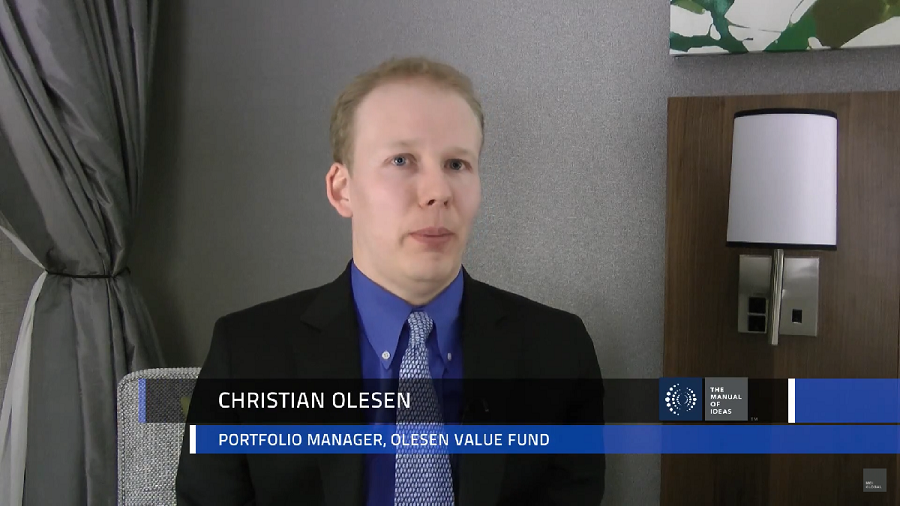
Cómo Hacer Seguimiento de las Ideas de Inversión a lo Largo del Tiempo

April 23, 2025 in Contenido Libre, MOI Global en Español, Videos

Christian Olesen, Portfolio Manager de Olesen Value Fund, habla sobre cómo hacer un seguimiento a las ideas de inversión a lo largo del tiempo.

El video tiene subtítulos al español. Para activarlos, dentro del recuadro del video, ve a “Configuración” → “Subtítulos“, y selecciona “Español“.

Los miembros de MOI Global pueden acceder a la transcripción completa.

Miembros, inicien sesión abajo para acceder al contenido restringido.

¿No eres miembro?

Gracias por tu interés. Ten en cuenta que MOI Global está cerrado para nuevos miembros en este momento. Si deseas unirte a la lista de espera para miembros hispanos, completa el siguiente formulario:

Laurence Endersen Discusses His Book, The Compounder’s Element

April 22, 2025 in Audio, Diary, Equities, Explore Great Books Podcast, GARP, Interviews, Invest Intelligently Podcast, Member Podcasts, Podcast, Reading Recommendations

We had the pleasure of speaking with fellow member Laurence Endersen about third book, The Compounder’s Element: A Patient Path to Prosperity. The interview was conducted by MOI Global chairman John Mihaljevic.

The Compounder’s Element explores what it takes for both investors and businesses to achieve exceptional long-term compounding of wealth. At its core is a “patient pursuit of prosperity” — the idea that the journey of consistent, long-term investing matters more than any short-term outcome. The book shares nuanced frameworks on compounding, highlighting how mindset, time horizon, and business quality intersect to drive superior results over decades.

A key theme is the mindset and behavior that distinguish great compounders. Laurence Endersen underscores virtues like patience, discipline, and long-termism as foundational. As Munger emphasized, “the first rule of compounding is to never interrupt it unnecessarily” — a warning against cutting short the growth of an investment through impatience or hasty profit-taking.

Laurence advocates planning for a long journey and finding joy in the investing process itself rather than fixating on immediate gains. This patient orientation helps investors ride out volatility and stay invested in high-quality businesses. Great compounders are rare. The fortitude to hold onto a winning business through thick and thin — even when it soars or during gut-wrenching drawdowns — is often what separates exceptional long-term investors from the rest. Temperament and steady behavior are vital to let compounding work its magic.

Another major theme is how long-termism and capital allocation discipline underpin compounding success at the business level. The Compounder’s Element provides frameworks for spotting “compounder-type” businesses — those with the right ingredients to reinvest and grow value year after year. Such companies typically exhibit outstanding economics: for instance, they earn high returns on invested capital and can redeploy those earnings at high rates of return over long periods. They often operate with durable moats that protect their market position and give them a long runway for growth.

Laurence emphasizes that management’s capital allocation decisions are critical. Leaders who practice discipline — reinvesting in high-return projects, avoiding value-destructive acquisitions, and returning excess cash prudently — create a virtuous cycle where earnings compound internally. By laying out traits like strong profitability, reinvestment opportunities, and enduring moats, the framework helps investors identify businesses capable of sustained compounding of intrinsic value. These are the companies that a patient investor can own for years, allowing the power of compounding to snowball.

Laurence highlights that true compounding success arises from the interplay between investor temperament, time horizon, and business quality. Even a superb business will not deliver its potential if investors lack the patience to hold it; conversely, a long-term investor holding mediocre businesses won’t achieve exceptional results. The greatest outcomes occur when a high-quality compounder is held by an investor with a suitably long time horizon. As Buffett famously observed, “the stock market is a device for transferring money from the impatient to the patient”.

Laurence’s insights reinforce that long-term compounding is both an intellectual and emotional endeavor: it requires analytical skill to find enduringly superior companies and the right temperament to weather the ups and downs along the way. These themes, explored in depth during John’s conversation with Laurence, offer a valuable perspective for seasoned value investors looking to deepen their understanding of compounding as an investment philosophy. By internalizing the compounder’s mindset and focusing on businesses built for long-term growth, investors can better position themselves to achieve the kind of steady, exponential wealth creation that defines great investment track records.

Enjoy the conversation!

Members, log in below to access the restricted content.

Not a member?

Thank you for your interest.  Please note that MOI Global is closed to new members at this time. If you would like to join the waiting list, complete the following form:

About the author:

Laurence Endersen originally studied law as a pathway to practicing taxation while also training as a chartered accountant. A move to Sydney, Australia in 1994 facilitated a career change to corporate advisory and project finance, before returning to Ireland in 1998 where he subsequently held a series of investment management roles across venture capital, structured securities, leveraged loans and listed equities. Laurence founded a private investment firm in 2015. He currently lives with his family in Dublin. Laurence has published two other books, Pebbles of Perception: How a Few Good Choices Make all the Difference and What Owen Didn’t Know: A Philosophical Fable.

About the book:

The Compounder’s Element is about the patient pursuit of prosperity. It’s a journey where the pursuit matters more than the prosperity, because when we are in our element the joy is in the journey.

Building wealth slowly and assuredly, through a patient path to prosperity, is a path that’s open to everyone. There are just a few key elements:

1. Plan for a long journey.
2. Enjoy the journey as its own reward.
3. Minimise the costs of mistakes along the way.

This book is written for anyone interested in public markets investing, either on their own account or on behalf of others.

It may also appeal to executives of public companies if they wish to better understand how they are viewed by stock market investors.

Who accompanies us on the patient path is just as important as where we are headed. A journey taken in good company becomes a joyful one.

The content of this website is not an offer to sell or the solicitation of an offer to buy any security. The content is distributed for informational purposes only and should not be construed as investment advice or a recommendation to sell or buy any security or other investment, or undertake any investment strategy. There are no warranties, expressed or implied, as to the accuracy, completeness, or results obtained from any information set forth on this website. BeyondProxy’s officers, directors, employees, and/or contributing authors may have positions in and may, from time to time, make purchases or sales of the securities or other investments discussed or evaluated herein.

Bestinver sobre Gerresheimer

April 21, 2025 in Ideas de inversión, MOI Global en Español

NOTA DEL EDITOR: La siguiente idea de inversión es obtenida de una carta trimestral de los fondos de Bestinver.

* * *

La oportunidad de inversión en Gerresheimer [GXI: ETR] reside en su transición estratégica desde un fabricante de envases genéricos para la industria farmacéutica, hacia un proveedor clave en el creciente mercado de los medicamentos biológicos y GLP-1. Un cambio que implica un aumento significativo de la calidad del negocio, impulsado por su potencial de crecimiento y la especialización en soluciones de alto valor añadido (cartuchos de vidrio tubular listos para llenado, plumas precargadas, viales para medicamentos líquidos con cierre de seguridad, etc.). La tesis de inversión se asienta en la valoración de sus acciones que, en nuestra opinión, no descuentan los retornos que va a obtener la compañía en los próximos años, ni la caja que va a generar el negocio cuando termine el actual ciclo de inversiones que está llevando a cabo.

Miembros, inicien sesión abajo para acceder al contenido restringido.

¿No eres miembro?

Gracias por tu interés. Ten en cuenta que MOI Global está cerrado para nuevos miembros en este momento. Si deseas unirte a la lista de espera para miembros hispanos, completa el siguiente formulario:


Bestinver sobre Airbus

April 18, 2025 in Ideas de inversión, MOI Global en Español

NOTA DEL EDITOR: La siguiente idea de inversión es obtenida de una carta trimestral de los fondos de Bestinver.

* * *

En Bestinver Grandes Compañías priorizamos empresas con ciclos largos de producto, poca volatilidad en sus negocios y altas barreras de entrada. Airbus [EPA: AIR] pertenece al selecto grupo de empresas que cumplen estos criterios, proporcionando a sus accionistas los dos mayores tesoros que puede tener el dueño de un negocio: crecimiento recurrente y alta rentabilidad sobre el capital.

Miembros, inicien sesión abajo para acceder al contenido restringido.

¿No eres miembro?

Gracias por tu interés. Ten en cuenta que MOI Global está cerrado para nuevos miembros en este momento. Si deseas unirte a la lista de espera para miembros hispanos, completa el siguiente formulario:


Zoomlion: Construction Machinery Leader Undergoing Structural Reform

April 17, 2025 in Asia, Asian Investing Summit 2025, Asian Investing Summit 2025 Featured, Audio, Discover Great Ideas Podcast, Equities, Ideas, Member Podcasts, Transcripts

Florian Weidinger of Santa Lucia Asset Management presented his investment thesis on Zoomlion Heavy Industry Science and Technology Co. Ltd. (HK: 1157) at Asian Investing Summit 2025.

Thesis summary:

Zoomlion is a Hunan-based SOE and a dominant player in China’s construction machinery sector, recently trading at 8.9x FY25E earnings with a 6.1% dividend yield. Despite its association with the struggling domestic real estate sector, the business is increasingly diversified, both geographically and across equipment categories. The company’s overseas operations—where gross margins are materially higher—are expanding rapidly, now supported by a structural mix shift into aerial work platforms, earth-moving, mining, and agricultural machinery. Zoomlion’s foreign sales are still at an early stage, but with only 10% global market share, the company sees significant headroom in Belt and Road countries, as well as emerging markets in Europe and South America.

The investment thesis is anchored by multiple variant views on China. First, SOEs like Zoomlion, once seen as value traps, are undergoing structural reform. Incentives have shifted from asset hoarding to return optimization, leading to better capital allocation, dividends, and buybacks. Zoomlion is 15% owned by management and insiders—including through ESOPs—while the Hunan government retains a 14.5% stake. This alignment is reinforced by corporate actions: in October 2024, the company announced intentions to buy back H-shares, providing additional shareholder support.

Second, Zoomlion is a direct beneficiary of narrowing valuation gaps between its Hong Kong-listed H-shares and the more expensive Shanghai-listed A-shares. With a 32% A-H discount, the H-shares provide a margin of safety, and increasing Southbound interest—Chinese investors using Hong Kong’s Connect program to buy local equities—offers a catalyst for re-rating. Southbound Connect ownership of Zoomlion’s H-shares rose from 9% in June 2023 to nearly 29% by March 2025, reflecting growing domestic investor confidence in its international prospects and governance reform.

Finally, this is a business that’s being overlooked due to stale narratives. While domestic construction demand has weakened, replacement demand, policy moderation, and a sizable installed base offer downside protection. With foreign revenue ramping up, a structurally improving mix, and strong insider ownership, Zoomlion offers an underappreciated way to participate in both SOE reform and China’s shifting global industrial footprint. Investors are getting paid to wait through an above-market dividend and potential for valuation convergence, making Zoomlion a classic value play with meaningful optionality and multiple paths to upside.

The full session is available exclusively to members of MOI Global.

Members, log in below to access the full session.

Not a member?

Thank you for your interest.  Please note that MOI Global is closed to new members at this time. If you would like to join the waiting list, complete the following form:

About the instructor:

Florian Weidinger is the CEO of Santa Lucia Asset Management (SLAM), a pan-Asian Singapore-based investment management business. Prior, he was the founder of Hansabay a specialist in active engagement and special situation investing, and one of the early adopters of the PRI Principles for Responsible Investment in Singapore. Hansabay contributed its activities into SLAM during 2021. Earlier in his career, Florian Weidinger was a vice president at Lehman Brothers where he last worked for the insolvency administration, after several years with the risk arbitrage, principal investing and investment banking divisions in London. Mr. Weidinger has sourced, managed and executed public and private investments in Europe, Africa and Asia, and across the capital structure. Strategies included event-driven, long/short, distressed/credit and special situations investing. Mr. Weidinger has held multiple board directorships across sectors, including in the public markets. Mr. Weidinger holds a BSc from City University London, an MBA from the Stanford Graduate School of Business, and an MS in Environment and Resources from Stanford University’s School of Earth Sciences.

The content of this website is not an offer to sell or the solicitation of an offer to buy any security. The content is distributed for informational purposes only and should not be construed as investment advice or a recommendation to sell or buy any security or other investment, or undertake any investment strategy. There are no warranties, expressed or implied, as to the accuracy, completeness, or results obtained from any information set forth on this website. BeyondProxy’s officers, directors, employees, and/or contributing authors may have positions in and may, from time to time, make purchases or sales of the securities or other investments discussed or evaluated herein.

IndiGo: India’s Dominant Airline, With Long Runway of Growth

April 17, 2025 in Asia, Asian Investing Summit 2025, Audio, Discover Great Ideas Podcast, Equities, Ideas, Member Podcasts

Rajeev Mantri of Navam Capital presented his in-depth investment thesis on InterGlobe Aviation Ltd (India: INDIGO) at Asian Investing Summit 2025.

Thesis summary:

InterGlobe Aviation, which operates under the IndiGo brand, is India’s largest and most dominant airline, recently accounting for over 63% market share in the domestic market and operating more than 2,200 daily flights to 128 destinations. Founded in 2006, IndiGo has emerged as the world’s most highly valued airline by capitalizing on a simple but robust low-cost carrier model emphasizing affordability, operational efficiency, and reliability. The company recently expanded its capabilities by ordering 30 Airbus A350-900s to strengthen its long-haul fleet and international presence.

India’s civil aviation market has undergone radical transformation over the past decade, marked by government support, infrastructure expansion, and the exit of several legacy carriers. IndiGo has emerged as the key beneficiary of this evolution, having steadily gained market share while competitors struggled with profitability and scale. IndiGo’s domestic market share has expanded sharply from around 30% in 2014 to over 60% in 2025, even as the broader industry grew in volume and outbound international travel surged.

The company’s highly standardized fleet, no-frills service model, and tech-enabled processes drive industry-leading cost efficiency and high aircraft utilization. These operating advantages, along with the scale of its network and brand loyalty, position IndiGo to ride a long S-curve of growth driven by rising discretionary incomes and government emphasis on regional and international connectivity. The business has delivered consistently strong earnings growth and has been a multi-bagger over the past five years.

The shares recently traded at ₹5,151, with a market capitalization near ₹2 trillion and an EV/EBITDA of 12.8x. With net profit at ₹60.7 billion and ROCE of 24.5%, IndiGo combines robust financial performance with long-term structural tailwinds. Risks include macroeconomic shocks, competitive intensity, and operational constraints tied to aircraft and crew availability, but its high promoter ownership, institutional backing, and proven ability to scale mitigate many of these challenges. For investors seeking exposure to a rapidly expanding consumer sector with clear leadership and compounding potential, IndiGo remains an attractive opportunity.

The full session is available exclusively to members of MOI Global.

Members, log in below to access the full session.

Not a member?

Thank you for your interest.  Please note that MOI Global is closed to new members at this time. If you would like to join the waiting list, complete the following form:

About the instructor:

Rajeev Mantri is managing director of Navam Capital, an India-focused investment firm. Prior to founding Navam Capital, Rajeev worked as a venture capitalist at New York-based Lux Capital, focusing on investments in energy, water and nanomaterials. Rajeev has contributed columns and articles on technology, investing, venture capital and political economy to The Wall Street Journal, Mint, Swarajya, Financial Times, The Indian Express, The New York Times International Weekly, Roubini Global Economics and other publications. In August 2010, Rajeev co-founded Vyome Therapeutics, a biopharmaceuticals company, and served as Vyome’s president through the company’s formative years. Rajeev graduated with a BS in materials science and engineering from Northwestern University, and an MBA from Columbia Business School, specializing in private equity and value investing. Rajeev is the author (with Harsh Madhusudan) of the book, A New Idea Of India — Individual Rights In A Civilisational State, an international best-seller on the history and future of modern India covering a diverse range of topics in economics, foreign policy and politics.

The content of this website is not an offer to sell or the solicitation of an offer to buy any security. The content is distributed for informational purposes only and should not be construed as investment advice or a recommendation to sell or buy any security or other investment, or undertake any investment strategy. There are no warranties, expressed or implied, as to the accuracy, completeness, or results obtained from any information set forth on this website. BeyondProxy’s officers, directors, employees, and/or contributing authors may have positions in and may, from time to time, make purchases or sales of the securities or other investments discussed or evaluated herein.

MOI Global