Sandstorm Gold: FCF Enables Investments and Buybacks

April 22, 2019 in Equities, Ideas, Letters

This post is excerpted from a letter by MOI Global instructor Jim Roumell, partner and portfolio manager of Roumell Asset Management, based in Chevy Chase, Maryland.

Sandstorm Gold reported very strong fourth quarter results. SAND sold 14,182 gold equivalent ounces in the fourth quarter, an increase of 18% from the prior year. Revenue for the quarter came in at $17.5 million, an increase of 14% from the prior year. Cash flows from operating activities (excluding non-cash working capital) for the quarter came in at $10.9 million, an increase of 14% from the prior year. Of the gold equivalent ounces sold by SAND during the fourth quarter of 2018, approximately 32% were attributable to mines located in Canada, 25% from the rest of North America and 43% from South America and other countries.

In addition to the very strong fourth quarter, SAND delivered record full year 2018 gold equivalent ounces sold and revenue. For 2018, SAND’s average cash cost per gold equivalent ounce was only $278 per ounce. This resulted in impressive cash operating margins of $991 per ounce. The combination of the increased sales and strong operating margins resulted in full year operating cash flow of $48.1 million, an increase of 9.3% from 2017.

SAND’s strong cash flow generation has provided ample liquidity to make investments and repurchase shares when the company deems the stock to be undervalued. During the fourth quarter, SAND’s Board of Directors approved the purchase of up to 18.3 million of its common shares by the end of 2019, subject to Toronto Stock Exchange approval. This 18.3 million share repurchase approximates 10% of the total shares outstanding.

Members, log in below to access the restricted content.

Not a member?

Thank you for your interest.  Please note that MOI Global is closed to new members at this time. If you would like to join the waiting list, complete the following form:

The specific securities identified and described do not represent all of the securities purchased, sold, or recommended and the reader should not assume that investments in the securities identified and discussed were or will be profitable.

Errores de Inversión: OHL

April 22, 2019 in Miscelánea, MOI Global en Español

NOTA DEL EDITOR: El siguiente texto escrito por Javier Ruiz, CFA,  es un extracto de una carta trimestral de Horos Asset Management.

* * *

En el mundo de los negocios, las malas noticias suelen aflorar en serie: si te encuentras con una cucaracha en tu cocina, según pasen los días, conocerás a sus familiares.
— Warren Buffett

El segundo error de inversión que vamos a comentar es aún más doloroso por la manera en que se ha producido y, especialmente, por su impacto en la rentabilidad de nuestros fondos. Se trata de OHL [BME: OHL], inversión por la que hemos apostado a lo largo del último año y cuyo deterioro, adelantado en la última carta trimestral, nos ha llevado a su liquidación.

En su inicio, se trataba de una inversión tan fácil y tan clara que, como se terminó demostrando, era demasiado buena para ser verdad. La venta de OHL Concesiones supuso un cambio absoluto en el perfil financiero de la compañía, dejando su balance con una posición de caja neta muy importante, hasta el punto de que hubo momentos en los que esta caja, incluso asumiendo salidas futuras por necesidades de circulante y pérdidas por proyectos en curso, era superior al valor bursátil de OHL. Esto despertó nuestra atención. No entendíamos que se pudiera estar produciendo esta aparente ineficiencia en el mercado. Conocíamos sobradamente la histórica gestión del equipo directivo, pero el margen de seguridad era, en ese momento y con los datos encima de la mesa, tan claro que decidimos realizar una inversión muy significativa en la compañía. En cierto sentido, se puede decir que acudimos como abejas a un tarro de miel, sin cuestionarnos si había gato encerrado.
Continue reading »

Howard Marks on the Importance of Experience

April 20, 2019 in Interviews, Video Excerpt, YouTube

In the following excerpt from an exclusive interview with MOI Global, Howard Marks, co-chairman of Oaktree Capital Management, reflects on the significance of experience in investment management.

Learn more and see the full interview with Howard.

Since the formation of Oaktree in 1995, Howard Marks has been responsible for ensuring the firm’s adherence to its core investment philosophy; communicating closely with clients concerning products and strategies; and contributing his experience to big-picture decisions relating to investments and corporate direction. From 1985 until 1995, Howard led the groups at The TCW Group, Inc. that were responsible for investments in distressed debt, high yield bonds, and convertible securities. He was also Chief Investment Officer for Domestic Fixed Income at TCW. Previously, Howard was with Citicorp Investment Management for 16 years, where from 1978 to 1985 he was Vice President and senior portfolio manager in charge of convertible and high yield securities. Between 1969 and 1978, he was an equity research analyst and, subsequently, Citicorp’s Director of Research. Howard holds a B.S.Ec. degree cum laude from the Wharton School of the University of Pennsylvania with a major in finance and an M.B.A. in accounting and marketing from the Booth School of Business of the University of Chicago, where he received the George Hay Brown Prize. He is a CFA® charterholder and a Chartered Investment Counselor. Howard serves on the Investment Committee of the Helmsley Charitable Trust, the Board of Trustees of Mount Sinai Hospital, and the Board of the University of Pennsylvania, where from 2000 to 2010 he chaired the Investment Board.

Thoughts on Fossil Fuels and Global Warming

April 19, 2019 in Commentary, Energy, Europe, Letters

This article by MOI Global instructor Robert Leitz is excerpted from a letter of Iolite Partners, based in Switzerland.

“If a problem has no solution, it may not be a problem, but a fact – not to be solved, but to be coped with over time.” –Shimon Peres

Earlier this year, Germany announced it would exit coal power generation by the year 2038. Prior to this, Norway (a country whose wealth is almost entirely based on fossil fuels) and the Rockefeller family charity started to divest their stakes in businesses related to fossil fuels. Accomplished investor Jeremy Grantham has publicly stated “thermal coal is dead meat”.

These attention-grabbing headlines make you believe humanity has made great strides and is winning the fight against global warming. In my opinion, a quick look at the facts reveals the material disconnect between this feeling and reality. It seems the (Western) mainstream is driven by wishful thinking and emotion, not rational thought.

Economic prosperity is closely linked with the availability and consumption of electricity. From 2000-2017, global energy consumption increased by about 44%, at an annual growth rate of about 2.2%, while the world’s population increased by 23%. Fossil fuels account for about 85% of the global energy mix, and that share hasn’t changed much since the 1970s. This means the world keeps consuming more coal, gas, and oil.

Over the next two decades, in the absence of a major catastrophic event, the world’s population is likely to grow by more than one billion people and some two billion people are expected to join the “developed” world. Consequentially, the world’s hunger for energy will increase.

The U.N. Intergovernmental Panel on Climate Change found that global emissions would have to be cut nearly in half by 2030 to preserve a chance of capping the planet’s warming to 1.5 degrees Celsius (or 2.7 degrees Fahrenheit).

This goal seems utterly unachievable, given the growing demand for energy and how the world is generating its electricity. As of today, no impactful progress has made to reduce the world’s dependency on fossil fuels and thereby lower CO2 emissions. Any industrialized nation requires reliable baseload (the permanent minimum load that a power supply system is required to deliver). Unfortunately, wind and solar are unreliable sources of energy and we currently also lack the ability to store electricity on a large scale. Hence, nuclear power and fossil fuels are essential pillars of any energy mix.
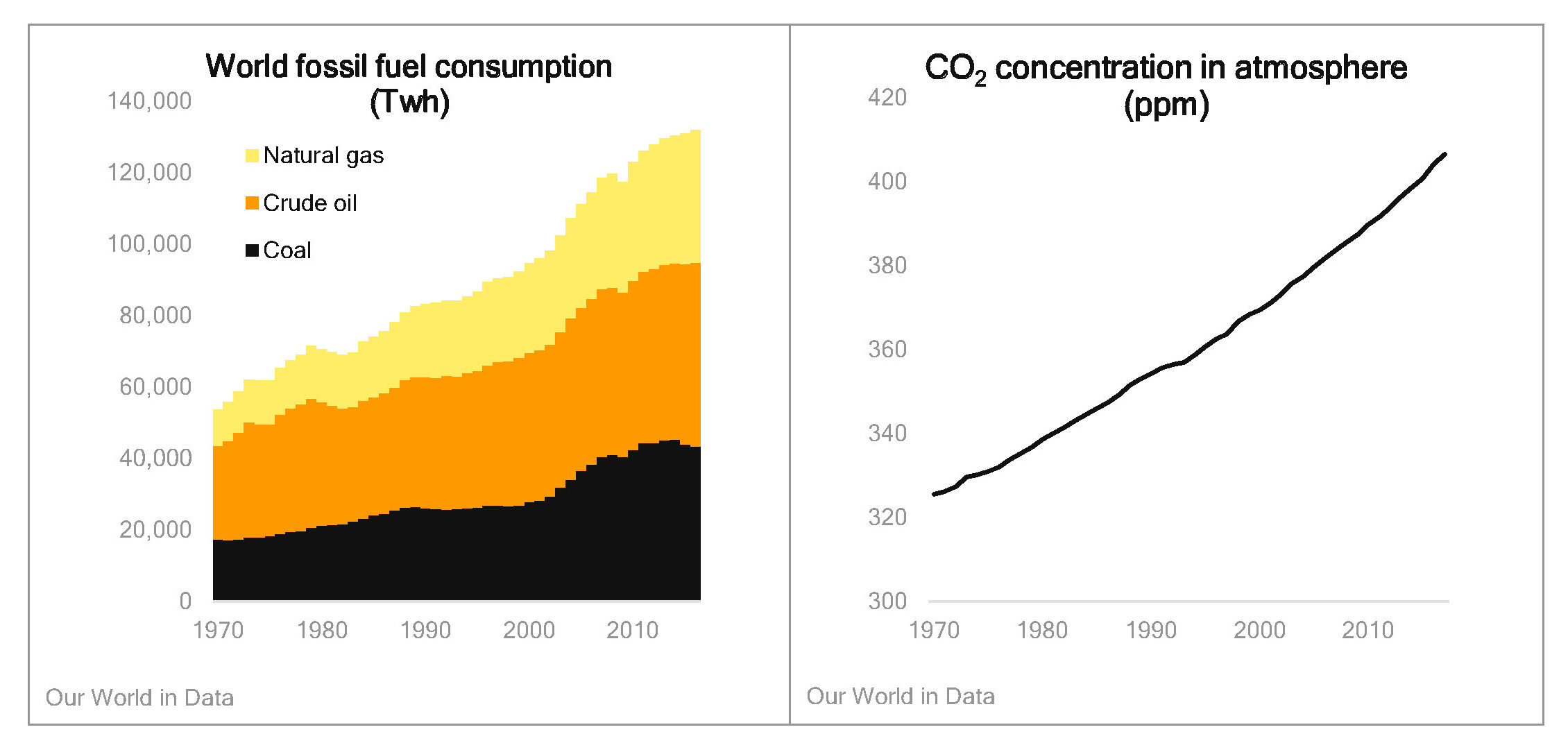
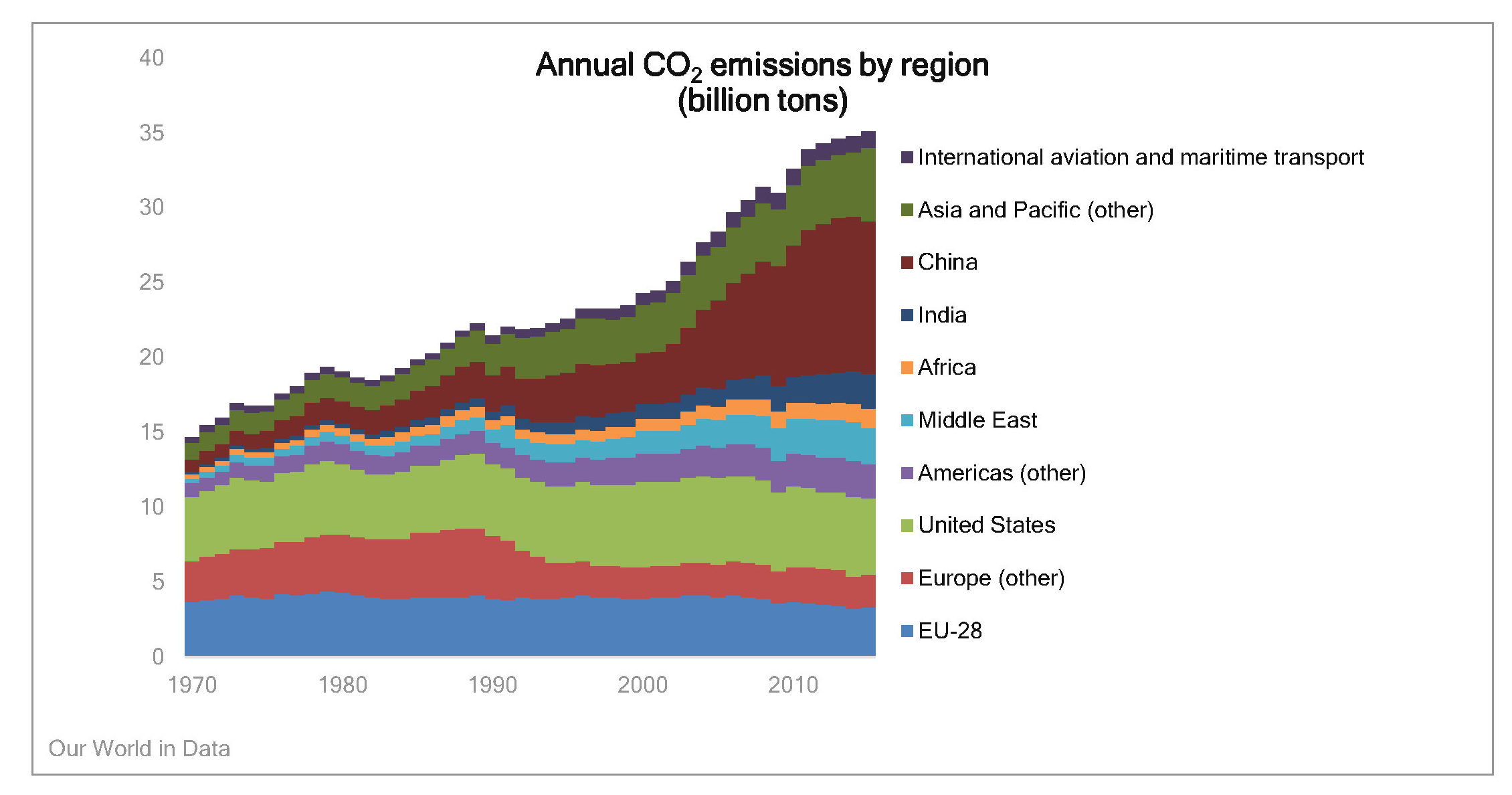
Let’s spotlight a few issues.

Coal

Coal is one of the worst climate offenders. However, coal is also a cheap, reliable and simple way to generate electricity, and therefore the preferred energy source in many developing countries. It makes up about 40% of global electricity generation. Global demand and supply are growing as lower consumption in “Western” nations is offset with growth in “developing” regions such as China, India, Pakistan, and Southeast Asia. In 2018, coal emissions were at the highest level, ever. Developing nations will look to roll out cheap energy first and we can’t deny people the right to live a modern life.

Renewables

Germany is widely considered a role model in the fight against climate change. It is estimated that the country has invested something like US$ 500+ billion into wind and solar over the last two decades. All coal power supply is to go offline by 2038, and all nuclear power reactors are supposed to go offline by 2022.

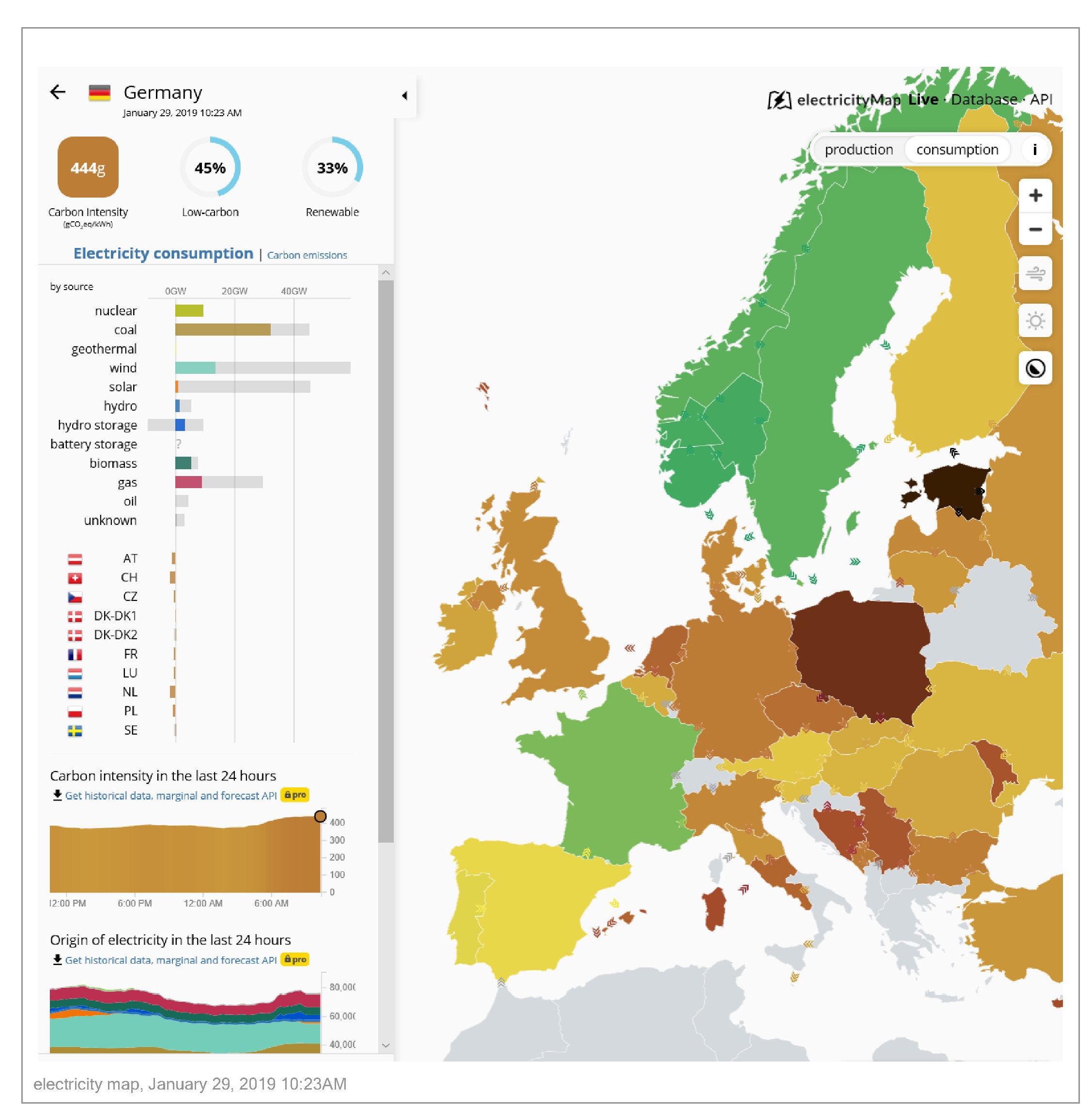
Despite the green headlines, Germany is one of Europe’s worst CO2 offenders with an average output of 450g/kWh. Fifty percent of Germany’s energy supply still comes from coal and nuclear (and up to 70% at night and when the wind is not blowing).

Germany’s recent announcement to shut down 50% of its power supply was made without a viable domestic alternative to rely on. In the absence of a major technological breakthrough regarding battery technology, Germany will have to import more energy from its neighbors in times of peak demand (i.e. nuclear from France or coal from Eastern Europe) and increasingly rely on gas sourced from Russia and the Middle East. Does this sound like a good plan?
Nuclear

A look at the electricity map also reveals that Europe’s cleanest energy producers are France (c. 75g/kWh, nuclear), Sweden (c. 50g/KWh, nuclear), and Norway (c. 50g/kWh, hydro). Hydro is restricted to geography (in Europe mainly to Norway, Switzerland, and Austria). Regarding nuclear: it took France and Sweden about 15 years each to roll out their nuclear programs and almost go emission-free. China is in process to materially increase its nuclear electricity generation, and this development could have a very positive impact on the country’s carbon footprint.

People with a rational mindset and not driven by fear and popular opinion are aware of the positive impact modern nuclear power can have on a country’s ability to produce clean energy. One of them is Bill Gates, who is supporting various projects in the field, for example Terrapower, a company working on a next generation reactor that uses nuclear waste to generate safe energy. Unfortunately, attempts to build a prototype reactor in China were halted given the current trade tensions between the U.S. and China.

Concluding thoughts

Despite many conferences on climate change, billions of dollars spent on research, glossy corporate brochures and enough public awareness, we haven’t made notable progress reducing CO2 emissions from fossil fuels on a global basis. Given the circumstances, a meaningful reduction of fossil fuels (in the absence of a huge nuclear rollout, material investment into carbon capture technologies, or a breakthrough in battery technology) in the next two decades is unlikely.

Members, log in below to access the restricted content.

Not a member?

Thank you for your interest.  Please note that MOI Global is closed to new members at this time. If you would like to join the waiting list, complete the following form:

This information is not intended as financial advice and provided for general information only. It is not a solicitation to buy or sell shares. The historical performance is not indicative of the future. This report or any portion hereof may not be reprinted, sold or redistributed without our prior written consent.

El sector pétroleo en el 1T19

April 19, 2019 in Industrias, MOI Global en Español

NOTA DEL EDITOR: Este texto es un extracto de un comentario de Prime Value.

* * *

Explicación de lo que ocurrió el año pasado:

El anuncio de estas sanciones llevó a la OPEC+, en su reunión del 22 de junio en Viena a anunciar que aumentaba sus exportaciones, en gran parte para suplir la reducción estimada de Irán, especialmente KSA. El mercado, lejos de descontar que la industria estaría equilibrada, se preocupó por estas sanciones así como por el crecimiento del shale debido a problemas de capacidad con las pipelines, lo que llevó el precio del Brent a $86 a comienzos de octubre.

A principios de noviembre Donald Trump anuncia exenciones para 8 países a las sanciones de Irán. Irán no ve reducidas las exportaciones en lo estimado, la OPEC+ ya ha comenzado a aumentar sus exportaciones, a esto se une que de nuevo el shale sorprende en su crecimiento y que el mercado global sufre una corrección debido a una preocupación por el crecimiento global de la economía. El crudo entra en pánico y los precios caen más de un 40% en menos de 3 meses.

Continue reading »

Idea Thesis Summaries from Asian Investing Summit 2019

April 18, 2019 in Asian Investing Summit, Asian Investing Summit 2019, Diary, Equities, Ideas

The following idea snapshots have been provided by the respective instructors or compiled by MOI Global using information provided by the instructors. For the full investment theses, please review the in-depth slide presentations and replay the conference sessions.

Please note: This post covers selected sessions only. Browse all sessions.

Members, log in below to access the restricted content.

Not a member?

Thank you for your interest.  Please note that MOI Global is closed to new members at this time. If you would like to join the waiting list, complete the following form:

MOI Global