
Impressions from Ideaweek St. Moritz 2019

February 18, 2019 in Diary, Ideaweek

The following update is shared by John Mihaljevic, chairman of MOI Global, with input from selected Ideaweek participants.

Be sure to review timeless insights from Ideaweek St. Moritz 2018 as well.

“Ideaweek is rich and intense. Insights and sagacity are shared with humility and received with a profound hunger for lifelong learning. Friends share their perspectives on the sources of failures and successes in business and in life. It’s a privilege to be part of a community with such a culture of open-mindedness and intellectual generosity.”

–Mark Walker, Tollymore Investment Partners

I am pleased to include below selected Ideaweek impressions, shared by this year’s participants. I hope you’ll pardon the hyperbole in some of the takeaways — it was a fabulous week, but this was entirely due to the quality of the participants themselves. My job was easy: Get smart people together and don’t stand in the way of serendipity!

Elliot Turner, Managing Director of RGA Investment Advisors in Stamford, Connecticut, journaled his Ideaweek experience. Here is an excerpt, highlighting a few themes and conversations:

  • Investing is really hard. It’s hard not to dwell on that sitting in a room with brainpower that rivals a well-positioned datacenter. Worse yet, we’re inherently climbing uphill against behavioral limitations and base rates which suggest failure is far more common than we like to believe as investment managers.
  • How should we think about position management? Is the use of “turnover” in describing my own strategy descriptive or prescriptive? The goal is to be descriptive, but can one behaviorally separate the communication of a target from it becoming an actuality?
  • The perspective of Europeans on this moment in history between Brexit, the EU crisis, the yellow vests and the rise of nationalism alongside our place as Americans in this big mess. This is something I have largely been lacking from my seat in the US.
  • Is “technology” an appropriate label for a sector or a business? Have we reached a place in the Internet’s history where we can isolate the business as separate and apart from “technology” or is there a chronically volatile landscape that we should fear amidst rapid change?
  • Several fascinating business models including “plastic crack for nerds,” “big fish in small ponds,” the “repurposing of commercial real estate” and how to change behavior and share risk using data. We need to consider all kinds of leverage, including “reputational leverage.”
  • How to be a better parent. “Your kid is not your ego.” Look for latent tendencies and observe what inspires your child(ren). Talk to your kids as adults.
  • How to learn and the meaning of life — in an engaging conversation on the Art of Learning we started with how a chess master was able to “hack” the learning curve and become a Tai Chi master. We moved to a somewhat open-ended exploration on the meaning and origin of life and the role of spirituality.
  • How do you start small and build a great investment firm? What are some best practices? What kinds of communications resonate with the right target audience(s)? How do you institutionalize a decision-making process that takes opinions from a handful or more people, makes the best decisions possible, while also letting everyone involved feel like a stakeholder?
  • Who are some of the under-the-radar, outstanding investors that share their thought process and ideas? I left with a huge list of YouTube videos and Podcasts to track down on a variety of topics. Special shout-out to Paul Lountzis’ “On Differential Insights.”

Elliot delivered a structured talk to the group on the topic of position management:

“I was a little nervous picking this topic, because it’s something I think about a lot though hardly see any literature on. I spoke about how I never buy my full position right away and take at least a quarter to round out to target size. I find considerable benefit from this “imposed patience,” because in the transition from observer to owner you take what’s a backward looking narrative and start watching the world in a hypothesis–>test mode. In doing so, you can strip away some of the biases and perhaps even glean insight into key inflection points on your thesis along the way. It was amazing to see how much the topic resonated with so many in the room.”

“The talk turned into a moderated discussion with outstanding contributions from the field and a fascinating book recommendation, The Art of Execution. As an avid reader, I am embarrassed to admit that I didn’t know this book existed, alas I am lucky to now have it high up on my reading list. Position management became a topic that just about everyone spoke about in more than one context for the remainder of the trip. The pent-up interest in the topic makes me wonder what other topics we all as investors think about, though don’t speak much about. Perhaps something like “scuttlebutt techniques” fits the bill?”

Chris Mayer, Portfolio Manager of Woodlock House Family Capital, based in Gaithersburg, Maryland, reflected on Elliot’s talk:

“One of his observations stuck with me: How position sizing can help a mediocre investor deliver good returns and, conversely, how it can also be responsible for a good investor delivering poor returns. The idea being that position-sizing can be a core competence in helping determine returns is a powerful idea. The group’s discussion around this idea was very interesting.”
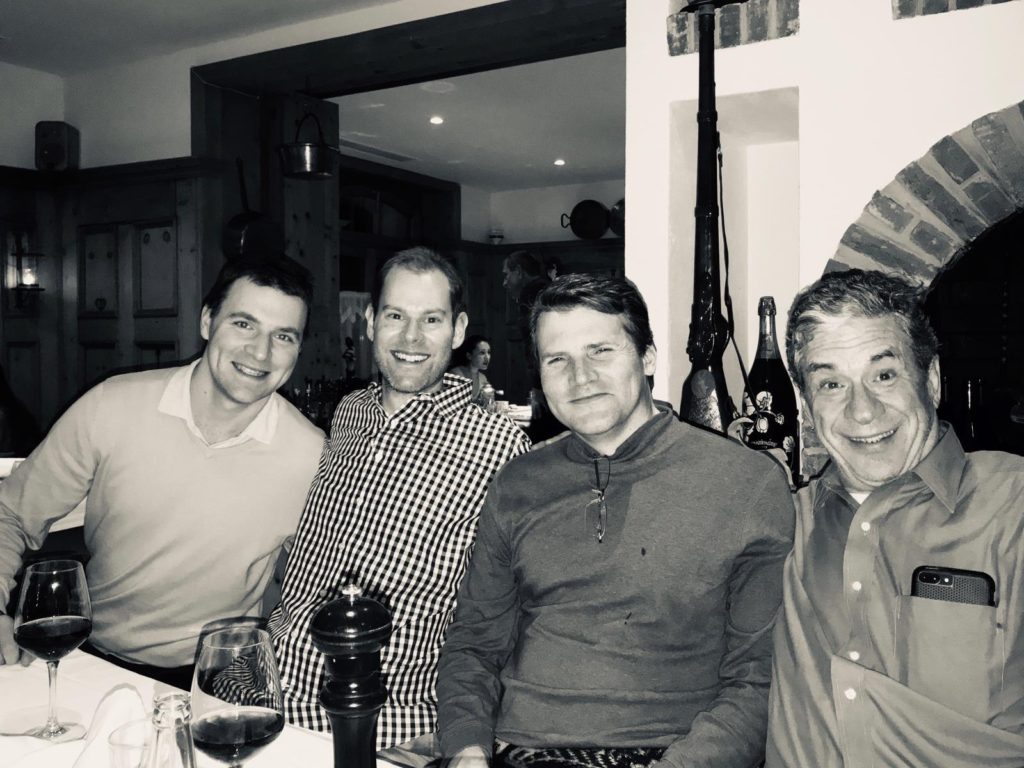
Gary Mishuris, Managing Partner and Chief Investment Officer of Silver Ring Value Partners, based in Boston, highlighted the following insight gleaned during Ideaweek:

“A fellow participant described how he made ~7x investing in a Brazilian retailer in 2015, yet considered the investment a mistake. He had analyzed a competitor that had an improving online business model; he dismissed it and ended up missing out on a ~100x return. The insight was to not just look for good businesses, but to focus on increasingly good businesses. As a result, I will go through my portfolio and other companies I cover and grade them as to whether they are structurally getting better, worse, or staying the same, in addition to my usual process of rating how good they are at a point in time. Direction of change can be more important than the level.”

Serge Belinski, Founder of Value Holdings SAS, based in Paris, summed up his experience as follows:

“Ideaweek was an incredible opportunity to learn from people of various experiences and horizons in a friendly atmosphere. In a matter of days, I came back with great insights on investing, entrepreneurship and even parenting: How can we possibly ask for more?”

“Experienced entrepreneurs showed me how it is possible to use both opportunities and mistakes as assets to achieve desired outcomes. Experienced investors generously shared their investment frameworks and outcomes while younger, promising investors with different investment processes also helped enrich my view of the world.”
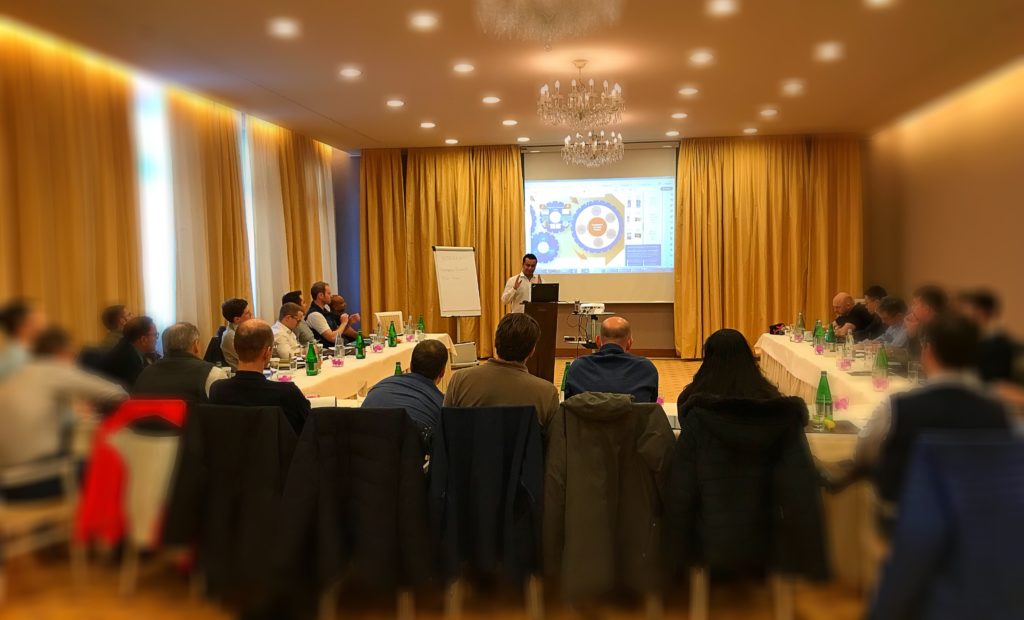
Sid Choraria, Asian Equities Portfolio Manager in Singapore, commented:

“Ideaweek was the best investment conference I have attended in my investing career, it was transformational and life changing in many ways. Set in a dream setting in St. Moritz, Switzerland, John handpicked an exceptional group of value investors from 25+ countries, bringing unique experiences from family offices, sovereign wealth funds, allocators, portfolio managers, and analysts from the U.S., Asia, Europe, and entrepreneurs who have founded their own investment companies.”

“The right balance of investment and non-investment activities made for an ideal setting to learn and reflect on investment successes and mistakes. This sets Ideaweek apart from any other conference in the world. I was blown away by the talent in the room but, importantly, what set the group apart were humility and curiosity, despite everyone being very accomplished already. I have been to other conferences at which ‘star’ investors pitch their ‘best’ ideas – and have come away less than impressed. Ideaweek was the perfect setting and I would be honored to attend every year and any event organized by MOI Global. If John is there, count me in!”

“There were many exceptional conversations — I’ll mention two of them: A conversation with Chris Mayer, author of my favorite investment book, 100 Baggers, reinforced the importance of reinvestment opportunities. I also had a profound conversation with Henry Patner, one of the smartest investors I have ever met. The conversation centered on investing in Asia, focused on wonderful businesses at wonderful prices. It reconfirmed the validity of Charlie Munger’s advice, to ‘fish where the fish are.'”

“I came away excited about the opportunity in relatively inefficient Asian markets for my multi-decade life journey as an investor. Ideaweek showed just how smart some investors are in the U.S. and Europe. Asia does have less competition and reinvestment opportunities are large. To quote my favorite company in Japan, Kobayashi, I want to be a ‘big fish in a small pond’, fishing in Asian markets for the rest of my life.”
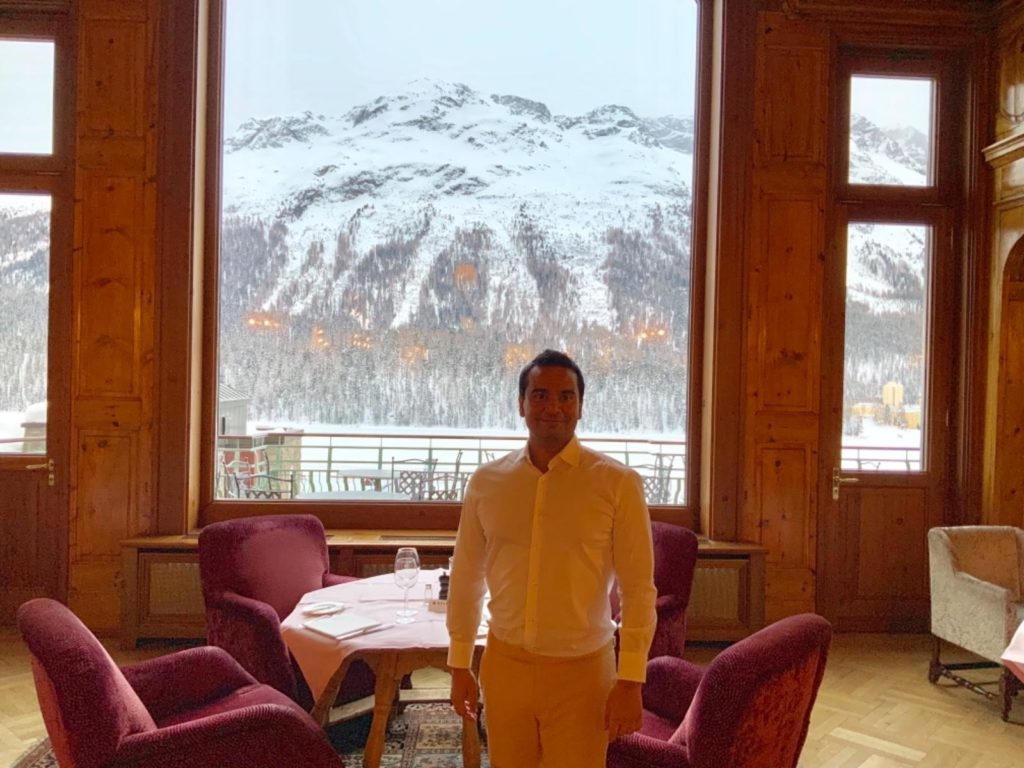
David Eborall, Director of Investments at SaltLight Capital Management in South Africa, observed: “Sometimes it’s a simple statement from which a bounty of knowledge can be gleaned. I observed that investors are becoming more entrepreneurial (perhaps by necessity), and the traditional investment business model of gathering a few clients in segregated accounts is morphing into entrepreneurs with many lines of business. My favorite topics were position execution, tending to your environment, and the many book ideas I received.”

Gary J. Yarus, President of Diversified Capital Corporation, based in Miami Beach, Florida:

“Ideaweek presented an amazing opportunity to interact, share, and grow. At home, in Miami, Florida, I have known my colleagues for years. We share ideas regularly. In fact, I know what their advice would be in advance. What a rare opportunity John provided for us: Place a dynamic, proven, talented group of advisors, who had not met before, in a remarkable setting…. and, wow! My perspective was broadened by our interactions. Going forward, my outlook will be more global, as our meeting sparked my interest in international and emerging markets. I thank you all for a terrific and stimulating week, and thanks for the concrete takeaways.”

Anuj Didwania, Chief Investment Officer of Redart Capital Advisors in Mumbai, India, reflected on a conversation with a fellow participant:

“We discussed the factors that lead to wealth creation in a country or community. For example, Japan rose like a phoenix (economically speaking) from the devastation of World War II. And yet, regions within Japan had divergent GDP-per-capita growth, i.e., some regions were more affluent than others. We found this fascinating considering that the regions tended to have similar factors at play in terms of the government, legal system, cultural background, educational level, etc. It was fascinating to try to decipher the reasons for the differences in economic success in light of the geographic proximity of the various regions.”

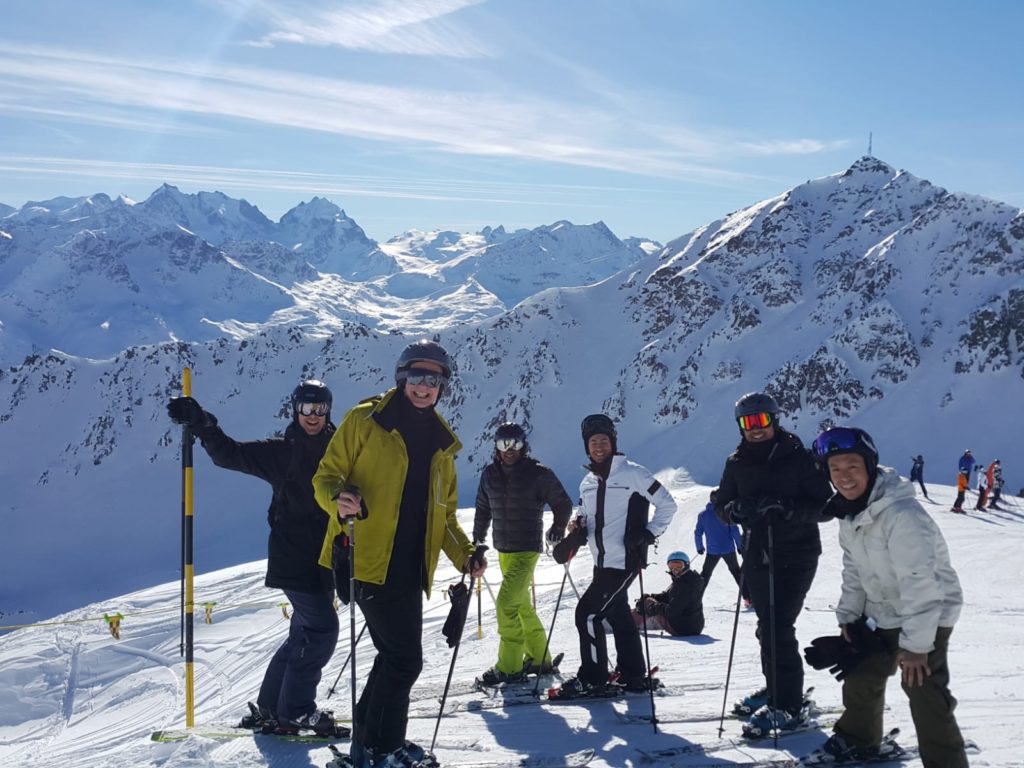
Clement Loh, Investment Manager of Lion Rock Partners, based in Hong Kong, related a personal experience on the ski slopes to investing:

“A group of us agreed to ski down a long run to start the day. Since we went as a group, I never bothered with the trail map. As we started the run, a few peeled off into what I thought was a short cut through an ungroomed portion of the mountain and I was happy to follow. That’s when trouble hit. It turns out that skiing in powder requires a different technique — you must carry enough speed so you can float above the loose snow. My skis were the narrow “all terrain” type and sank into the snow. I soon found the skis above my head. It took me quite a long time to dig out and even longer to inch myself back to the groomed trail. Luckily, the group was kind enough to message me their coordinates and I was able to meet them back on the lift.”

“While I was waist deep in the snow, a conversation about knowing oneself came back to me. It was certainly comforting to follow the group down the mountain but I really should have read the map to have an idea of where I was going. I also did not account for my ability to ski through unfamiliar terrain without the right experience and equipment. I can think of many sub-optimal investments where I was attracted by a well-presented thesis that did not work out because it wasn’t right for me. The next time I am tempted to take a shortcut, I will remember my adventure in the deep snow of St. Moritz.”
A participant from Basel, Switzerland, highlighted this takeaway:

“A key learning was the importance of developing a specific focus area, a well-defined circle of competence. There are so many companies and industries, it’s impossible to know and be good at everything. It’s important to have the courage to specialize. I was impressed by the participants that applied this principle and had a clear focus, be it consumer companies in Asia, South African stocks, or resource and energy companies.”

Peter Platzer, chief executive officer of Spire Global, highlighted the following:

“I was particularly struck by the amazing story of Gary Yarus. It was inspirational to listen to his many paths, the incredible tenacity he showed in forging his life’s story. Most importantly, however, was the sheer amount of positive energy he radiated and transferred to the group. The kicker was when he revealed that he is in his seventies, something I would have never guessed by his youthful attitude, openness, and sheer energy. It was a privilege to meet him and a great example of the type of people John is able to entice to come.”

Sanjay Voleti, a private investor in real estate and public markets, based in Santa Monica, California, summed it all up as follows:

“I am beginning to see the Ideaweek experience — set in the great nature of the Engadin — as an exponential function of John’s intrinsic (and ever compounding) knowledge, wisdom, and generosity. Ideaweek grows into a snowball of wonderful insights and goodwill from everyone. This says so much about not only the starting conditions but also the MOI Global community and every person and subtlety, which combine to become the Ideaweek experience!”

Here’s to a terrific year and to seeing you at Ideaweek St. Moritz 2020!

Highlighted Tweet by dhh

February 18, 2019 in Twitter

EQUAM Capital sobre Sesa

February 18, 2019 in Ideas de inversión, MOI Global en Español

NOTA DEL EDITOR: Estas ideas de inversión presentada son extraídas de una carta de EQUAM Global Value Fund.

* * *

Sesa [BIT: SES] es una compañía italiana líder en ese país en la distribución de software y soluciones informáticas de valor añadido para pequeñas y medianas empresas. Se trata de una compañía que cumple todos nuestros criterios de inversión:

  • Sector con claras barreras de entrada (es necesario cerrar acuerdos con las grandes compañías internacionales del sector IT) y un negocio con altos retornos sobre el capital y gran capacidad de generación de caja. Además se trata de un negocio en crecimiento sin una exposición excesiva al ciclo económico.
  • Compañía con un muy bajo perfil de riesgo ya que mantiene una posición de caja neta en su balance.
  • Los fundadores de la compañía son los gestores y principales accionistas lo que permite que exista una buena alineación de intereses.

Continue reading »

Bruce Flatt on Durable Principles for Real Asset Investing

February 15, 2019 in Curated, Full Video, Interviews, Materials, Real Estate, Timeless Selections, Transcripts, YouTube

Bruce Flatt, CEO of Brookfield Asset Management, participated in the “Talks at Google” series in 2018, sharing his principles for real asset investing. The Q&A session following Bruce’s talk was moderated by Pranesh Srinivasan.

Bruce discussed his journey, the challenges faced by Brookfield over the decades, key ideas that have shaped its investment philosophy, and principles for enduring through times good and bad.

Brookfield Asset management is a leading global alternative asset manager and a global value investor with a focus on the real asset sectors of real estate, renewable power, and infrastructure.

Charlie Munger’s Remarks at Daily Journal Annual Meeting in 2019

February 15, 2019 in Curated, Daily Journal Annual Meetings, Full Video, Transcripts, YouTube

Charlie Munger, the 95-year-old vice chairman of Berkshire Hathaway and chairman of the Daily Journal Corporation, speaks to shareholders and answers questions at DJCO’s annual meeting.

Members, log in below to access the restricted content.

Not a member?

Thank you for your interest.  Please note that MOI Global is closed to new members at this time. If you would like to join the waiting list, complete the following form:

Elliot Turner’s Ideaweek Journal

February 15, 2019 in Featured, Ideaweek, Letters

This article is authored by MOI Global instructor Elliot Turner, managing director of RGA Investment Advisors, based in Stamford, Connecticut and Great Neck, New York.

Elliot participated in Ideaweek St. Moritz 2019.

Ideaweek easily holds up as one of the most intellectually invigorating experiences of my life. The true hallmark of such an experience is that it inspires deep thought, raises important questions worth analyzing in more detail and leads to meaningful friendships born on mutual interest and an insatiable desire for self-improvement. The balance between structured and unstructured time, mental and physical exercise helped engage all senses and left ample time to push our boundaries while affording us opportunity for the learnings to marinate.

John deserves immense credit for his attention to detail and flawless execution. Most importantly though, it takes a special person to bring together such diverse, interesting, and unique people — this is truly a reflection of John, and the participants were a key ingredient in making the experience special.

Participants came from around the world, so geographic diversity was but one element. We had traditional value investors, quality investors, those with global mandates, emerging market managers, country-specific managers, family office managers, emerging managers and experienced managers alike, entrepreneurs, founders and operators all united in the goal of self-actualization.

Some ongoing themes/conversations throughout the week that I continue to reflect on:

  • Investing is really hard. It’s hard not to dwell on that sitting in a room with brainpower that rivals a well-positioned datacenter. Worse yet, we’re inherently climbing uphill against behavioral limitations and base rates which suggest failure is far more common than we like to believe as investment managers.
  • How should we think about position management? Is the use of “turnover” in describing my own strategy descriptive or prescriptive? The goal is to be descriptive, but can one behaviorally separate the communication of a target from it becoming an actuality?
  • The perspective of Europeans on this moment in history between Brexit, the EU crisis, the yellow vests and the rise of nationalism alongside our place as Americans in this big mess. This is something I have largely been lacking from my seat in the US.
  • Is “technology” an appropriate label for a sector or a business? Have we reached a place in the Internet’s history where we can isolate the business as separate and apart from “technology” or is there a chronically volatile landscape that we should fear amidst rapid change?
  • Several fascinating business models including “plastic crack for nerds,” “big fish in small ponds,” the “repurposing of commercial real estate” and how to change behavior and share risk using data. We need to consider all kinds of leverage, including “reputational leverage.”
  • How to be a better parent. “Your kid is not your ego.” Look for latent tendencies and observe what inspires your child(ren). Talk to your kids as adults.
  • How to learn and the meaning of life — in an engaging conversation on the Art of Learning we started with how a chess master was able to “hack” the learning curve and become a Tai Chi master. We moved to a somewhat open-ended exploration on the meaning and origin of life and the role of spirituality.
  • How do you start small and build a great investment firm? What are some best practices? What kinds of communications resonate with the right target audience(s)? How do you institutionalize a decision-making process that takes opinions from a handful or more people, makes the best decisions possible, while also letting everyone involved feel like a stakeholder?
  • Who are some of the under-the-radar, outstanding investors that share their thought process and ideas? I left with a huge list of YouTube videos and Podcasts to track down on a variety of topics. Special shout-out to Paul Lountzis’ “On Differential Insights.”

These are more high-level, but the specific conversations were also phenomenal. There were so many investment ideas exchanged along the way. I refined my own storytelling on some of my favorite positions and was able to obtain great feedback in deficiencies in my own communication and storytelling individually, as a firm and on specific investment ideas.

A handful of us shared an affinity for food delivery business models and it was neat to hear from those with a more global perspective on the similarities (and differences) in delivery across borders. Banks and payments were a common topic (I’m guilty for pushing PYPL into the conversation more than once) with some skepticism about the European bank business model in light of PSD2 and the emergence of capital lean customer acquisition-driven banks. It was great to hear perspectives from some sharp European investors on one of my positions that gets next to no coverage in the States, despite having several prominent product lines here. It may be confirmation bias at work, but it’s helpful to hear my thoughts on the founding family, culture and strategy affirmed from those with a closer nexus to that side of the company.

For my structured talk, I spoke about position management. I was a little nervous picking this topic, because it’s something I think about a lot though hardly see any literature on. I spoke about how I never buy my full position right away and take at least a quarter to round out to target size. I find considerable benefit from this “imposed patience,” because in the transition from observer to owner you take what’s a backward looking narrative and start watching the world in a hypothesis–>test mode. In doing so, you can strip away some of the biases and perhaps even glean insight into key inflection points on your thesis along the way. It was amazing to see how much the topic resonated with so many in the room.

The talk turned into a moderated discussion with outstanding contributions from the field and a fascinating book recommendation called The Art of Execution. As an avid reader, I am embarrassed to admit that I didn’t know this book existed, alas I am lucky to now have it high up on my reading list. Position management became a topic that just about everyone spoke about in more than one context for the remainder of the trip. The pent-up interest in the topic makes me wonder what other topics we all as investors think about, though don’t speak much about. Perhaps something like “scuttlebutt techniques” fits the bill?

One hypothetical I brought up several times is, “let’s say you have a company with 75% gross margins, 30% operating margins, 15% annualized growth for five years and 100%+ ROICs with little opportunity to incrementally invest capital in the business. What multiple would you pay?” There are two companies I had in mind in introducing this exercise, though I left that aside — reality is slightly messier than the specifics, though it’s a close approximation. The answers (or rather the questions back at me) were insightful, including the layers of new information people needed especially with respect to management, its capital allocation philosophy and the nature of the industry (i.e., is it fragmented or concentrated, what’s the relationship with suppliers like, etc). This led to fascinating conversations on what some people see as the best, most durable businesses out there and what kinds of industries present the best risk / reward opportunities.

Before I left for the trip, I saw a quick tweet (that I since cannot find) suggesting (and I paraphrase): “the chair lift on a ski mountain is perhaps the last remaining domain for serendipitous conversations.” How timely and true. Some of my most interesting conversations happened while we were heading from the bottom, to the top. In that context, one can really add color to some of the thoughts that emerged in our structured conversations at the bottom of the mountain. It’s hard not to be open-minded in that environment. Plus, when you shift to unstructured time with interesting, worldly people, you connect on a different level than post-lecture cocktail hours afford. The adventures on the slopes forge a bond that cuts deeper than shared time and space in a conference room.

On a related note, this was my first time skiing in thirteen years. Growing up, I never imagined I would take one-third of my life away from what had truly been a passion. It all started with some numbness in my hands and a doctor saying “you have syringo.” Sorry doc, “I have what?!?!? Can you please tell me in English?” Fortunately, with hindsight, I now know this cyst on my spine is under control and not something that needs to be front of mind. The initial price to pay during the monitoring and evaluation period was a high degree of caution during which I was told not to ski and limit physical activities. This resulted in weight gain that made other back problems worse and an even longer hiatus from skiing. I’ve come a long way since then and felt a freedom and vivaciousness on the mountain that was made even better being surrounded by such great people. I am grateful to John for putting together such a wonderful group, fantastic week and most of all, for inviting me to be a part of it.

One regret is that I took far fewer pictures than expected. This was largely a function of immersing so fully in the outstanding conversations, but I wish I took more snapshots with my new friends, in the majestic setting along the way. One thing I do not regret is having promised my wife I would wear a helmet for my grand return to the slopes. The chair lifts are not made for tall people and I got whacked in the head a few times. More importantly, on the first day, walking back to the hotel while talking about how smoothly the day went, I slipped on a patch of black ice while holding my skis and poles in hand. I landed flat on the back of my head and have a nice helmet dent/scratch to show for it, though I did not even feel the bump on my head itself. Talk about a great ROI!

Mother Nature herself offered a rather fitting metaphor for the trip. On the train ride to St. Moritz from Zurich, the cloudy remnants of a three-day long snowstorm blanketed the horizon, hiding the gothic peaks of the alps on what is one of the only rail lines in the world recognized as a UNESCO World Heritage site. With the wonders of modern technology, a fellow traveler on this journey was able to track me down on the train after exchanging a few WhatsApp messages. We commenced a long conversation that persisted as the clouds slowly lifted off the mountains.

On the last day, after a four-hour marathon conversation over breakfast, it was time to leave back for Zurich. Along the majestic railway, there was not a single cloud in the sky and every sun-soaked peak illuminated our voyage home. I was joined by John and my breakfast companion for the journey. On the ride, we were all reflecting on how far MOI Global had come since we first joined over six years ago. What started as a newsletter has truly morphed into a community of outstanding members. The membership itself feels like Amazon Prime, whereby each year, the value members get rises considerably versus the year before — our membership benefits are indeed compounding.

Por qué usar checklists al invertir

February 15, 2019 in Miscelánea, MOI Global en Español

NOTA DEL EDITOR: El siguiente texto escrito por Javier Ruiz, CFA,  es un extracto de una carta trimestral de Horos Asset Management.

* * *

Ningún piloto prudente, da igual cuánto talento o experiencia tenga, deja de utilizar su checklist.
— Charlie Munger

Una de las mejores herramientas que podemos utilizar para optimizar el proceso de inversión es el checklist o lista de verificación. El checklist tiene su origen en la industria de la aviación, después de que un nuevo modelo de avión de Boeing se estrellase en una exhibición de los años 30. Al descubrir, en el posterior análisis, que no hubo fallo mecánico que causara la trágica colisión, Boeing llegó a la conclusión de que la complejidad del nuevo avión hizo que el experimentado piloto olvidase alguno de los pasos en la fase de despegue. Desde entonces, se trabaja con un checklist que minimice al máximo los errores humanos en el pilotaje del avión.
Continue reading »

MOI Global