Rimini Street: Special Situation with Compounder Potential

October 23, 2018 in Equities, Ideas, Letters, Special Situations

This article is authored by MOI Global instructor Matthew Sweeney, founder and managing partner of Laughing Water Capital, based in New York.

Rimini was introduced in our H1’18 letter. In short, the company provides 3rd party maintenance for enterprise software. Their basic sales pitch to customers is, “we will save you 50% on your maintenance costs, while providing better service,” which is clearly attractive.

Most often, they are undercutting Oracle, and not surprisingly, Oracle is attempting to litigate the company to death. It has been a wild few months for RMNI, with shares having rallied ~50% from our purchase price, only to decline to below our purchase price on news in mid-August that a Nevada court granted a permanent injunction against Rimini for infringing on Oracle’s copyrights. This “permanent” injunction lasted about a month, at which point it was stayed until the 9th Circuit Court of Appeals can hear Rimini’s appeal, and shares once again rallied significantly.

Members, log in below to access the restricted content.

Not a member?

Thank you for your interest.  Please note that MOI Global is closed to new members at this time. If you would like to join the waiting list, complete the following form:

From A to B, the Italian Way

October 23, 2018 in Commentary, Letters, Macro

This article by MOI Global instructor Massimo Fuggetta is excerpted from a quarterly letter of Bayes Investments, based in London.

Our quarterly return would have been higher but for the last day of September, when the MIB index lost -3.7% and our Fund fell -1.9%. This was the day after the Italian government disclosed its 2019 budget deficit provision, which came out at 2.4%, 50% higher than the 1.6% that Finance minister Tria had until then assured it would be.

This unwelcome development was in contrast with our expectations, which, as articulated in our 4 June note, envisaged an acceptable compromise between the government coalition’s electoral promises and the need to keep public debt to GDP ratio on a declining path. This would have avoided a mutually damaging confrontation between Italy and the EU, resulting in a positive outlook for Italian equities in the second half of the year.

We were wrong. Defying what, backed by Mr. Tria’s pledge, had become a consensus scenario, the 5Star party, which had been losing ground to its coalition partner Lega in the latest polls, imposed the higher deficit number as a means to bolster its popularity. The Lega, in EU defiance mode, followed suit, and Mr Tria was side-lined. As a result, an event we were expecting to bring about a resolution of uncertainty ended up increasing it. We will now have to wait until the end of October, for the actual budget law to be presented in Parliament and then evaluated by the EU and the rating agencies.

We still think that a conciliatory compromise will eventually be reached – in Italian affairs the path from A to B is never a straight line. The real issue is not EU wrangling per se – this is not the first dispute between the EU and a national government, and it won’t be the last – but the overall credibility of the government plan to stimulate the economy and increase GDP growth beyond the current consensus forecast of around 1%.

The government’s best intentions are well summarised in a document issued in early September by the European Affairs minister Paolo Savona (the English translation follows the Italian original). As you will recall, Savona was at the origin of the May turmoil, as the new party coalition’s proposal to appoint him as Economics minister was vetoed by President Mattarella on the grounds of Savona’s association with the notorious ‘Plan B’, detailing a course of action for Italy to leave the Euro zone by stealth. Savona, who subsequently entered the government in a different ministry, has been adamant since then to shed his ‘Eurosceptic’ image and to clarify his vision, which stresses the need to change the EU’s economic policy architecture and endow it with effective fiscal instruments to boost aggregate demand. This essentially coincides with Paul De Grauwe’s position we highlighted in our June note (here again his F&W June interview).

The risks to the government stance are well summarised, with usual clarity and composure – raising high above the cacophony of caricature and insult on both sides – in this article by ex-ECB Director Lorenzo Bini Smaghi (only in Italian – sorry):

1. Italian fiscal policy has been expansionary and pro-cyclical for most of the last 20 years. Doing more of the same runs the risk of requiring drastic corrections in the future.

2. Lower growth in Italy has more to do with structural bottlenecks than with low aggregate demand. More debt-financed public expenditure may be ineffective and even counterproductive.

3. If North-European ‘populist’ parties replicate the 5Star/Lega success in next year’s European elections, the EU aversion to South-European high debt countries may actually increase rather than decrease.

4. It is wrong to assume that, in case of a loss of credibility and a consequent sharp jump in bond yields, ECB intervention through Outright Monetary Transactions (OMT) would be unconditional. Italy cannot rely on being too big to fail: OMT could only be conditional on a sharp correction of fiscal excesses, enough to regain market confidence.

We shall see in the next few weeks how the saga pans out. But whatever happens, it is important to keep in mind that, whereas heightened uncertainty may depress market prices, the intrinsic value of our companies does not change. First half results have been strong across the board and there is no reason to expect the second half to be any different. A good example is Landi Renzo Group, a company we recently presented at European Investing Summit 2018, hosted by MOI Global.

In these circumstances, price volatility creates opportunities to increase our positions at cheaper prices.

Disclaimer: This document has been prepared by Bayes Investments Ltd, registered in England and Wales. Bayes Investments Ltd is an Appointed Representative of New College Capital Ltd. New College Capital (FRN 430986) is authorised and regulated by the UK Financial Conduct Authority (FCA). This document is not intended for retail customers or any person or entity that is a resident of or located in any jurisdiction where such distribution or use would be in contravention of law or regulation. This document is intended for Relevant Persons, i.e. those who benefit from an exemption under Rule 4.12 of the FCA’s Conduct of Business Sourcebook (“COBS”), or from an exemption under FSMA (Promotion of Collective Investment Schemes) (Exemptions) Order 2001. Investments are subject to a number of significant risks. Investors should refer to the Atomo Sicav Prospectus, which contains details of these risks. Any past performance contained herein is not an indication of future performance. The value of investments and income from them may fluctuate. Investors should have the financial ability and willingness to accept such risks for an indefinite period of time, and the loss of the entire investment. This document may contain forward looking statements, terms and expressions. These contain certain risks and uncertainties that could lead to significant variations against expectations. No assurances can be given in this regard. Whilst Bayes Investments Ltd has taken all reasonable steps to ensure that the information contained within these pages is accurate and up-to-date, no liability can be accepted for any error or omissions appearing in this document. If you are in any doubt as to the validity of information made available within these pages, you should seek verification and/or contact us. Nothing in this document is intended to constitute a financial promotion for the purposes of section 21 of the Financial Services and Markets Act 2000. The contents of this document are provided for general information purposes only, and is not investment advice. In addition, nothing on this document amounts to a personal recommendation or advice on the merits of any transaction or service. Bayes Investments Ltd is therefore not responsible for providing you with protection and you should seek your own legal, investment and tax advice before acting on anything contained in this document. Professional advice should always be sought before acting or relying on any of the information, and we accept no responsibility for any loss which may arise from reliance on the information in our document.

Bryan Lawrence on Intelligent Investing in the Energy Sector

October 23, 2018 in Diary, Energy, Equities, Full Video, Ideas, Latticework, Latticework London, Podcast, Transcripts

Bryan Lawrence, a partner and principal at Yorktown Partners, based in New York, joined the MOI Global community at Latticework London 2018, held at The Savoy on September 20.

Bryan shared his insights into the changing energy landscape. He presented a uniquely differentiated analysis of the relative competitiveness of various energy sources. He also highlighted several companies and management teams whom he considers particularly adept at creating long-term value for shareholders.

This private video recording is a special episode of the Latticework Podcast, available exclusively to MOI Global members below.

Members, log in below to access the restricted content.

Not a member?

Thank you for your interest.  Please note that MOI Global is closed to new members at this time. If you would like to join the waiting list, complete the following form:

True Value sobre Fiat

October 22, 2018 in Ideas de inversión, MOI Global en Español

NOTA DEL EDITOR: Esta idea de inversión es obtenida de la una carta trimestral a los accionistas de True Value FI.

* * *

Fiat [FCAU] realmente no es un valor nuevo en la cartera de True Value, de hecho el fondo comenzó a comprar en 2014 a 8€ por acción, entre medias hemos recibido el spinoff de Ferrari [RACE] que fue de unos 4€ por acción, por lo que “creamos” en su día Fiat por unos 4€. Esos 4€ crecieron hasta valer cerca de 22€ por acción en 2018, momento en cual el fondo redujo su exposición.
Lo recientes eventos han creado un buen punto para volver a incrementar posiciones a 14€. Las acciones comenzaron a bajar por la caída de los mercados en Febrero, posteriormente con la guerra comercial todas las acciones de autos han corregido más de un 20% y finalmente los problemas de salud de Sergio Marchionne que desembocaron en su fallecimiento han dado lugar a la oportunidad.
Uno podría tomar la visión simplista de que Fiat ha ganado 3€ por acción aplicando un PER de 7x que es la media del sector sale un valor justo de 21€. Pero hay mucho más detrás de la historia si uno toma el tiempo de investigar a fondo.
Primero Fiat debería llamarse más bien “Jeep Holdings” ya que el 70% de su beneficio proviene de esta división que goza de márgenes operativos superiores al 12% más en línea con marcas de lujo o aspiracionales que con autos corrientes. Recordemos que marcas como BMW [GR:BMW] o Audi [ETR: NSU] gozan de márgenes del 10%, y márgenes superiores al 12% están limitados a marcas como Ferrari, Porsche o Jeep en nuestro caso. Es una marca icónica a nivel mundial. ¿Quién no ha crecido viendo Jeep en series, películas y hasta en la segunda guerra mundial?
Continue reading »

Highlighted Tweet by jasonzweigwsj

October 19, 2018 in Twitter

Emérito Quintana sobre la inversión en infraestructuras

October 19, 2018 in Ideas de inversión, MOI Global en Español

NOTA DEL EDITOR: Esta idea de inversión es obtenida de una carta semestral a los inversores de Numantia Patrimonio Global.

* * *

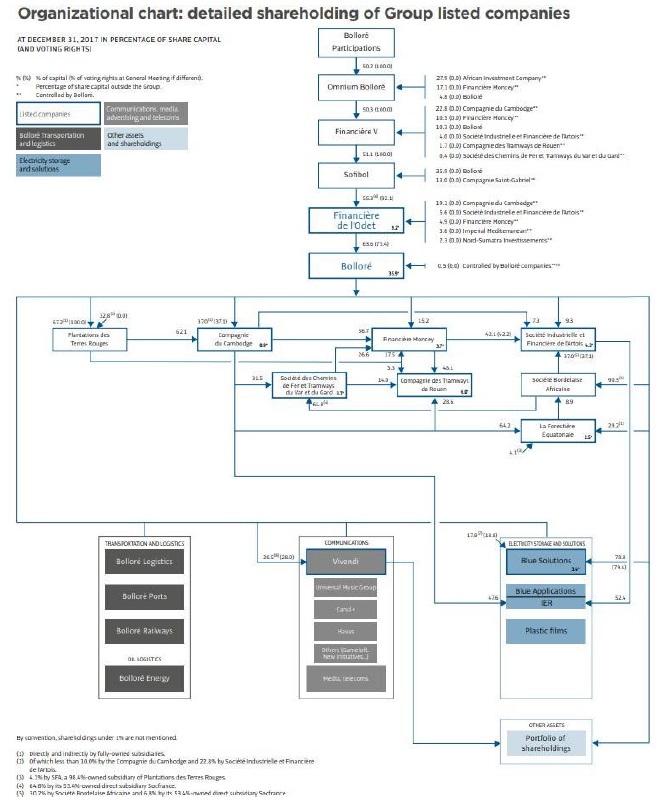
También ha sido interesante nuestra investigación sobre África, con la que éramos muy reticentes y durante la cual hemos tenido que eliminar muchos sesgos. Hemos conseguido adquirir un conjunto de infraestructuras (puertos, carreteras, ferrocarriles, logística) que son la columna vertebral de un continente que creemos que será el que más crezca en el siglo XXI, y no sólo comprarlo gratis, sino que nos paguen por ello. Esto es posible gracias a la complejísima estructura de la empresa Bolloré, cuya propiedad circular hace que en realidad la mitad de las acciones en circulación sean autocartera, y al descuento extra de su matriz, ODET, que muchos fondos no pueden comprar debido a su iliquidez, pero que creemos que será donde finalmente aflore el valor.


La inversión en infraestructuras no es sólo una tesis de inversión más, sino probablemente LA tesis de inversión de nuestras vidas1. Las infraestructuras sirven de eje para el crecimiento económico, y tanto la reducción de la inversión en los países desarrollados desde 1970 como el fuerte crecimiento de la clase media en las ciudades de países emergentes provocarán un fuerte déficit de inversión privada en infraestructuras a escala global del orden de las decenas de trillones de dólares de aquí a 2040.
Continue reading »

Notes from MOI Global Company Visits in London

October 18, 2018 in Diary, Equities, Ideas

On September 21, the day after Latticework London 2018, a group of eight investors from the MOI Global membership community participated in a series of company visits. These were kindly arranged by fellow members.

The meetings provided a win-win proposal for all involved: attendees met with senior management at five London-based public companies: Informa (INF), Metro Bank (MTRO), Petrofac (PFC), Ashmore Group (ASHM), and Dixons Carphone (DC). These firms had passed a series of screens and offered a combination of growth opportunities, catalysts, shareholder focus, and attractive pricing.

The management teams were receptive to the visits as they perceived the group as potential “white knights” — long term-oriented investors who would analyze the firms in depth and, if choosing to become shareholders, would support the management teams’ pursuit of a long-term strategy that is not swayed by short-term market pressures.

As the group traveled together between the meetings, the participants introduced the to-be-visited companies to each other and exchanged views on the businesses and the respective sectors. These discussions enabled the participants to leverage their time with management in order to ask the most impactful questions.

We are pleased to share below notes from three of the five company visits.

Members, log in below to access the restricted content.

Not a member?

Thank you for your interest.  Please note that MOI Global is closed to new members at this time. If you would like to join the waiting list, complete the following form:

MOI Global