
Why We Do Not Worry About Catalysts

January 4, 2019 in Best Ideas 2019, Equities, Ideas

This article is authored by MOI Global instructor Michael Melby, founder and portfolio manager of Gate City Capital Management, based in Chicago.

“I don’t believe in psychology. I believe in good moves.” –Bobby Fischer

When explaining our thesis for one of our portfolio companies, we are often asked by other investors to identify the potential “catalyst” for the company. In this context, a catalyst is an event that causes the company’s stock price to move higher and reduce or eliminate the market’s discount to our calculation of intrinsic value.

While we understand the nature of the question, we find little value in attempting to identify potential catalysts.

We value companies based on the amount of cash we expect the company
to generate for the company’s owners and not on what we hope others might pay us for the company at some point in the future. In our view, this philosophy is consistent with that of a long-term investor looking to be a business owner versus a speculator dependent on the behavior of another market participant. As business owners, we strongly prefer our management teams to be focused on operating the business to maximize future cash flows rather than managing the business in pursuit of catalysts.

Behavioral finance studies how psychological and emotional factors influence human behavior and ultimately impact market prices and asset returns. The topic is a popular one for investors, with experts on the subject writing best-selling books and winning Nobel Prizes.

Humans are said to have certain inherent biases that prevent us from making the best decisions. Armed with an understanding of these biases, an individual can either encourage others to make better decisions to benefit all of society or encourage others to make bad decisions and capitalize on their mistakes.

We think that all humans attempt to maximize their own personal utility, and the incentive to improve one’s own personal fortune has led to technological progress and higher standards of living for all.

However, this desire for advancement does not guarantee the best decisions are always made. To err is human. It would be illogical to think that humans should make the optimal decision in every situation, especially when considering the thousands of choices each of us make every day.

Members, log in below to access the restricted content.

Not a member?

Thank you for your interest.  Please note that MOI Global is closed to new members at this time. If you would like to join the waiting list, complete the following form:
Best Ideas 2019 Preview: Micron Technology

January 4, 2019 in Best Ideas 2019, Equities, Ideas

This article is authored by MOI Global instructor Naveen Jeereddi, Chief Executive Officer at Jeereddi Partners, based in Los Angeles.

Micron Technology Inc is a global manufacturer of dynamic random access memory chips (DRAMs), flash memories (NANDs), semiconductor components, and other memory modules for the computer industry. Micron trades at less than 4x LTM earnings and EBIT. The memory industry is a profitable oligopoly (consisting of three DRAM players and six NAND players) characterized by short pricing cycles of memory products and strong secular demand trends including cloud computing, mobile devices, artificial intelligence, gaming platforms, autonomous vehicles, and the internet-of-things applications.

Micron has an approximately $40 billion market capitalization with no debt and has been a public company for many decades. Micron investors, having experienced tremendous cyclical feast-or-famine swings in the past, possess a reflexive distaste for Micron in down cycles, resulting in a bargain valuation for the business on multiple metrics. We believe that most Micron investors are short-term oriented and as a result, are mispricing the recent improvement in Micron’s underlying industry fundamentals and the company’s newly implemented capital allocation and share repurchase programs.

Micron’s industry supply and demand structure have vastly improved over the last few years. The industry has consolidated on the supply side with more rational profit-oriented players. Demand has exploded and diversified with new sustainable long-term secular drivers. Barriers to entry are higher (and increasing) due to the complexity and capital intensity of the sector. Also, approximately 20% of Micron’s revenue is a more stable, high cash-flow, sticky systems business. We estimate that the systems business valued alone (at reasonable multiples) could approach a significant portion of Micron’s enterprise value. As such, Micron shareholders have an inexpensive call option for the remaining “non-system” business.

Micron’s business has transformed from a PC-related commodity business to a more diversified technology platform in a short time. The market is not correctly evaluating that change. Micron’s valuation is extreme. Micron shares trade at a low-single-digit multiple to normalized earnings, EBIT, and free cash flow and a slight premium to tangible book. Investors are receiving a low price with enormous future secular growth attached to Micron. Replacement cost is likely far higher than the current enterprise value. Underlying demand growth for memory products is virtually certain over time while the supply curve appears rational.

Members, log in below to access the restricted content.

Not a member?

Thank you for your interest.  Please note that MOI Global is closed to new members at this time. If you would like to join the waiting list, complete the following form:

CIMA Capital sobre Nicolás Correa

January 4, 2019 in Ideas de inversión, MOI Global en Español

NOTA DEL EDITOR: Esta idea de inversión es obtenida de una carta trimestral de CIMA Capital.

* * *

Una de las principales posiciones de la cartera es Nicolás Correa [BME: NEA], fabricante de máquina herramienta y más concretamente soluciones de fresado personalizadas. Nicolás Correa es una compañía que ha pasado por una situación muy complicada a lo largo de la última década como consecuencia de la adquisición de Anayak a finales del ciclo expansivo anterior. La compañía llegó a tener una deuda financiera de más de 25 millones de euros con un EBITDA negativo y ha pasado por un proceso de restructuración muy complicado y doloroso (que deja valiosas lecciones para el futuro).

Continue reading »

Best Ideas 2019 Preview: Walt Disney

January 4, 2019 in Best Ideas 2019, Equities, Ideas

This article is authored by MOI Global instructor Adam Zuercher, CEO & Chief Investment Officer of Hixon Zuercher Capital Management, based in Findlay, Ohio.

When you think of entertainment, cinema, and theme parks, what company comes to mind? You’re probably thinking Disney. The company is the world leader at the box office, their parks have no equals, and they are building an empire through mergers and acquisitions. Their current business is doing extremely well and experiencing strong growth, while being fundamentally sound, but we believe the best is yet to come.

Disney claims to have four business segments: Media Networks, Parks and Resorts, Studio Entertainment, and Consumer Products & Interactive Media. We believe the addition of Disney+ and the additional equity stake in Hulu through the upcoming completion of the 21st Century Fox acquisition along with ESPN+ and the investment in BAMTech add a distinct fifth segment, Streaming Services. It is this new segment where we believe the most growth lies.

Fundamentally, Disney has grown revenue steadily over the last 10 years while operating profit and earnings have easily outpaced revenue growth. They have managed cash and debt well while investing in the business with mergers and acquisitions as well as exceptional focus on returning cash to shareholders through an ever-increasing dividend and share buybacks. Returns on assets, equity, and invested capital have generated exceptional value as well.

Bob Iger has had a very successful career at Disney thus far. He became CEO in 2005 after holding multiple senior leadership positions at Disney and ABC. His interests are also aligned with those of the shareholders as he currently holds over one million shares of Disney stock which represent over $100 million.

One thing we look at is the performance of company fundamentals during each board member’s tenure. Each board member has seen revenue, EPS, and free cash flow increase in their time on the board. This fact proves that Disney’s Board of Directors has proven to be very effective in their leadership of the company.

Members, log in below to access the restricted content.

Not a member?

Thank you for your interest.  Please note that MOI Global is closed to new members at this time. If you would like to join the waiting list, complete the following form:

Intelligent Cloning: The Winter 2019 Edition

January 3, 2019 in Letters

This article is authored by Peter Coenen, a value investor based in the Netherlands.

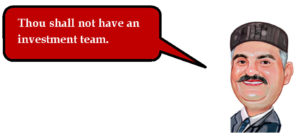
This is the second commandment of the Mohnish Pabrai 10 Commandments of Investment Management. I couldn’t agree more. You don’t need an expensive research department, since the best investment ideas on planet Earth are available for free.

13F filings, which have to be filed with the Securities and Exchange Commission within 45 days after the end of each calendar quarter, is the place to be and they give us a great snapshot into where exceptional investment minds like Mohnish Pabrai, Todd Combs, Ted Weschler or Stanley Druckenmiller, are finding value in the current market.

In the previous edition on Intelligent Cloning, I announced a few topics of interest for this edition, but I have a much better idea. Let’s go fishing in Instanbul!

Members, log in below to access the restricted content.

Not a member?

Thank you for your interest.  Please note that MOI Global is closed to new members at this time. If you would like to join the waiting list, complete the following form:

Best Ideas 2019 Preview: A Look at Great Capital Allocators

January 3, 2019 in Best Ideas 2019, Diary, Equities

This article is authored by MOI Global instructor Phil Ordway, Managing Principal of Anabatic Investment Partners, based in Chicago.

Investors place a lot of emphasis on capital allocation when considering businesses as potential investments, and rightfully so — over multi-year periods there are few things more important to a company success. So why do companies pay so little attention to it?

Is it because of managerial inexperience? Most CEOs get the top job because of operational excellence or other skills that have nothing to do with allocating capital. At least in the first few years of such cases it’s not even fair to expect capital allocation success from new CEOs.

But what about the board? Isn’t the board supposed to choose and oversee the executives? Yes, but most boards are similarly inexperienced when it comes to capital allocation.

So what about shareholders? They supposedly own the company; can they do something constructive in this regard?

Whatever the reason, I will argue that there are mutually beneficial solutions.

  • Company boards could create a standing capital allocation committee to make ongoing assessments of investment opportunities and the effectiveness of prior decisions.
  • Company boards could incorporate shareholder representation in the form of one or more rational but patient, long-term shareholders.
  • Management teams could be more intentional and thoughtful in their investor relations efforts. How, when, and why companies communicate with their shareholders is important, and a good base of aligned, like-minded shareholders can be a significant asset over time.

We’ll look at several examples of companies who “do it right” when allocating capital and interacting with their investors. A smart capital allocation framework, communicated through a thoughtful investor relations function, can attract patient, long-term, rational shareholders that will be an asset to the company. It is possible to create a positive feedback loop in this regard, but precious few companies even bother to try. Studying the companies who get it right should yield a fruitful list of potential investment ideas.

replay conference session

How to Avoid the Most Expensive Mistake in Investing

January 3, 2019 in Best Ideas 2019, Equities, Letters

This article is authored by MOI Global instructor Jean Pierre Verster, Portfolio Manager at Fairtree Capital, based in Johannesburg, South Africa.

The most expensive mistake in investing, in my opinion, is selling too soon (and, relatedly, thinking it is too late to buy), specifically in the case of long-term compounders, i.e. companies which grow their intrinsic value per share at an above-average rate over the long-term.

Even the best investors have painful tales related to this mistake, whether it’s Warren Buffett recalling not buying enough Walmart shares in the early days or Mohnish Pabrai describing how he sold his Amazon.com shares in 2002 after a quick 40% return, missing out on the next 11,500% for the 16 years thereafter (34.6% p.a. to date).

My own mistake, of a similar order, is selling Mr. Price shares (Johannesburg: MRP) at ZAR24 in 2008 after a 50% return within a few months. The share kept on going and reached ZAR260 in 2015, an opportunity cost of over 40% p.a. for 7 years. At the time, I had reasonable conviction that Mr. Price was still a long-term compounder, but I incorrectly thought that ZAR24 did not represent an attractive prospective return. How can investors avoid such expensive mistakes? To help me answer this important question, I performed the following analysis:

1. Rank the S&P500 constituents according to total change in NAV per share over the past 10 years (including distributions) as a proxy for change in intrinsic value*;

2. Compare this change to the total shareholder return (price change plus distributions reinvested) for these shares over the same period.

3. Rank the S&P500 constituents according to total shareholder return (price change plus distributions reinvested) over the past 10 years;

4. Compare this return to the total change in NAV per share for these shares over the past 10 years (including distributions) as a proxy for change in intrinsic value.

* This measure would be very close to the theoretical change in intrinsic value over a long period of time, barring a significant change in the estimated sustainable ROE of the company (which would lead to a materially different justified P/B ratio in the valuation process).

I recognise that the above analysis process is not necessarily academically robust (due to survivorship and other biases) but I believe it is sufficiently robust for the general conclusions reached, which are also supported by common sense. The analysis was done in both directions to address possible spurious correlation. For the sake of brevity, I will move straight to the findings:

Members, log in below to access the restricted content.

Not a member?

Thank you for your interest.  Please note that MOI Global is closed to new members at this time. If you would like to join the waiting list, complete the following form:

Value Drivers vs. Value Traps

January 3, 2019 in Best Ideas 2019, Equities, Ideas

This article is authored by MOI Global instructor A.J. Noronha, Partner, Equity Research & Portfolio Committee of Desai Capital Management, based in Chicago.

As longtime value investors, we have noticed that there is frequently a fine line when distinguishing between stocks that provide true underlying value and stocks that are merely cheap for various reasons. Experience is often the best teacher, and through close review of both our winning and losing investments over the years, we have identified several factors which continue to play a valuable role in our investment approach and which we believe can help other investors avoid value traps and find truly valuable investment opportunities in an uncertain market. We hope you find this helpful, and welcome any feedback.

Value Trap #1: Price/Book

We commonly use trailing P/E, forward P/E, P/B, and enterprise value/EBITDA to give us an indication of the relative value of a stock in comparison to a peer company or the greater market (e.g. S&P 500). The first mistake we make is using the wrong metric. P/B is relevant when you are speaking of financial services companies, REITs, or other companies with large amounts of regularly measured assets. It is largely irrelevant when it comes to technology companies or companies with large amounts of intangible assets. Book value measurements also allow for large deviations regarding intangible and inventory write-downs, making these areas to watch for value traps. Compare Intel and Apple. When it comes to inventory, Intel’s products tend to become obsolete & are replaced more quickly, making their book value quite different from Apple’s longer-lasting products.

Similarly, it is hard to accurately predict assets of companies that buy a large number of patents. For example, pharmaceutical companies have great risk when it comes to measuring the potential value of in-process drugs. The patent value is only measurable at the point of purchase and will fluctuate greatly with every milestone, creating substantial uncertainty throughout the R&D process and making the value of this intangible asset very hard to measure and thus hard to draw comparisons across companies or industries.

Value Trap #2: Price/Earnings

P/E can be a good comparison when it comes to companies with very similar capital structures. However, companies very frequently can have low P/Es when they choose to finance heavily with debt, creating another potential value trap and making P/E a less accurate gauge of relative value. The airline industry during the financial crisis provides us with a great example of this. Delta, United, US Airways, American, and Northwest all declared bankruptcy while sporting low P/Es that were the result of high levels of debt. While they might appear to be a bargain at a superficial glance, a deeper look would show that they essentially become substantially more risky and expensive when you factor in bankruptcy risk. Southwest, which had a higher P/E, was more conservative with its use of debt and thus did not require bankruptcy protection.

Value Trap #3: Enterprise Value & EBITDA

Finally, enterprise value/EBITDA takes into account all capital sources but requires greater inspection of debt structure, tax treatments (deferrals, loss carryforwards, international operations) and various methods of depreciation. In order to accurately compare different companies using this metric, adjustments would have to be made to reflect each of these factors. In the case of GE, they pay a much lower tax rate than the 35% US corporate rate, have many international subsidiaries, and have significant depreciation of industrial plant and equipment. To compare them to another industrial company of a similar scope would be costly and time-consuming. However, a consistently profitable company with operations that are predominantly in the same country can typically be used as a reasonable comparison.

MOI Global