We had the pleasure of interviewing Gwen Hofmeyr, founder of Maiden Financial and former equity analyst at Tiny.
Renowned for her rigorous and thoughtful approach to investment analysis, she is celebrated for her deep, investigative approach to equity research and her commitment to producing differentiated insights. In this exclusive interview, Gwen shares her unconventional journey into the world of finance, her methods for generating investment ideas, and her advice for aspiring investors without a formal financial background.
Ezra Crangle, MOI Global: Tell us about your background and career path.
Gwen Hofmeyr: First, I want to thank you for taking the time to interview me, Ezra. It’s always a pleasure to share with the MOI Global community.
I studied political science at the University of Victoria, in British Columbia, Canada, with a focus on political theory and philosophy. After abandoning the idea of pursuing a career in academia, I found myself in the unfortunate position of staring down the barrel of a career in public policy, and I was miserable. The idea of spending the next thirty years advising governments on frequently ineffective policies had me as cheery as a storm cloud. Something needed to change.
Luckily, a close uncle of mine retired in his early forties thanks to his knowledge of investing, and his influence had an impact on me from a young age. As a result, when I began to explore a career change, finance was a natural first choice. So I began down the road of learning how to invest, only, instead of going the “get rich slowly” route, I decided that a “good” starting point would be to watch day trading videos on YouTube.
Thank goodness my first date with day trading was my last, as I lost over 10% of my investment account within thirty minutes of trading a biotechnology stock. Traumatized by the experience, I decided that day trading was not for me, and I promptly marched down to my local used bookstore to pick up my first ever book on investing: One Up on Wall Street, by Peter Lynch.
That single decision changed the course of my life. I had no idea that the process of securities analysis could be so intellectually stimulating, and I fell head-over-heels for all-things investing.
Several dozen books later, an amateur finance blog, and a “lead with your work” attitude, and I landed my first job as an equity analyst at Tiny, in October 2018. Fortunately for my analytical development, Tiny’s co-founders, Andrew Wilkinson and Chris Sparling, have a preference for delegation. So instead of providing mentorship, they handed me the proverbial equivalent of a bottle of water and a trowel and sent me off into the desert with a friendly, “Good luck!”
“I had no idea that the process of securities analysis could be so intellectually stimulating, and I fell head-over-heels for all-things investing.”
The consequence was that instead of developing under the industry status quo, where analysts are given clear instruction and assignment, I had to figure out how to add value to Tiny by myself. It forced me to develop a level of introspection that I believe is rare in our industry, as my performance at the company necessitated that I become laser-focused on understanding the behavioral and environmental conditions where I produce my best and most productive work.
As time passed, I did not merely become aware of my own behavior, which involved developing systems for managing workflow and irrationality triggers; I also became aware of how I behaved in relation to others.
This led me to frequently ask questions like:
- “What are other analysts and investors talking about?”
- “What do investors like, and what do they dislike?”
- “How do investors describe the companies and industries that they analyze?”
- “How do investors approach company analysis and the sourcing of ideas?”
- “Are there any industries or companies that investors are averse to analyzing, or that they presumptuously dismiss?”
- “What are analysts being commissioned to do, and what are they not being commissioned to do?”
- “How does the average investor and analyst spend their day?”
How are people behaving, and how am I behaving in relation to them?
Through the observation of others and the market at-large, I could not help but notice that we live in a world where high quality, in-depth equity research is becoming increasingly rare. With passive and quantitative investing strategies now accounting for the majority of global funds, the market is rewarding strategies that are largely price-agnostic.
This is perhaps the biggest blight to the Efficient Market Hypothesis today: That there is a structural disincentive for active participation in markets, which is having an observable impact on market efficiency and the commissioning of the sort of deep work necessary for the rational pricing of securities.
To bridge the gap, I started Maiden Financial in June of this year, which is an independent research firm that aims to provide professional investors with consistently differentiated insight and depth into companies and industries. The idea is to shoulder the type of focused work that many managers and analysts do not have time to do, and to set a high standard for what thoughtful equity research should look like.
MOI: How do you generate investment ideas?
Gwen: My primary aim is to produce research that is consistently differentiated with minimal bias, which I achieve through the application of what I call, “the archeologist’s prerogative.”
The prerogative of the archeologist is to acquire a rich knowledge of history, which sometimes includes the excavation of archeological sites of interest. Occasionally, an archeologist encounters the opportunity to excavate a site that has never been dug before. In such situations, there is no other archeologist that has experience excavating the site to advise them. Hence, the archeologist must solely rely on their own expertise to guide them.
In our industry, expertise is acquired through the study of financial accounting, through the wisdom of industry practitioners, and through one’s experience working and investing in capital markets.
The reason that I take a “no-one-has-dug-it-before” approach, is that it forces me into a situation where the only way that I may achieve understanding is through the complete and thoughtful analysis of a company, industry, or theme. After I conduct my own analysis, I have a strong behavioral and intellectual base to compare my work to existing research.
The work involved is often grueling, and few practitioners today commission research performed in a vacuum that spans several hundred hours per project. It is behaviorally contrarian, yet I personally find the method an effective way to produce consistently differentiated analyses that aren’t muddied by previously acquired third-party speculations and convictions.
This isn’t to say that I avoid speaking with anyone throughout the analytical process. I speak with workers, ex-workers, consumers, and the lower management teams of the companies and industries I analyze, as they usually have nothing to sell or prove by speaking with me.
I also often analyze industries that other investors or analysts do not want to analyze, or are not being commissioned to comprehensively analyze. On the latter point, every major project I engage in involves serious thought as to how I can make the project and the work involved as Everest-like as possible, so that the information provided by the resulting analysis has a high probability of exceeding industry standards in both quality and depth.
“I avoid speaking with anyone throughout the analytical process. I speak with workers, ex-workers, consumers, and the lower management teams of the companies and industries I analyze, as they usually have nothing to sell or prove by speaking with me.”
MOI: What does your typical research process look like when you start analyzing a sector of company, especially given the detailed research you’ve done on Hingham Institution for Savings and Ingles Markets?
Gwen: I apply basic scientific rigor to every analysis I conduct. I start the research process by first defining my dig site, which is guided by an overarching hypothesis. To take the example of Ingles Markets, a family-owned operator of supermarkets in Asheville, North Carolina, I hypothesized that an investor would have a higher likelihood of identifying companies with under-analyzed land if they analyzed a large basket of companies spread across industries where land ownership might not be an expected feature.
After I have my hypothesis, I define a method for its testing. For Ingles, my initial method involved the construction of a list comprising 753 companies spread across several industries, where I went through the 10-Ks of each to identify those that disclosed land ownership. This method later evolved when I discovered Ingles, as I suspected that the company was under-disclosing the amount of owned land in its annual report. To confirm my suspicion, I defined a new method:
“To confirm whether Ingles owns more land than disclosed, I will engage in county tax record analysis across each of its primary markets to assess the value and breadth of its real estate portfolio.”
After some 1,000 county tax record searches across 400 counties, and I had discovered that Ingles owns 2,170% more acres than disclosed in the company’s annual report, and that the company owns a real estate portfolio with a value just shy of its enterprise value.
MOI: Do you have any personal “rules” or red flags that help you decide to avoid or exit an investment?
Gwen: Overarching rules depend on the nature of the company or industry in question, so rules and red flags are contextual for me. That said, I would be happy to provide a few examples.
On the topic of exits, if a company has a clearly defined earnings cycle, then an exit may be defined by conditions where the company is in a state of: a) supernormal profitability, b) 90th percentile historical valuation, and c) being favorably viewed by the market. Indeed, when the market broadly views a cyclical favorably in the midst of record profits, joining that party is all but certain to get crashed by the cops.
By contrast, if a company benefits from economics that are structurally difficult to reproduce, like captive know-how, then understanding the drivers behind that know-how is essential, as any threat to its continuation would erode the predictability of the company’s future economics, and thereby render it exit-worthy.
In terms of red flags, if a company appears to be in terminal decline, any changes to how the company recognizes revenue or capitalizes its assets is a point of interest. We saw this with Tupperware around 2019, when the company changed its revenue recognition policy from “sell-through,” to “sell-in,” by which the company shifted from recognizing revenue from sales at the customer-level to when product was simply shipped to a customer. At the time, I identified the change as an attempt by management to generate a short-term boost to revenue and steered clear. Unsurprisingly, Tupperware declared bankruptcy in September of this year.
Another red flag is conflicting information shared by a company’s upper management and its associates. Although David Rush stepped down as the CEO of Builders FirstSource [BLDR] on November 6th, prior to his departure, he spoke very highly of BFS digital tools, or “myBLDR,” which is BLDR’s suite of digital job management and home rendering tools.
In BLDR’s second quarter earnings call, Rush stated that the company has experienced “broad acceptance of the platform so far, including interest from multiple top 200 builders.” Yet, in a call with a myBLDR sales rep, the rep stated that BLDR had eliminated national homebuilders from their sales repertoire, as such builders largely have their own vertically integrated job management and digital rendering tools. The rep further went on to say that the typical customer of myBLDR is a small home builder that uploads between 5-30 plans, and that builders who upload upwards of 80 plans or more are a rarity.
This was a “shut the front door” moment in my assessment of BLDR. Management has marketed myBLDR as some novel, “first-mover” innovation because BLDR is the first LBM supplier to feature an end-to-end suite of digital tools. What management is failing to disclose is that they spent US$450 million on a suite of tools that is subject to a declining market.
In 2019, the top 100 homebuilders in America accounted for 51.5% of all single-family completions. In 2023, they accounted for 70.4% of completions. In other words, in just four years, the number of completions by homebuilders that would overwhelmingly have no need for myBLDR grew by 36.7%, and there is no sign of home builder consolidation slowing any time soon.
To conclude, when management over-emphasizes the attractiveness of what appears to be a poor investment, I lose the ability to trust management, and pass on it as an investment prospect. Even if BLDR remains a top performer in the S&P 500, we do not have to catch every ship that passes by, for there will always be another ship.
“When management over-emphasizes the attractiveness of what appears to be a poor investment, I lose the ability to trust management, and pass on it as an investment prospect.”
MOI: Tell us about one (or a couple) of your biggest investment mistakes.
Gwen: As a disciple of Charlie Munger, I blindly followed Charlie into Alibaba Group [NYSE: BABA] simply because he purchased its stock, without conducting any prior analysis to assess the opportunity for myself.
As human beings, we tend to distort reality when we love or like someone, and my leap of faith with Charlie was testament to that. As Charlie was someone who was passionate about the exposition of cognitive biases, it’s humorous that my worst investing mistake was made on behalf of being influenced by the very man who made me aware of them. Rest in peace, Charlie.
Luckily, my incentives have changed in a way where such a repeat mistake would be very unlikely. Saying, “some smart guy bought it,” is not conducive with the standards of institutional-grade research. Every report that I produce is judged by Maiden’s members, so I naturally feel a strong inclination to satisfy their expectations. If I fail to do so, I may lose their business in future years. Couple the latter with years of building self-awareness, and there are big, honking guardrails protecting me from paying attention to much of anything beyond the desert and the trowel in my hand.
MOI: You mentioned that patience is critical. Are there other key atributes or principles that you believe are essential for an investor to succeed in the long-term?
Gwen: There is a lot of overlap here with how I source ideas. I think that if an investor wants to produce uncommon results, they are far more likely to do so if they behave uncommonly. This does not necessarily require steadfast contrarianism, but it at least requires an investor to behave abnormally throughout the investment and research process.
For example, while my analysis on Hingham was a contrarian take following the collapse of Silicon Valley Bank (SVB) in March of 2023, my analysis of Ingles was not. Coming back to the concept of “building Everest,” what was contrarian for both ideas was the degree of work that I put into them.
My analysis of Hingham took upwards of 500 hours, while my analysis of Ingles was around 300 hours, so roughly 5-9 weeks from initiation to report publication. I built a dataset with over 10,000 data points on Ingles, and one with over 3,600 data points on Hingham, which included 138 banks in the KRE. This level of work on a single idea is not widely commissioned today; consequently, the findings of each report were beyond the market’s general purview.
I guess this is a long-winded way of saying that I think it’s important for an investor or analyst to not merely be abnormal in idea generation, but abnormal in conduct. Again, should one’s aim be to produce differentiated results, then they must behave in differentiated ways in life, work, and investing.
“Should one’s aim be to produce differentiated results, then they must behave in differentiated ways in life, work, and investing.”
MOI: You previously spoke about your book here at MOI Global. In short, could you tell us more about what inspired the unique title of your book, the Halfwit Crustacean?
Gwen: The title was inspired by Peter Lynch’s love affair with a company called Cajun Cleansers, which is a company that used to produce a patented gel-based stain remover. When Peter ran the Magellan Fund at Fidelity Investments in the late 70s to early 90s, he visited Cajun and was struck by how easy its product was to make. Peter remarked that, “any well-trained crustacean could make the gel.” I interpreted “crustacean” to be synonymous with “idiot,” which summed up my behavior during my first-year investing. Thus, The Halfwit Crustacean was born.
I wrote the book after my first year investing in the stock market as a sort of love letter to myself for later reflection, and as a crescendo of my efforts to behaviorally improve. In-line with Munger’s advice for investors to “admit when they act like a complete stupid horse’s ass,” The Halfwit Crustacean is an exposé of all the mistakes that I made during my first-year investing. What better way to improve than to put one’s mistakes on display for all to see, right?
MOI: What advice would you give to someone who is pursuing investing without a formal financial background? Are there any resources you have found particularly helpful?
Gwen: Books are an important resource for both traditional and non-traditional path-goers, and I would be happy to provide an extensive booklist to any interested reader. Peter Lynch’s, One Up on Wall Street, and Robert G. Hagstrom’s, The Warren Buffett Way, remain my favorite introductory books to suggest to industry newcomers, but once an investor has some basic knowledge of investing and behavioral finance, a few choice books to broaden one’s foundation might be Financial Statement Analysis: A Practitioner’s Guide, by Fernando Alvarez and Martin Fridson; The Manual of Ideas, by MOI’s own John Mihaljevic; Distressed Debt Analysis, by Stephen Moyer; and Financial Shenanigans, by Howard Schilit.
Beyond books, if one takes a non-traditional approach, it pays to lead with your work. Credentials are intended to be representative of intellectual competency by their holder. In their absence, one must demonstrate their competency through the sharing of their work. Starting a blog and applying one’s learnings to the construction and sharing of company analyses is a great way for any well-meaning individual to build a following and to learn from the investing community. It worked for me!
MOI: You’ve mentioned books by investing legends like Warren Buffett and Peter Lynch. Are there any influences outside of traditional finance or investing literature that have shaped your approach?
Gwen: The book that has had the longest standing impact on my career was a favorite of Munger’s, and one that he often recommended. That book is Influence, by Dr. Robert Cialdini. Educating oneself on the influence that cognitive biases have on our perception of reality is critical to understanding and regulating one’s own behavior.
One way that Influence helps an investor self-regulate is by equipping them with the vocabulary to explain the market’s behavior in response to a particular event.
Time and time again, Wall Street has demonstrated a tendency to discard entire industries, or the stock market at-large, in uncertain periods where the trade setup might as well be labeled, “It’s Armageddon or you make money.” Such trade dichotomies are often inspired by a confluence of biases, but loss-aversion bias (loss-avoiding behavior), and social proof bias (social behavior and/or ideas taken as proof of a perceived reality) are common themes.
The Silicon Valley Bank Crisis is a recent example of the Armageddon trade dichotomy, as the SPDR S&P Regional Banking Index (KRE), which contains over 138 US regional banks, declined by 44 percent in three months following the bank’s collapse in March 2023.
In a move may have set a world record for laziest-decision-made-by-a-bank-in-the-history-of-money, SVB’s management decided to increase their exposure to long-dated US Treasuries as a percentage of assets from 14.4% in 2020, to 46.4% in 2021, or by US$81.6 billion. Add in the fact that over 95% of SVB’s depositors were above the FDIC insurable limit, couple it with a specialty in small business lending, and you’ve got yourself a bank with a risk profile resembling a dingy floating in the middle of the Pacific Ocean.
When inflation ramped in 2022 and the Federal Reserve was forced to increase interest rates, SVB found itself caught in the liability mismatch of the century. Once news broke of SVB’s losses, Mr. Market woke up and said, “nope,” and off went all of America’s regional banks, down the slippery, steep slope of Mr. Market’s repulsion to anything that isn’t popularly sellable in the immediate present.
The irony about the SVB debacle is that 1/3rd of the banks contained within the KRE have zero material exposure to HTM securities, so any investor with prior knowledge or a willingness to analyze US regionals in the aftermath of the crisis had a big leg-up over a market that threw in the towel at Go.
When you think of it, Wall Street is kind of like a monkey. Wall Street is always hungry for a banana, and they will do whatever the provider of the banana (i.e., the client) wants. If the client doesn’t pay Wall Street for what it’s selling, then Wall Street will throw a tantrum. That’s what competition on Wall Street has always been about. It’s never been about doing what is rational or sensible for the client, or what is best for the functioning of capital markets. It’s about figuring out what clients want today so that Wall Street can get that fricken banana as fast as possible.
If clients want corporate bonds, Wall Street will sell them corporate bonds. Space SPACs and shitcoin ETFs? You got it boss. What about upending the efficiency of markets for the popularity of passive index funds? Ab-so-LUTELY!
Mr Market: “Honestly, I’d sell turds to clients if it scored me a banana. Wait… I do sell clients turds for bananas! Remember 08? Ha, what a trip. You watching the game later?
“Wall Street is kind of like a monkey. Wall Street is always hungry for a banana, and they will do whatever the provider of the banana (i.e., the client) wants.”
I guess the point of my ramble is that in addition to books and the demonstration of competency, any investor who wants to stand out and to produce uncommon results needs to: a) grow a stomach; b) pay close attention to what differentiated behavior looks like; and c) understand how their own mind seeks to sabotage them.
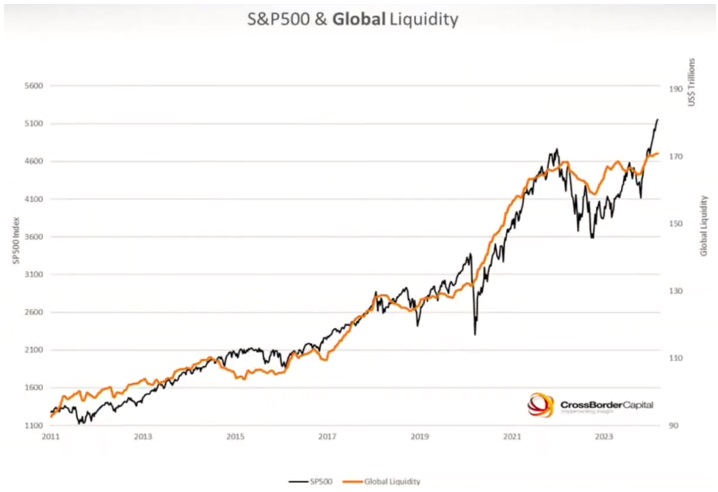
As an aside, has anyone ever thought about the 30-year sea change in passive flows and the corresponding, elevated average P/E multiple paid for S&P 500 earnings over the period? I am sure this has already been said, but it seems like the S&P 500 has benefitted from a structural tailwind spurred by thoughtless allocation, which has been fueled by a simple sales pitch that has scored Wall Street a lot of bananas.
Mr. Market: “Just give up and get rich! It’ll work forever!”
The content of this website is not an offer to sell or the solicitation of an offer to buy any security. The content is distributed for informational purposes only and should not be construed as investment advice or a recommendation to sell or buy any security or other investment, or undertake any investment strategy. There are no warranties, expressed or implied, as to the accuracy, completeness, or results obtained from any information set forth on this website. BeyondProxy’s officers, directors, employees, and/or contributing authors may have positions in and may, from time to time, make purchases or sales of the securities or other investments discussed or evaluated herein.