
SFS Group: Self-Help and Cyclical Recovery Driving Margin Upside

November 5, 2025 in Audio, Diary, Discover Great Ideas Podcast, Equities, Europe, European Investing Summit 2025, European Investing Summit 2025 Featured, Ideas, Member Podcasts, Transcripts

Kevin Durkin of Ballina Capital presented his investment thesis on SFS Group (Switzerland: SFSN) at European Investing Summit 2025.

Thesis summary:

SFS Group is a Swiss-based industrial company specializing in application-critical precision components, assemblies, and fastening solutions. The business operates in three segments: Engineered Components (EC), Fastening Systems (FS), and Distribution & Logistics (D&L). EC (~37% of sales) acts as a development partner for customer-specific components in end markets like automotive, medical, and electronics. FS (~20% of sales) provides mechanical fastening systems, primarily for the construction industry. The D&L segment (~44% of sales), which grew following the 2022 Hoffman acquisition, is a leading European distributor of tools, fasteners, and C-parts.

Kevin highlights SFS’s position as a “mission-critical value engineering specialist.” The company’s components often represent a small fraction of a customer’s manufacturing cost but are engineered to lower the customer’s total cost of assembly, logistics, and reliability. This approach creates embedded, loyal relationships. SFS is characterized by its “local-for-local” global footprint, high family ownership (over 50%), and a strong financial profile. Historically, the company generates ROIC above 20% and converts a high portion of its cash flow to FCF.

The investment opportunity, according to Kevin, arises from recent share price stagnation, which reflects several headwinds. The company is suffering from the broader industrial weakness in Europe, particularly in its key markets of Germany and Switzerland; Kevin notes the German Fabricated Metal Products IFO survey remains a key indicator of this pressure. This cyclical downturn has led to lower capacity utilization, pressuring margins. Furthermore, the strength of the Swiss franc has masked modest underlying top-line growth, and the 2024 results and 2025 outlook disappointed market expectations.

The thesis rests on both a cyclical recovery and company-specific “self-help” initiatives. SFS is undergoing a reorganization to close smaller, less productive satellite locations and consolidate volumes, which is expected to add 80 bps to operating margins. Management has also been streamlined to accelerate decision-making. Kevin sees a path for margins in the core EC segment to expand from ~14% toward a target range of 18-21% as capacity utilization improves. Long-term growth is supported by M&A, R&D spending aligned with trends like electrification, and a strategic push to rebalance sales geographically toward North America and Asia.

Regarding valuation, Kevin notes the shares recently traded at 109.6 CHF. He believes the valuation is supported by a DCF estimate of approximately 115 CHF (using a 9% WACC). The company trades at multiples below its own 5-year reflexive history and at a discount to peers on an EV/EBIT basis, despite most peers having lower margins. The thesis anticipates that as SFS executes its self-help plan and the industrial economy recovers, the company should see its multiple expand closer to 12-13x EBITDA on a higher base of earnings.

The full session is available exclusively to members of MOI Global.

Members, log in below to access the full session.

Not a member?

Thank you for your interest.  Please note that MOI Global is closed to new members at this time. If you would like to join the waiting list, complete the following form:

About the instructor:

Kevin Durkin is the Founder and Chief Investment Officer of Ballina Capital. Prior to starting Ballina, Kevin was a founding member of Causeway Capital Management, where he served as Portfolio Manager. He brings over 25 years of experience in International Investing and a long history of successful stock selection to the company. Ballina is named after the town in Ireland where Kevin’s grandparents were born. Kevin holds a Bachelor of Science degree in Management (cum laude) with a concentration in Finance from Boston College, as well as a Master of Business Administration degree from the University of Chicago Booth School of Business.
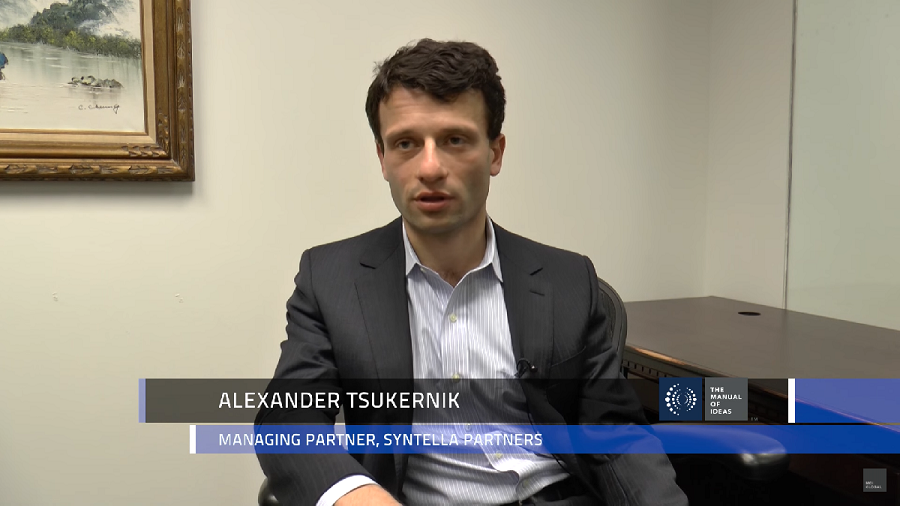
¿Compounders en Negocios de Commodities?

November 5, 2025 in Contenido Libre, MOI Global en Español, Videos

Alexander Tsukernik, Managing Partner de Syntella Partners, explica cómo sí hay compounders en negocios de commodities.

El video tiene subtítulos al español. Para activarlos, dentro del recuadro del video, ve a “Configuración” → “Subtítulos“, y selecciona “Español“.

Los miembros de MOI Global pueden acceder a la transcripción completa.

Miembros, inicien sesión abajo para acceder al contenido restringido.

¿No eres miembro?

Gracias por tu interés. Ten en cuenta que MOI Global está cerrado para nuevos miembros en este momento. Si deseas unirte a la lista de espera para miembros hispanos, completa el siguiente formulario:

Diageo: Short-Term Noise Obscures Cash-Gushing Quality Business

November 3, 2025 in Audio, Diary, Discover Great Ideas Podcast, Equities, Europe, European Investing Summit 2025, European Investing Summit 2025 Featured, Ideas, Member Podcasts, Transcripts

Alirio Sendrea of Invexcel presented his in-depth investment thesis on Diageo (UK: DGE, US: DEO) at European Investing Summit 2025.

Thesis summary:

Diageo is the world’s largest premium spirits company, holding a 5% global value share and a 20% share in the premium-and-above segment. The company is 1.7x larger than its closest international peer and possesses an unparalleled portfolio of over 200 brands, including Johnnie Walker, Tanqueray, and Smirnoff, alongside a 34% stake in Moët Hennessy. The company is highly diversified, selling in 180 countries, and has a portfolio heavily weighted (over 60%) towards the premium-and-above segments, which is almost double the global average.

The spirits sector, as Alirio describes, has faced numerous headwinds that have caused it to go from “sunrise to moonlight,” with many fearing it as the “new tobacco.” These challenges include structural issues like consumer moderation and health consciousness (including GLP-1s) and changing Gen Z habits, as well as circumstantial issues like macro pressures on disposable income, inventory destocking after a post-COVID boom, and new tariffs. These factors led to the first US volume decrease in 30 years in 2023, causing valuations to collapse.

Alirio’s thesis argues this pessimism is misplaced, viewing the macro and inventory issues as transitory. He contends the structural shifts are manageable and create opportunities for “drinking less but better,” which favors Diageo’s premium portfolio. The company benefits from formidable moats, including immense scale, which provides bargaining power and a virtuous cycle of reinvestment. Other moats include the high barrier to entry from “aging,” which requires deep pockets to fund maturing inventory, and powerful brands that provide pricing power.

Diageo is leaning into these strengths, increasing its marketing (A&P) spend to 18% of sales while peers pull back, and growing its maturing inventory to drive future premium sales. Financially, Diageo leads its peers with stable operating margins, a higher ROIC, and superior cash conversion (69% EBITDA to CFO vs. 61% for peers). Alirio highlights that the company is prioritizing organic growth, funded by its strong FCF, and is also embarking on an efficiency plan. While leverage (Net Debt/EBITDA) is at the high end of its 2.5-3.0x target range, he views it as manageable and notes potential upside optionality not included in his valuation, such as portfolio restructuring.

Alirio’s valuation starts from a conservative “no-growth” top-line scenario and a normalized 29% operating margin. He values the Moët Hennessy stake at $7.1 billion using an 18x P/E multiple. His target price is derived from an average of three methods: an EV/EBIT (Market) multiple of 17.4x, an EV/EBIT (Transactions) multiple of 20.4x, and a P/FCF multiple of 18x. This methodology yields a target price of 28-29 pounds per share. Compared to a recent price of 1,750p, Alirio believes this offers a decent margin of safety for a quality, moaty business whose long-term profile is being blurred by short-term noise.

The full session is available exclusively to members of MOI Global.

Members, log in below to access the full session.

Not a member?

Thank you for your interest.  Please note that MOI Global is closed to new members at this time. If you would like to join the waiting list, complete the following form:

About the instructor:

Alirio Sendrea, CFA is Partner and Head of Research at Invexcel, a multi‐family office based in Spain. He is a generalist investor in European Equities with two decades of experience in Financial Services, Shipping, Information Services, Alcoholic Beverages and Business Services, working with entrepreneurial families and leading global companies.

La cartera de Castañar Investment Fund en el 3T 2025

November 3, 2025 in Ideas de inversión, MOI Global en Español

NOTA DEL EDITOR: El siguiente texto es obtenido de una carta trimestral de Castañar Investment Fund.

* * *

Las compañías que tenemos en cartera no suben por la fiebre de la IA, sino porque —simplemente— cada día son mejores. Cada una, en su sector, está creciendo, expandiendo el negocio, incrementando pedidos y mejorando su estructura.

Otras —lo reconozco— siguen rezagadas, afectadas por el miedo arancelario, como es el caso de la mencionada ADF Groupe. Pero no me cabe duda de que, tarde o temprano, esta incertidumbre desaparecerá y el mercado volverá a ponerlas en su sitio.

Lo mismo podría decirse de nuestras empresas de petróleo. A pesar de todo el pesimismo —mala prensa, aumento de inventarios, aumento de la producción de la OPEC+ y EEUU, recesión…— las empresas en cartera están máximos. Por lo tanto, me reafirmo en que lo importante no es la narrativa ni el ruido, sino el análisis fundamental que uno hace. En estos tiempos tan convulsos, es más importante que nunca mantenerse fiel a nuestros principios, quedarse dentro de nuestro círculo de competencia —conocer nuestras limitaciones— y realizar nuestro propio análisis objetivo de los datos.

Miembros, inicien sesión abajo para acceder al contenido restringido.

¿No eres miembro?

Gracias por tu interés. Ten en cuenta que MOI Global está cerrado para nuevos miembros en este momento. Si deseas unirte a la lista de espera para miembros hispanos, completa el siguiente formulario:


Barratt: Well-Run UK Homebuilder at Discount to Liquidation Value

November 1, 2025 in Audio, Diary, Discover Great Ideas Podcast, Equities, Europe, European Investing Summit 2025, European Investing Summit 2025 Featured, Ideas, Member Podcasts, Transcripts

Simon Caufield of SIM Limited presented his investment thesis on Barratt Redrow plc (UK: BTRW) at European Investing Summit 2025.

Thesis summary:

Barratt Redrow is the UK’s largest housebuilder, operating under three distinct brands: Barratt, David Wilson, and Redrow, which target first-time buyers, the mid-market, and the premium market, respectively. Simon highlights the company’s operational strengths, stemming from its scale and investment in off-site factory production for components like timber frames and bathroom pods. This approach enhances efficiency and lowers construction costs. The multi-brand strategy facilitates a wider customer appeal and a faster sales rate, which makes larger development sites viable for the company.

Simon emphasizes the conservative, cost-conscious culture, which is led by a CEO who was the former CFO. This culture prioritizes efficiency and ROI. A key operational differentiator for Barratt Redrow is its centralized land-buying process. Unlike peers who may allow regional divisions to make purchases, all land acquisition at Barratt is signed off by the CEO or CFO. Simon believes this centralized control prevents the company from overpaying for land, a common pitfall in the industry.

The core of Simon’s thesis rests on a market misunderstanding of UK housing shocks. The consensus view is that UK houses are unaffordable and that falling prices and volumes will lead to a drop in homebuilder earnings. Simon argues this view is both wrong and irrelevant. He believes it is “wrong” because the UK has a structural housing shortage and demand is typically deferred rather than destroyed. He argues it is “irrelevant” because of the industry’s unique operating model, which the market fails to appreciate.

Simon explains that UK builders hold 3-4 years of land as inventory. During a downturn, as volumes fall, they stop buying new land. This action causes OCF to increase as working capital is released. Simultaneously, land prices fall at a much faster rate than house prices. The company can then restart buying land at depressed prices, which feeds through to higher margins 3-4 years later. Simon notes that the 2022-2025 period saw a shock equivalent to 83% of the GFC, creating the same setup that led to a sharp recovery in earnings and the stock price after 2011. He believes sell-side analysts have missed this and that earnings upgrades are forthcoming.

Simon notes that the shares recently traded at a 10-year low, down over 50% from their 2020 high. He estimates a liquidation value of £12 billion, which is more than twice the recent market cap of £5.7 billion. This suggests the stock trades at approximately 47% of its liquidation value. This valuation is derived from building out the existing owned and optioned land bank, plus strategic plots already in local authority plans, and conservatively excludes the value of 224,000 other strategic plots and the brand itself.

The full session is available exclusively to members of MOI Global.

Members, log in below to access the full session.

Not a member?

Thank you for your interest.  Please note that MOI Global is closed to new members at this time. If you would like to join the waiting list, complete the following form:

About the instructor:

Simon Caufield is Managing Director at SIM Limited, a UK-based investment firm. Simon founded the firm in 2007 after selling his stake in Nomis Solutions, a B2B enterprise software company he founded in 2002. His circle of competence is deep value, cyclicals and deceptively cheap compounders amongst the industrial and consumer discretionary sectors.

Previously, Simon was a management consultant for more than a decade, including at Mercer Management Consulting. Simon has an MA in Engineering from Cambridge University and an MBA from London Business School.

Bellway: Well-Capitalized, Quality UK Homebuilder at Cyclical Low

November 1, 2025 in Audio, Diary, Discover Great Ideas Podcast, Equities, Europe, European Investing Summit 2025, European Investing Summit 2025 Featured, Ideas, Member Podcasts, Transcripts

Christian Olesen of Olesen Value Fund presented his investment thesis on Bellway (UK: BWY) at European Investing Summit 2025.

Thesis summary:

Bellway is a UK-based pure-play homebuilder, the fifth-largest in the country by revenue. The company was founded in 1946 and focuses on single-family homes, typically at a lower mid-range price point. Christian highlights that the company maintains very little exposure (less than 5%) to the London market. This is relevant as UK home prices outside of London do not appear to be meaningfully overvalued, reducing the risk of large land write-downs compared to London-focused peers.

The UK homebuilding industry is highly cyclical, characterized by volatile demand and a slow-adjusting supply. Christian notes that the UK’s complex and slow “planning system” creates high barriers to entry, making it difficult for smaller builders to operate. This uncertainty requires builders to maintain a large pipeline of sites, favoring scaled operators like Bellway. This dynamic has contributed to industry consolidation and a more rational land market post-GFC, with fewer, more disciplined bidders for land.

The investment opportunity stems from a cyclical downturn in UK housing demand, driven by interest rate increases since 2022, which has depressed the stock. Christian views Bellway as one of the highest-quality, most conservatively managed builders in the UK, noting it outperformed peers during the GFC. The business possesses a strong, almost unlevered balance sheet (approx. 6% net debt to total cap) and generates positive FCF during downturns as its inventory (land and work-in-progress) is freed up. This financial strength minimizes tail risks. The company has a long track record of compounding book value per share (plus dividends) at a 15.2% CAGR since 1994. Management recently updated its capital allocation framework to include a new £150m buyback program and a greater focus on capital returns.

Christian points out that the shares recently traded at 0.87x P/TBV, which compares favorably to its 22-year historical average multiple of 1.26x P/TBV. This suggests a 45% upside merely from a reversion to the mean. Based on an estimated 13% mid-cycle ROE, the stock trades at an inexpensive 6.7x mid-cycle earnings. Christian projects that if the stock is held for two years and exits at its historical 1.26x P/TBV multiple, the investment could generate a 35% annualized return. A more conservative six-year hold under the same assumptions would still yield a 17% annualized return, offering an attractive risk-adjusted upside.

The full session is available exclusively to members of MOI Global.

Members, log in below to access the full session.

Not a member?

Thank you for your interest.  Please note that MOI Global is closed to new members at this time. If you would like to join the waiting list, complete the following form:

About the instructor:

Christian Olesen is the investment manager of the Olesen Value Fund. Previously, Christian worked in a dual role of Analyst and Trader for Xaraf Management, a group within Paloma Partners that focuses on a variety of equity and credit strategies. Before that, Christian was Senior Associate in the research department of DebtTraders Group, a New York-based broker-dealer specializing in distressed and high yield bonds, and Senior Financial Analyst in the corporate finance advisory services group of Stern Stewart & Co., a New York-based financial advisory firm best known for its proprietary EVA? (Economic Value Added) concept. Christian holds a B.S. in Economics, with concentrations in Finance and Accounting, from The Wharton School, University of Pennsylvania. He also holds the CFA (Chartered Financial Analyst) designation.

Kuehne+Nagel: High-ROIC Logistics Leader Temporarily Disrupted

November 1, 2025 in Audio, Diary, Discover Great Ideas Podcast, Equities, Europe, European Investing Summit 2025, European Investing Summit 2025 Featured, Ideas, Member Podcasts, Transcripts

Adam Crocker of Logbook Investments presented his investment thesis on Kuehne+Nagel International AG (Switzerland: KNIN) at European Investing Summit 2025.

Thesis summary:

Kuehne+Nagel is a global, asset-light freight forwarder founded in 1890. The company buys wholesale capacity from sea, air, and ground carriers and resells it to shippers, a model Adam likens to a “travel agent for goods.” It also operates a third-party logistics (3PL) division, Contract Logistics, providing outsourced supply chain functions for manufacturers. The business is an essential service, characterized by deep networks, scale, and high returns on capital. It is consistently recognized by Gartner as a “Leader” in the industry, alongside peers like DHL and DSV.

Adam’s thesis posits that Kuehne+Nagel is a high-quality, historically predictable business that is temporarily mispriced due to recent events. Post-COVID macroeconomic volatility disrupted its predictable performance. Furthermore, management “dented credibility” by setting overly ambitious 2026 targets at its 2023 investor day, only to cut them in March 2025. This loss of predictability, a trait highly valued by its investor base, has created an opportunity. Adam argues this is a “reversion to mean valuation story,” as the underlying fundamentals of the business remain intact.

The company is not standing still and is implementing initiatives to drive growth and efficiency. It has restructured its go-to-market strategy, moving from a geographic focus to a matrix based on customer size (global, national, and SME). A key focus is growing its share of the more profitable SME segment, which generates 1.8x the gross profit of non-SME accounts, by leveraging automation and new digital platforms like “eTouch.” The company maintains a high dividend payout, targeting over 80% of earnings. Adam notes this capital allocation policy, which contrasts with DSV’s M&A-focused strategy, is largely driven by the controlling shareholder.

The firm is 55% controlled by Klaus-Michael Kuehne, the founder’s grandson, who no longer holds an active role. His shares are set to be bequeathed to a foundation, which ensures a long-term strategic focus but largely precludes an acquisition. Adam identifies “real risks” as a macro slowdown, competitor consolidation, carriers like Maersk entering freight forwarding, and new tech-based competitors like Flexport. He views “perceived risks,” such as nearshoring (which he sees as a “plus one” strategy) and the recent poor forecasting, as the source of the current opportunity.

Regarding valuation, the shares recently traded at an LTM EV/EBIT of 13.2x and an EV/EBITDA of 8.2x. This is a discount to the company’s historical 10-year median EV/EBIT multiple of 18.2x. The investment thesis rests on this multiple re-rating as the business returns to its predictable cadence. The stock also trades at a discount to its closest peer, DSV, which recently traded at 21.8x EV/EBIT, and at valuations below recent industry M&A transactions. Adam’s base case scenario, which assumes modest 3% revenue growth and a 16.0x EV/EBIT multiple, implies 32% upside from recent levels.

The full session is available exclusively to members of MOI Global.

Members, log in below to access the full session.

Not a member?

Thank you for your interest.  Please note that MOI Global is closed to new members at this time. If you would like to join the waiting list, complete the following form:

About the instructor:

Adam Crocker, CFA is Founder and Chief Investment Officer of Logbook Investments, a value fund with core positions based on insights from books. Logbook launched in 2016 and is seeded by his former employer. Prior to Logbook, Adam was a co-manager at Metropolitan Capital Advisors, a long/short equity fund founded in 1992. Before joining Metropolitan, he was an analyst at Morgan Stanley Investment Management conducting research on behalf of growth and value investment teams. He began his career in Leveraged Finance investment banking at JPMorgan. Adam is a 2005 graduate of the Value Investing Program at Columbia Business School and has an undergraduate degree in Economics from Columbia University.

Domino’s Pizza (UK): Asset-Light, Growing Leader With High FCF Yield

October 31, 2025 in Audio, Diary, Discover Great Ideas Podcast, Equities, Europe, European Investing Summit 2025, European Investing Summit 2025 Featured, Ideas, Member Podcasts, Transcripts

José Antonio Larraz of Equam Capital presented his investment thesis on Domino’s Pizza Group plc (UK: DOM) at European Investing Summit 2025.

Thesis summary:

Domino’s Pizza Group is the exclusive master franchisee for the UK and Ireland. The company operates a highly asset-light, 100% franchised business model. DPG manages the central supply chain, including dough manufacturing and logistics, as well as national marketing. Franchisees, who are required to source all materials from DPG, run the individual stores. This structure results in low CapEx requirements, with maintenance CapEx below 1% of revenues, and a negative working capital cycle.

DPG holds a dominant position in the UK pizza delivery market with a 54% market share, making it more than 3.5 times the size of its nearest competitor. José highlighted that DPG is strengthening this leadership, having added over 90 stores in the past two years while its two largest branded competitors have seen a net reduction in their store counts. This scale provides DPG with durable competitive advantages in brand awareness, sourcing efficiencies, and the ability to optimize delivery times, which is a key service metric.

The company’s growth strategy is multi-faceted. The first leg focuses on maximizing revenues from the existing network by improving service, continuous product innovation, and the national rollout of a loyalty program designed to increase average order frequency from 4.3 to over 5.0 times per year. The second leg is expanding the store network in the UK, which remains underpenetrated (53k people/store) compared to markets like the US (28k). This expansion is targeting smaller towns and splitting existing territories. A third leg involves accelerating growth in Ireland, an even less penetrated market (85k people/store) with an opportunity for over 100 new locations.

DPG is also exploring further growth avenues, including leveraging its supply chain, franchisee network, and 13.5 million active customers to launch a second, non-pizza fast-food brand in the UK. The company is exploring international expansion, signaled by its 12.1% stake in Domino’s Pizza Poland. José noted the company’s strong FCF generation and commitment to shareholder returns, having distributed 460 million GBP via dividends and buybacks in the last four years, equivalent to 52% of its recent market capitalization.

According to José, the investment opportunity exists because a >50% share price decline, driven by a weak UK consumer environment that has temporarily stalled LFL sales growth, has disconnected the company’s valuation from its fundamentals. He views this slowdown as cyclical. The company’s shares recently traded at historical low multiples of less than 10x P/E and at a FCF yield of approximately 10%. This valuation represents a discount to comparable companies, despite DPG’s market leadership. The balance sheet remains solid with leverage at approximately 2.0x net debt/EBITDA.

The full session is available exclusively to members of MOI Global.

Members, log in below to access the full session.

Not a member?

Thank you for your interest.  Please note that MOI Global is closed to new members at this time. If you would like to join the waiting list, complete the following form:

About the instructor:

José Antonio Larraz is a founding partner of Equam Capital. Jose has 15 years of experience as a partner in Capital Alianza Private Equity, investing in Spanish private companies in the middle market. He has investment experience in chemical, food, retail, outsourcing and telecommunications sectors, having participated in the board of directors of six different companies. Jose has 4 years of experience in financial advisory, corporate finance and M&A at Lehman Brothers in London and New York and He is a Professor at Instituto de Empresa since 2008. Jose holds a degree in Law and Business Administration from ICADE University and MBA from Insead.

Topicus: The Constellation Software Playbook Hits Europe

October 31, 2025 in Audio, Diary, Discover Great Ideas Podcast, Equities, European Investing Summit 2025, European Investing Summit 2025 Featured, Ideas, Member Podcasts, Transcripts

James Emanuel of Rock & Turner presented his in-depth investment thesis on Topicus (Canada: TOI) at European Investing Summit 2025.

Thesis summary:

Topicus is a 2021 spin-off from Constellation Software (CSU) executing a programmatic acquirer playbook focused on the European market. James describes this “Acquisition-as-a-Business” (AaaB) model as one that uses permanent capital to acquire and indefinitely hold niche vertical market software (VMS) companies. This strategy differs from private equity or serial roll-ups by emphasizing extreme decentralization, which avoids integration risk and allows acquired businesses to run autonomously. James notes this decentralized approach builds portfolio diversification and “anti-fragility” while operating like an active fund without the associated 2-and-20 fees.

The company’s primary competitive advantage, according to James, is its disciplined, in-house M&A process inherited from CSU. Topicus leverages a proprietary Salesforce database of ~100,000 potential targets, where business managers with software backgrounds—not finance professionals—nurture relationships, often for years. This patient approach generates a proprietary deal flow (at a 0.13% annual conversion rate) that allows the company to avoid competitive auctions and brokers. James argues the European market offers a vast runway of private companies, often at lower multiples than in North America, while high barriers to entry like language, culture, and regulation deter competition.

James highlights Topicus’s superior financial characteristics, including the negative working capital profile afforded by upfront software subscriptions, which provides free financing for operations and acquisitions. He also contrasts its disciplined accounting—allocating <20% of purchase price to goodwill—with other acquirers who may use high goodwill allocations to engineer earnings. Topicus provides transparent shareholder reporting through its “Free Cash Flow Available to Shareholders” (FCFA2S) metric, which clearly breaks out the non-controlling interest (NCI) share. The company maintains management continuity, as it is led by Robin van Poelje, who founded the core TSS business in 2006.

James observes that the pace of capital deployment has accelerated, with over €700 million deployed in 2025 alone, nearly matching the €790 million total from the 2021-2024 period. This was driven by the strategic ~€500 million “marriage” with Asseco, a Polish “Topicus twin,” which opens up Eastern European markets. James notes the shares recently experienced a 25% drawdown, which he attributes to group-level noise at CSU rather than fundamental issues at Topicus. He argues Topicus may screen as more expensive than it is, as the benefits from 2025’s heavy M&A investments have yet to flow through, while the costs hit financials immediately. Furthermore, the FCFA2S ratio is steadily increasing as the NCI share declines, which should increase the NPV of future cash flows.

The full session is available exclusively to members of MOI Global.

Members, log in below to access the full session.

Not a member?

Thank you for your interest.  Please note that MOI Global is closed to new members at this time. If you would like to join the waiting list, complete the following form:

About the instructor:

James Emanuel lives and works in London, England. He is happily married and has three children. He qualified in English law having achieved a Bachelor of Laws degree with Honours (and several academic prizes along the way). He subsequently secured a post graduate Legal Practice Certificate from the Law Society of England and Wales. However, having enjoyed the academic side of law, practicing law was not what excited him. Sharing a family aptitude for mathematics and economics — his father, being a retired stockbroker and his brother an actuary — he was drawn into the world of finance, particularly investing in businesses. As an investor in some of the world’s leading businesses, he has engaged with corporate leaders and learned what success looks like. He constantly introduces constructive challenges to inform corporate decision making and has improved the fortunes of the companies in which he has a financial interest. He has also served as a special advisor to the U.K. Government in matters relating to business policy.

Volkswagen: Deep Restructuring Unlocks Value at Leading Automaker

October 31, 2025 in Audio, Diary, Discover Great Ideas Podcast, Equities, Europe, European Investing Summit 2025, European Investing Summit 2025 Featured, Ideas, Member Podcasts, Transcripts

Stuart Mitchell of S. W. Mitchell Capital presented his investment thesis on Volkswagen (Germany: VOW, VOW3) at European Investing Summit 2025.

Thesis summary:

Volkswagen is a controversial, deep-value cyclical investment. VW is the world’s second-largest car manufacturer with a 9% market share and the leading manufacturer in Europe with a 23% share. The group’s brand portfolio spans from mass-market Skoda (8% operating margin) to luxury Porsche (15% operating margin). Stuart notes that a long-standing challenge has been the core VW auto brand, which, despite its volume, earns only a 2% operating margin.

The investment thesis rests on management addressing three main challenges that have caused the share price to fall to the low 90s. The first challenge is China, where VW has a 20% share in internal combustion engines (ICE) but only 4% in battery electric vehicles (BEVs). Stuart argues that VW is responding effectively by introducing the ‘China Main Platform’ to cut production costs by 40% and creating the Volkswagen China Technology Company to develop software localized for Chinese consumers. A joint venture with XPENG will also provide a low-cost platform for Audi.

The second challenge is European profitability. Stuart points to a deep restructuring plan (‘Zukunft Volkswagen’) agreed upon in December 2024. This plan includes cutting 35,000 German jobs (25% of German capacity), reducing Wolfsburg capacity from four lines to two, and suspending a 5% wage increase until 2030. This contributes to a total cost-saving target of €15 billion. The third challenge, technology, Stuart believes is “more imagined than real,” arguing VW’s pragmatic “make and buy” approach, including JVs with Rivian and XPENG, is narrowing any perceived gap.

Stuart presents a sum-of-the-parts (SOTP) valuation to highlight the disconnect, with the stock recently trading near €92. A conservative SOTP analysis values the high-end Porsche models (911, Panamera) at 10x EV/EBIT and the mid-level luxury brands (Audi, Lamborghini, and the rest of Porsche) at 4x EV/EBIT. This SOTP, which also includes the truck and financial services divisions, plus €40 billion in industrial net cash, less pensions and minorities, results in a value per share of €313. Stuart notes this 10x multiple for Porsche is a fraction of Ferrari’s. If the restructuring is executed, he also projects the business could trade on 1.5x 2027 earnings.

The full session is available exclusively to members of MOI Global.

Members, log in below to access the full session.

Not a member?

Thank you for your interest.  Please note that MOI Global is closed to new members at this time. If you would like to join the waiting list, complete the following form:

About the instructor:

Stuart Mitchell is the Managing Partner and CIO of S. W. Mitchell Capital and the Investment Manager of the SWMC European Fund, as well as a number of managed accounts.

Prior to founding SWMC in 2005 Stuart was a Principal, Director and Head of Specialist Equities at JO Hambro Investment Management (JOHIM, now Waverton Investment Management). At JOHIM he set up and managed the Charlemagne Fund, a long/short European fund, and the JOHIM European Fund, a long only European fund. The JOHIM European Fund rose by 133% since inception in December 1998 until March 2005 compared with 8% for the benchmark index and was number 1 rated by Micropal within its sector and three star ranked by S&P.

Upon leaving university in 1987 Stuart joined Morgan Grenfell Asset Management (MGAM) and soon afterwards assumed responsibility for managing the continental European equity assets for MGAM’s British pension fund clients. Stuart was appointed a director of MGAM in 1996. He was then made Head of European Equities and was responsible for $27 billion of equity assets. Whilst at MGAM he managed the Morgan Grenfell European Fund which rose by 123% from January 1990 to June 1996 compared with 85% for the benchmark index and was awarded 1st place by Micropal (5 year awards) in 1996.

Stuart was born in Scotland and educated at Fettes College and St. Andrews University where he read Medieval History. He is also a graduate of the Owner/President Management programme from the Harvard Business School. Stuart speaks English and French.

MOI Global